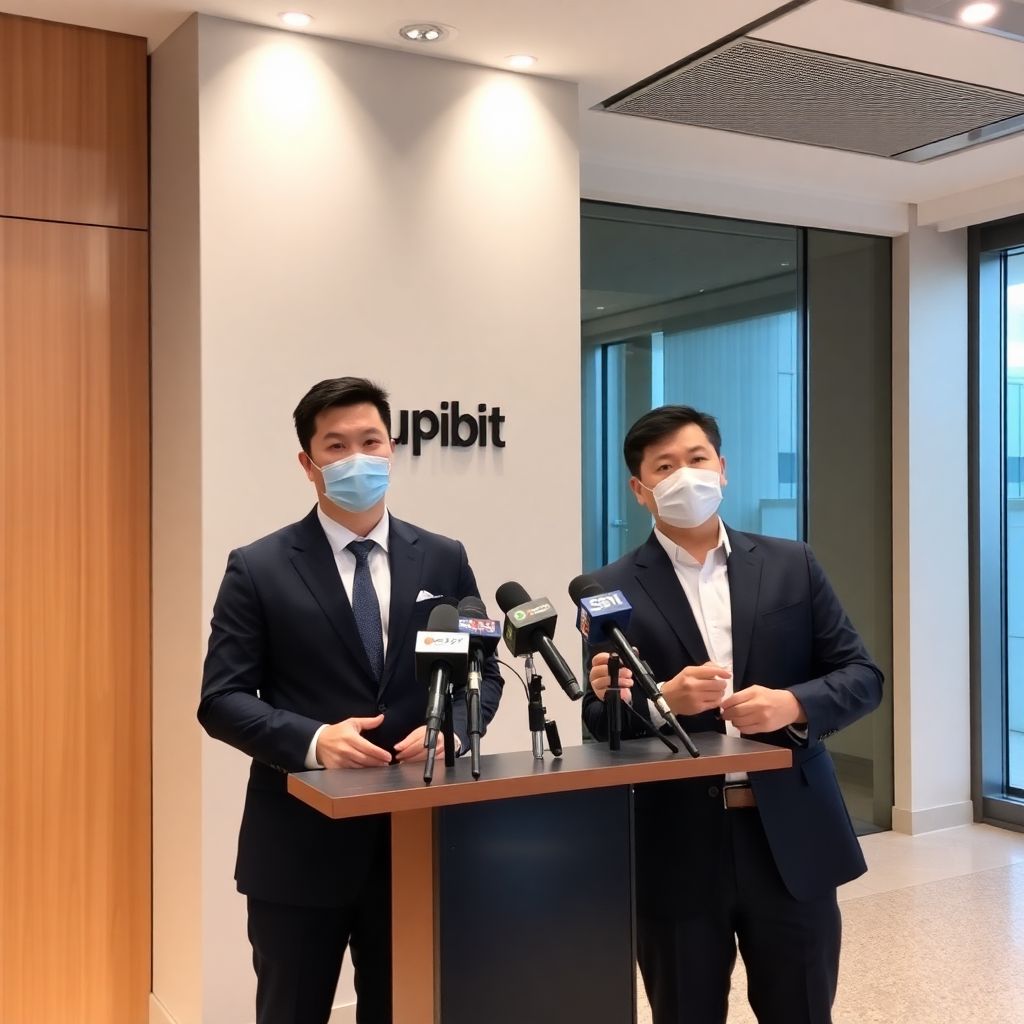
Upbit has firmly denied playing any role in issuing the proposed Open USD stablecoin, pushing back against claims that it had joined the initiative after being named as a participant by the project’s organizers.
The South Korean exchange clarified that neither it nor its parent company Dunamu has agreed to issue, launch, or operationally support Open USD (OUSD), a dollar‑pegged stablecoin introduced by the Open Standard project. Upbit stressed that, at this stage, it has only expressed a broad willingness to *consider* involvement with the Open Standard ecosystem if the project evolves and expands in a way that makes sense in the future.
This statement came in direct response to Open Standard’s published list of more than 140 entities it claimed had “signed up to use” OUSD. Dunamu appeared on that list, alongside a long roster of global brands and financial institutions. However, Upbit’s clarification indicates that any engagement remains at an exploratory level rather than a binding commitment.
Upbit is not alone in distancing itself from Open Standard’s framing. Several South Korean corporations and financial institutions that were also highlighted as partners have issued similar denials or caveats, prompting deeper scrutiny of how many firms have actually entered into formal agreements with the consortium.
Samsung Electronics was among the first to publicly question the way its name was used. The tech giant stated that it had not held formal talks with Open Standard and did not have a clear understanding of what role it was supposed to play in the stablecoin project. That position undercut the impression that Samsung was a confirmed founding member of the consortium.
Other major South Korean financial players, including Dunamu, Shinhan Bank, and K-Bank, also acknowledged contact with Open Standard but made it clear that any involvement remains strictly under review. They confirmed receiving inquiries or proposals, yet emphasized that they have not approved participation or signed binding documentation related to the issuance or governance of OUSD.
These positions contrast starkly with Open Standard’s initial unveiling of Open USD, which painted a picture of a powerful, ready‑made alliance. The project’s announcement described more than 140 organizations – from global payment networks and asset managers to tech companies and Korean corporates – as entities that had already agreed to use OUSD. Many of them were characterized as “founding partners” expected to help steer governance and share in the income generated from the stablecoin’s underlying reserves.
Open Standard’s model, as presented, promised a suite of favorable terms for participating businesses. These firms would purportedly be allowed to mint and redeem OUSD free of charge and without any limitations on transaction volume. Profits earned from the reserve assets backing the stablecoin were to be distributed among consortium members, creating an incentive structure that ties institutional participation directly to OUSD’s growth.
Yet the mismatch between those ambitious claims and the cautiously worded statements from named companies has sparked skepticism across the industry. The episode has reignited a recurring debate around high‑profile, consortium‑driven stablecoin initiatives that attempt to merge traditional finance, major tech platforms, and crypto infrastructure into a single, globally scalable system.
Industry figures have also raised substantive concerns about the economics and long‑term sustainability of the Open Standard model. Jeremy Allaire, CEO of Circle – the company behind USDC, one of the largest dollar‑backed stablecoins – has questioned whether offering free, unlimited minting and redemption is realistic over time. Maintaining such a structure would require a robust and resilient revenue model from reserve assets, alongside tight risk controls, something that previous high‑profile projects have struggled to achieve at scale.
Lorenzo Valente, research director at ARK Invest, characterized the Open Standard announcement as effectively a massive letter of intent rather than proof of finalized partnerships. His comments implied that many of the relationships listed by the project may still be exploratory, informal, or conditional, rather than legally binding arrangements with clear roles and responsibilities.
Observers have drawn parallels between Open USD and earlier consortium‑style stablecoin efforts such as Meta’s Diem (formerly Libra) and proposals for “global dollar” networks. In each case, a powerful lineup of potential partners generated headlines, but regulatory pressure, governance challenges, and alignment issues among participants made it difficult for those projects to reach meaningful global adoption. Against that backdrop, skepticism persists over whether Open USD can avoid a similar fate.
In South Korea specifically, regulatory uncertainty is compounding these doubts. The country has yet to finalize the long‑discussed Digital Asset Basic Act, leaving a significant legal vacuum around who is authorized to issue stablecoins and which types of businesses can participate in their ecosystems. Without this framework, banks, fintech firms, exchanges, and technology companies face unresolved questions about licensing, capital requirements, and the permissible scope of their activities in stablecoin networks.
One of the critical policy debates ongoing in Seoul concerns whether stablecoin issuance should be restricted solely to licensed banks or opened up to qualified non‑bank financial institutions and specialized crypto companies. Some regulators argue that only banks possess the risk management capabilities and prudential safeguards necessary to issue money‑like instruments. Others contend that limiting issuance to banks would stifle innovation and cement incumbents’ power in the digital currency space.
Until lawmakers reach consensus, several core elements of the future regime remain unclear: how reserves must be structured and audited, whether issuers must hold full one‑to‑one cash or cash‑equivalent backing, what consumer protections will apply, and what accountability mechanisms will govern members of a stablecoin consortium. All of these issues directly affect whether corporations are willing to formally tie themselves to a project like Open USD.
For South Korean companies appearing on Open Standard’s list, this uncertain backdrop is a powerful incentive to take a cautious stance. Publicly confirming full participation in a still‑evolving regime could expose them to regulatory risk, reputational fallout, or conflicts with domestic supervisory expectations. By characterizing their interactions with Open Standard as preliminary or subject to ongoing review, firms preserve strategic optionality while regulators refine the rules.
The controversy also highlights a growing tension between marketing narratives in the crypto sector and the more conservative, process‑driven approach of large institutions. From the perspective of a startup or protocol team, listing big‑name companies as prospective partners can create early momentum, attract developers, and signal credibility. For the corporates, however, even being described as a “partner” can trigger compliance reviews, internal audits, and questions from regulators and shareholders if no formal contract exists.
This disconnect is especially visible in the way Open Standard described its participants. Terms like “signed up to use” OUSD and “founding partners” suggest finalized agreements and shared governance, but the responses from entities like Samsung, Upbit, Shinhan Bank, and K-Bank point to something closer to initial outreach or exploratory conversations. That gap underscores the need for more precise language around partnership stages – from early‑stage talks to non‑binding memoranda of understanding and, finally, to signed contracts.
Another dimension is the broader evolution of stablecoin markets. Existing fiat‑backed stablecoins such as USDT and USDC already dominate global liquidity, serving as base assets for trading, lending, and cross‑border transfers. Any new entrant, even one fronted by a high‑profile consortium, must demonstrate clear advantages: improved transparency, stronger regulatory alignment, better user experience, or meaningful institutional integration. Without such differentiators, Open USD risks becoming another ambitious but under‑utilized token.
Institutional users, in particular, are likely to scrutinize governance design. For a multi‑stakeholder stablecoin to succeed, decision‑making processes around monetary policy (such as interest on reserves), risk management, blacklisting of addresses, and treasury operations must be transparent and robust. If governance is too centralized, participants might fear capture by a small group of insiders. If it is too diffuse or poorly defined, coordination breaks down when crises hit, as past experiments have shown.
The reaction in South Korea also reflects the country’s increasingly nuanced stance toward digital assets. Authorities have not taken a blanket anti‑crypto position, but they are wary of systemic risks, consumer losses, and corporate overreach following several high‑profile failures in the region. This history pushes regulators to demand clearer accountability structures when traditional firms become involved in crypto products that can resemble bank deposits in user perception.
In this environment, many companies are pursuing a “wait‑and‑see” strategy. They may continue to engage in dialogue with Open Standard, request more detailed information, and run internal pilots or simulations. Yet they are unlikely to make public, binding commitments until the Digital Asset Basic Act is enacted and supervisory guidance on stablecoins is explicit. Once those rules are in place, the same firms could revisit participation from a firmer legal footing and a stronger understanding of risk.
For Open Standard, the ongoing pushback creates both challenges and opportunities. On one hand, the consortium’s credibility depends on accurately representing who is truly on board. On the other, the heightened scrutiny could push the project to adopt more transparent communication practices, clarify its revenue model, and more openly describe the stage of discussions with each prospective partner. That kind of recalibration might improve its chances of building a genuine, durable coalition over time.
As of now, the published consortium behind Open USD is under closer examination than ever. With major South Korean players publicly emphasizing that talks are preliminary and no formal commitments have been made, the narrative of a fully formed, global alliance appears overstated. Whether Open USD can move beyond high‑level interest to concrete, regulated participation will depend heavily on how both the project and lawmakers respond to these questions in the coming months.