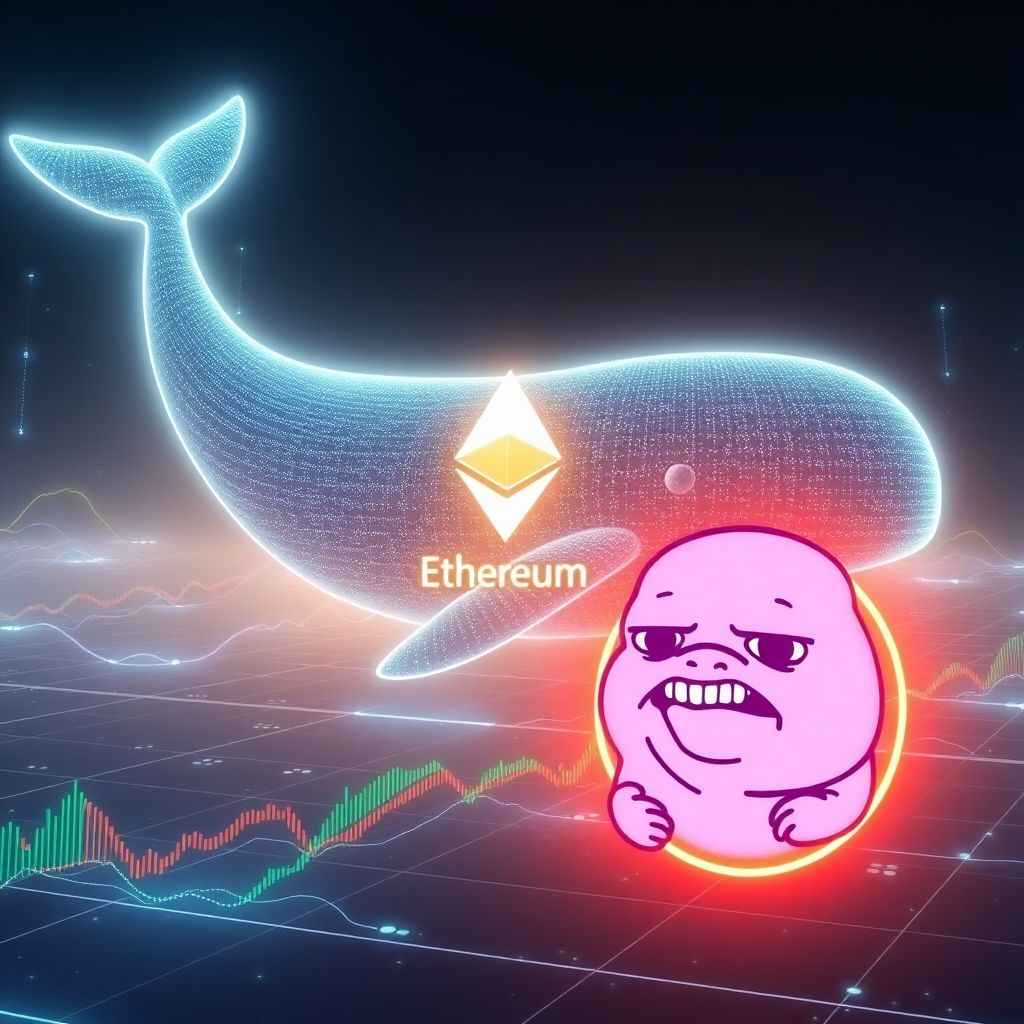
Ethereum whale flags Little Pepe as a high‑conviction asymmetric bet
A quiet but decisive on‑chain move has pushed an obscure meme coin into the spotlight. An Ethereum wallet holding millions of dollars’ worth of ETH has deployed roughly $500,000 into the presale of Little Pepe (LILPEPE), a Layer 2 meme project that until recently was mostly ignored by mainstream crypto coverage. Large holders rarely throw around half a million dollars without a thesis, and in this case, that thesis is that LILPEPE is still materially undervalued.
At the time of the whale purchase, LILPEPE was in Stage 13 of its presale, priced at $0.0022 per token. The team has already confirmed a public launch price of $0.0030, effectively locking in a 36% paper gain for anyone who holds from the current stage into listing. Early participants who got in at Stage 1 have already seen around 120% appreciation on their entry price. The conversation, therefore, is no longer about whether there are short‑term gains baked in, but whether this is only the beginning of a much larger move.
The most eye‑catching part of the whale’s strategy is the stated exit target: $0.26 per LILPEPE. If that level is ever reached, it would translate into an increase of more than 11,700% from the current presale price of $0.0022. On paper, that sounds outrageous. Yet this type of exponential move is not unprecedented in crypto, particularly for investors who position early in assets that evolve from fringe experiments into mainstream infrastructure.
Veteran Ethereum holders, in particular, are no strangers to asymmetric risk. Many of them watched ETH launch via an ICO at roughly $0.31 and rise over the subsequent years to almost $5,000 at its peak. Back then, Ether itself was dismissed as highly speculative, unproven technology. Today, even after retracements, ETH trades in a range more than four thousand times higher than its initial offering, and it has entrenched itself as the second‑largest cryptocurrency by market capitalization. For early ETH believers now backing LILPEPE, the calculus is familiar: limited downside with capital they can afford to risk, and potentially life‑changing upside if the thesis plays out.
What separates LILPEPE from a typical meme coin is the attempt to anchor speculation to actual network utility. The project is building its own Layer 2 chain and a dedicated meme launchpad dubbed “Pepe’s Pump Pad.” On this infrastructure, users will be able to issue new tokens directly on the Little Pepe Chain. Crucially, every transaction on this network will require LILPEPE as the gas token, mirroring the role that ETH plays on Ethereum or BNB on the Binance Smart Chain.
If the chain manages to attract developers and traders, this design could create persistent, structural demand for LILPEPE. Instead of price being driven purely by social media cycles and viral memes, usage of the chain itself would generate ongoing buy pressure, as participants need the token to pay for transactions, deploy contracts, or launch new meme assets. In that scenario, speculation and utility aren’t competing narratives but reinforcing ones.
Behind the scenes, the team claims to be working with multiple seasoned, though anonymous, advisers who have previously guided several top meme coins to multibillion‑dollar valuations. While pseudonymity is common in crypto and not inherently negative, it does increase the importance of verifiable third‑party checks, which is where Little Pepe has tried to differentiate itself from low‑effort meme launches.
Most meme presales at this stage are little more than a slick landing page and an active chat channel. LILPEPE, however, has already secured listings on major price‑tracking platforms, which generally require a baseline level of documentation and due diligence prior to inclusion. On top of that, the project’s smart contracts have been audited by CertiK, where they achieved a security score of 95.49%. While no audit can guarantee safety or success, this does place LILPEPE above the vast majority of meme projects that never undergo any formal review.
The presale structure itself is straightforward but aggressive. It spans 19 stages, with each subsequent phase priced higher than the last. The jump from Stage 12 to Stage 13, for instance, represented a 10% increase from $0.0021 to $0.0022. Demand has been accelerating: each new stage has reportedly sold out faster than the one before it. At the time referenced, Stage 13 was already 98.63% filled, meaning that the window to acquire tokens at $0.0022 was effectively closing. Once it sells out, the price moves to $0.0023 for Stage 14, and so on, until the presale ends and the token lists at $0.0030.
On the exchange side, LILPEPE has secured confirmation for listings on two major centralized exchanges at launch. The team has also indicated that it is targeting a listing on the largest global exchange and that preparatory work for that step is already underway. If a top‑tier listing does occur, the initial price discovery phase will likely look very different from the controlled step‑up model used in the presale, as open market dynamics, order books, and broader retail access come into play.
The whale’s $500,000 position and $0.26 exit target suggest a time horizon measured in years rather than days or weeks. That mindset mirrors how early Ethereum backers approached their investment: they endured brutal volatility and long periods of sideways action between bull runs. The expectation with LILPEPE, at least among its most optimistic supporters, is that value will accrue over multiple market cycles as the chain matures, the launchpad is used, and the broader meme ecosystem on Little Pepe Chain expands.
Yet, for all the excitement, it is essential to acknowledge the risks that come with this territory. Meme coins are some of the most volatile assets in the digital asset space. Many never recover after their first hype cycle, and a significant fraction fail outright. Even when there is a serious technical roadmap, user acquisition is never guaranteed. A launchpad is only as valuable as the projects that choose to build and launch on it, and competition among chains is fierce.
Investors eyeing LILPEPE would be wise to look beyond whale wallets and marketing slogans and examine the fundamentals: How is the token supply structured? What portion is reserved for the team, advisors, and marketing, and how are those allocations vested? How much liquidity will be added at launch, and will it be locked? What is the concrete incentive for developers to build on Little Pepe Chain instead of more established ecosystems like Ethereum, Base, or Solana?
The timing within the broader crypto cycle also matters. Presales often thrive in the early or mid stages of a bull market, when liquidity is abundant and risk appetite is high. If market conditions turn risk‑off, even strong narratives can stall or reverse. For a token with ambitions of 100x‑plus returns, surviving through bear phases and continuing to ship is usually more important than any single explosive rally.
Another factor to consider is the behavior of the whales themselves. While a $500,000 bet can signal conviction, large holders also introduce concentration risk. If a few major wallets control a significant share of the supply, their eventual selling can exert heavy downward pressure on the price. Monitoring on‑chain activity over time-such as whether those positions are being accumulated, staked, or gradually distributed-can provide clues about how aligned big players are with the project’s long‑term health.
Technically, the Layer 2 narrative gives LILPEPE an additional angle beyond pure meme culture. Scaling solutions remain a central theme in crypto, with users increasingly demanding cheaper and faster transactions. For Little Pepe Chain to stand out, however, it will need more than just lower fees and meme branding. Integration with existing tooling, developer‑friendly documentation, reliable infrastructure, and tangible user experiences will determine whether the chain can carve out its own niche.
Community engagement will also be a decisive factor. Meme coins that endure typically foster strong cultures, inside jokes, and a sense of shared identity that goes beyond speculative trading. If LILPEPE successfully blends this kind of grassroots culture with a functioning Layer 2 and a busy launchpad, it could build a self‑reinforcing ecosystem where new projects continually attract fresh participants back to the core token.
For now, LILPEPE sits at a crossroads: part speculative meme play, part Layer 2 infrastructure bet. The presale structure, early listings, security audit, and confirmed exchange launches provide it with more scaffolding than the average meme coin. The participation of a major Ethereum whale and a bold, public price target add a layer of narrative fuel that crypto markets are known to respond to.
Whether it ultimately becomes a footnote in the history of speculative assets or the next outlier success story will depend on execution, market conditions, and the project’s ability to turn attention into sustained usage. Anyone considering exposure should treat it as a high‑risk, high‑reward play and conduct thorough independent research on the tokenomics, roadmap, and team before committing capital.
Nothing in this article should be interpreted as financial advice. Digital assets are highly volatile, and investors should only allocate funds they can afford to lose after evaluating their own risk tolerance and investment objectives.