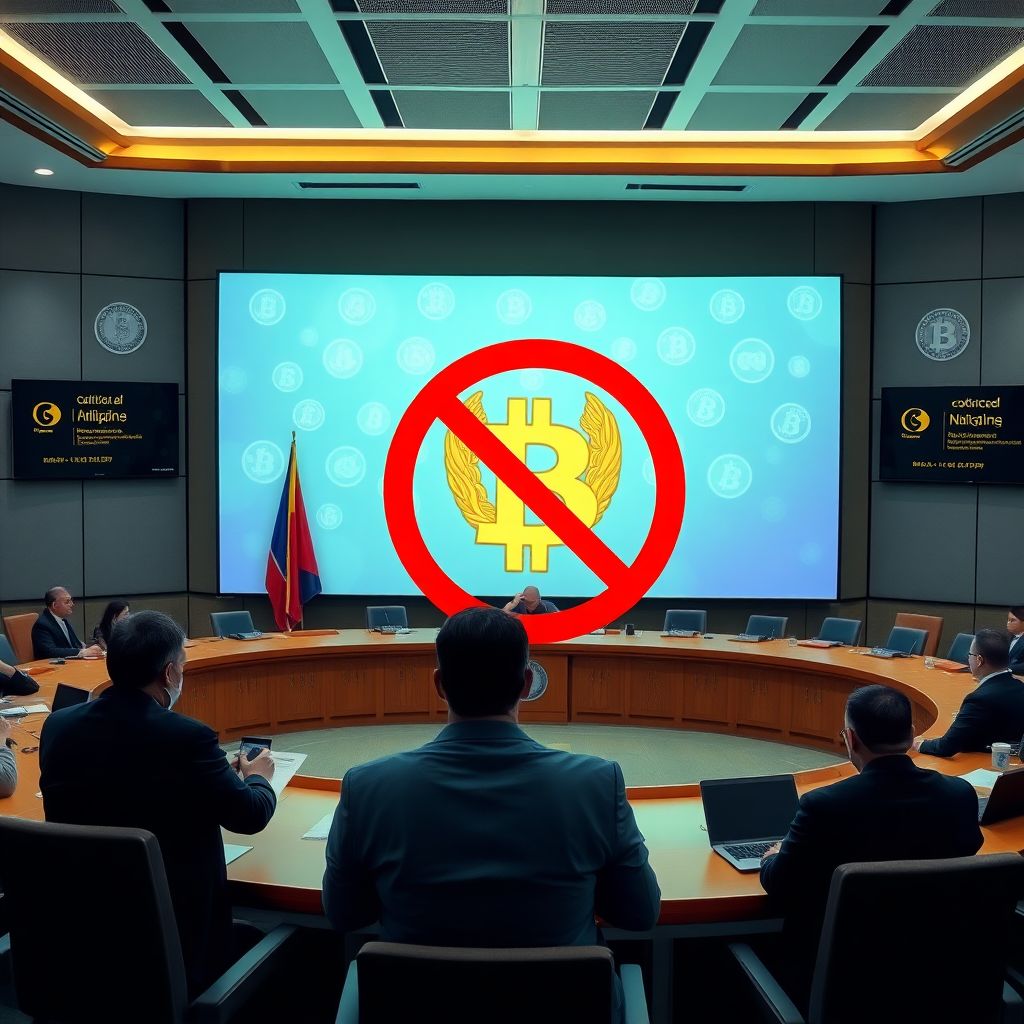
Philippines clamps down on crypto listings, outlaws privacy coins
The Philippines’ central bank has tightened its oversight of the digital asset sector, rolling out a tougher framework that reshapes which cryptocurrencies can be listed and traded in the country.
Under a new memorandum, the Bangko Sentral ng Pilipinas (BSP) now obliges all licensed Virtual Asset Service Providers (VASPs) – primarily exchanges and similar platforms – to conduct significantly more rigorous vetting and ongoing monitoring of every coin and token they list. At the same time, the regulator has imposed an outright ban on privacy-focused cryptocurrencies, prohibiting VASPs from listing or supporting them at all.
New listing rules: from “nice to have” to mandatory gatekeeping
The fresh guidelines turn what was once a largely internal, discretionary coin-review process into a formal regulatory obligation. VASPs must now:
– Establish clear, documented criteria for admitting new coins and tokens.
– Perform extensive due diligence on each asset’s technology, governance, and economic design.
– Assess and document the risks associated with each asset before listing it.
– Maintain an internal accreditation process that can be audited by the BSP.
The central bank stressed that these steps are not box-ticking exercises. Exchanges are expected to justify why a particular asset is suitable for Philippine customers, prove that they understand the underlying risks, and show how those risks are being mitigated in practice.
In the memorandum signed by Deputy Governor Lyn Javier, the BSP framed the changes as a safeguard for the broader financial system and retail users. The rules, it said, are designed to “promote financial stability and protect the financial welfare of customers” by ensuring that virtual asset services are delivered in a “safe, sound, and consumer-centric manner.”
Privacy coins pushed out of the Philippine market
The most controversial element of the new framework is the blanket ban on anonymity-enhancing cryptocurrencies, often called privacy coins. These are digital assets that deploy advanced cryptographic techniques to obscure transaction details such as the sender, recipient, and amount.
Under the central bank’s directive, VASPs licensed in the Philippines are barred from listing, offering, or supporting such assets. This means that coins whose core function is to make transactions untraceable – and which have historically attracted both privacy advocates and law enforcement scrutiny – will no longer be available through regulated local platforms.
From the BSP’s perspective, this step is closely tied to anti-money laundering (AML) and counter-terrorist financing (CTF) concerns. Privacy coins can make it significantly harder for authorities to trace flows of funds, investigate fraud, or identify proceeds of crime. By excluding them from regulated exchanges, the central bank aims to reduce the risk that the domestic financial system is used to facilitate illicit transactions.
From initial listing to ongoing surveillance
The new regime doesn’t stop at the moment a token is approved for trading. Exchanges must also put in place robust mechanisms to continuously monitor listed assets for:
– Market manipulation, wash trading, and other abusive behaviors.
– Sudden changes in liquidity, volatility, or trading patterns.
– Technological vulnerabilities such as critical bugs, attacks, or exploits.
– Regulatory developments that might affect the asset’s status.
If a coin or token is found to pose heightened risk or becomes non-compliant with regulatory expectations, VASPs are expected to react swiftly. That can include tightening trading conditions, warning users, or moving toward suspension or delisting. The BSP’s message is clear: listing is not a one-time event but an ongoing responsibility.
Two regulators, two frameworks
The crypto landscape in the Philippines is increasingly being shaped by more than one regulator. While the BSP focuses on VASPs and the monetary and payments side of digital assets, the country’s securities regulator has been rolling out its own, separate framework for token offerings and crypto securities.
This dual oversight means that companies operating in the sector must navigate both banking-style prudential rules and capital markets-style investor protection rules. In practice, some tokens may be treated as securities, others as payment instruments or utility tokens, and still others may be deemed too risky to be supported at all.
For exchanges and service providers, this raises the bar in terms of legal and compliance capabilities. They need internal teams that can interpret overlapping regulations, classify assets accurately, and ensure that their operations align with both central bank and securities requirements.
What this means for local exchanges
For licensed VASPs, the new listing rules will likely translate into higher operating costs and slower listing timelines. Exchanges will need to:
– Build or expand risk, compliance, and technical due diligence teams.
– Develop written policies that detail listing and delisting criteria.
– Create internal committees or boards to approve new assets.
– Maintain comprehensive documentation to show auditors and regulators how each listing decision was made.
Some platforms may respond by becoming more selective and listing fewer, more established coins and tokens. Others might choose to specialize in particular asset types or niches where they feel confident in their risk assessment capabilities.
The tightened rules could also accelerate consolidation in the market: smaller players who cannot keep up with the compliance burden might exit, merge, or pivot to non-custodial or purely technology-based services that fall outside certain licensing requirements.
Impact on Filipino users and investors
For everyday users, the immediate effect will vary by platform, but several trends are likely:
– Reduced access to privacy coins: Users who previously traded or held such assets via local exchanges will need to look for alternatives, such as foreign platforms or self-custody solutions, though these carry their own risks and legal uncertainties.
– Slower availability of new tokens: Newly launched coins or trending tokens may take longer to appear on Philippine-regulated exchanges, as they must pass tighter reviews.
– Potentially safer market environment: While choice may narrow, the average quality and transparency of listed assets could improve, reducing exposure to scams, “rug pulls,” and structurally flawed projects.
For more experienced traders, the shift could be a double-edged sword: the speculative upside of early access to high-risk tokens might diminish, but so too might the frequency of catastrophic losses due to poorly vetted listings.
How projects can adapt to the stricter environment
Crypto projects hoping to enter or remain in the Philippine market will need to factor the BSP’s stance into their design and disclosure strategies. That likely means:
– Avoiding features that are primarily focused on obfuscating transactions.
– Providing clear, verifiable technical documentation, including audits.
– Demonstrating strong governance structures and transparent tokenomics.
– Being ready to furnish detailed information to VASPs during their due diligence.
Projects that embrace compliance and transparency may actually benefit from the new regime, as exchanges will be looking for assets that can pass strict scrutiny while still offering innovation and user value.
Why the Philippines is moving now
The BSP’s move is part of a broader trend among regulators worldwide to close perceived gaps in crypto oversight. Rapid growth in trading volumes, the global reach of major exchanges, and a steady stream of high-profile failures and hacks have convinced many authorities that a more hands-on approach is necessary.
For the Philippines specifically, there are several underlying motivations:
– Consumer protection: The country has a large and growing population of retail investors, many of whom are new to complex financial products.
– Remittances and payments: Crypto is increasingly intertwined with cross-border transfers and domestic payments, areas where the central bank has a mandate to maintain stability.
– Reputation and international standards: Aligning with global AML and CTF expectations helps avoid the risk of being seen as a weak link in the international financial system.
By tightening crypto listing rules and outlawing privacy coins on regulated platforms, the BSP is signaling that innovation will be allowed, but only within guardrails it deems compatible with financial stability and law enforcement needs.
What to watch next
Market participants will be watching how strictly and how quickly the new rules are enforced. Key things to monitor include:
– How many existing listed tokens are reviewed, restricted, or delisted.
– Whether additional categories of assets (for example, algorithmic stablecoins or high-risk DeFi tokens) come under explicit scrutiny.
– How foreign exchanges with Philippine users respond to the local regulatory climate, especially if they seek licenses or partnerships.
In the longer term, the way these rules are implemented will shape whether the Philippines becomes a more conservative but stable crypto hub, or whether activity migrates to less regulated environments. For now, the message from the central bank is unmistakable: access to the local market comes with heightened responsibilities, and complete anonymity in digital transactions is no longer compatible with operating under its supervision.