Alito and Thomas Decide to Stay, Shutting Down Trump’s Chance at a Fourth Supreme Court Pick This Year
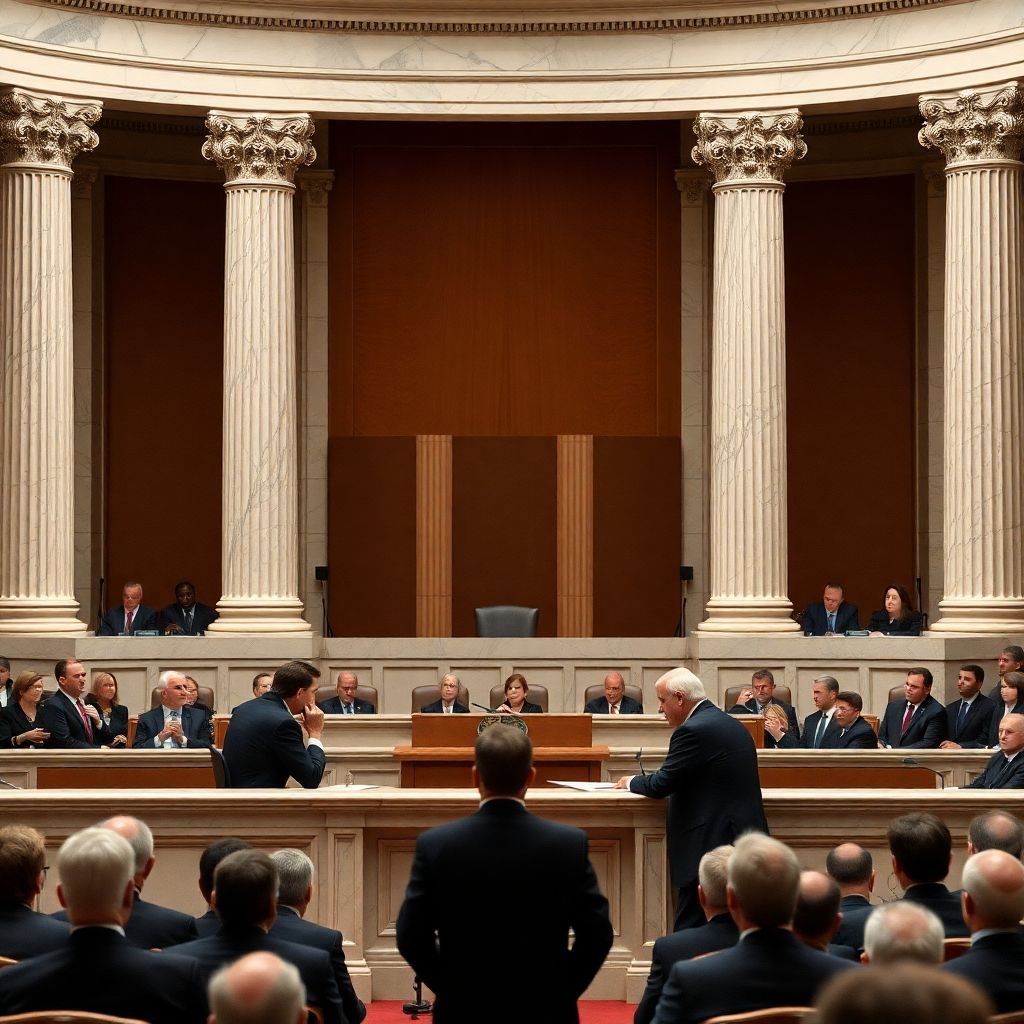
Supreme Court insiders have confirmed that Justices Samuel Alito and Clarence Thomas have no plans to step down this year, effectively eliminating any realistic path for Donald Trump to secure a fourth Supreme Court appointment before the November midterm elections. The decision closes off what had been one of the most closely watched political “what ifs” on the 2026 calendar and cements the current 6-3 conservative majority for at least another term.
According to reports from people familiar with the justices’ thinking, both Alito and Thomas have communicated privately that they intend to remain on the bench and are proceeding with business as usual. That includes hiring their full slate of clerks for the upcoming term-an internal signal that, in Supreme Court culture, is widely read as a decision to stay put rather than retire.
Their choice removes a major source of uncertainty from a political year already packed with deadlines and partisan fights. Had either justice announced a retirement, the Senate would have been forced into a high‑stakes confirmation battle under intense time pressure, with a volatile midterm campaign unfolding in the background. Republican leadership would have had to juggle Judiciary Committee hearings, floor debate, and a likely razor‑thin confirmation vote while also trying to move forward on a series of marquee priorities, including the so‑called Big Beautiful Bill reconciliation package, the CLARITY Act, a full reauthorization of FISA authorities, and other complex legislative efforts.
Speculation about a possible Alito retirement spiked in March, when the 76‑year‑old justice was briefly hospitalized for dehydration after becoming ill at an event in Philadelphia. The health scare revived chatter that he might choose to step aside while Republicans still hold both the White House and the Senate, giving Trump one more opportunity to shape the court. Yet sources say that following his hospital stay he quickly resumed a full workload and has remained actively engaged in the court’s cases and internal deliberations.
Clarence Thomas, now 77, has long been the subject of periodic retirement rumors, driven both by his age and by the intense political pressure around Supreme Court vacancies. Those close to him, however, indicate that he, too, has given no sign of preparing to leave. Like Alito, Thomas has lined up clerks for the next term and continues to be a dominant intellectual force on the court’s conservative wing.
Trump himself injected fresh energy into the retirement question this week during an interview on Fox Business, drawing a pointed comparison to the late Justice Ruth Bader Ginsburg. He noted that Ginsburg declined to retire when Barack Obama could have nominated a liberal successor, only to die in 2020 while Trump was president. That timing allowed Republicans to confirm a conservative replacement and tilt the court further to the right. In Trump’s words, Ginsburg “really hurt herself within the Democrat Party” by not stepping down earlier, a remark widely interpreted as a public nudge toward justices considering their own futures.
The political logic behind that comparison is straightforward. Since 2000, the average age at which justices have retired hovers around 80. Both Alito and Thomas are within just a few years of that benchmark. Party strategists know that if Republicans lose control of the Senate in November, the next window in which they’re likely to hold both the presidency and the Senate could arrive only after the justices are well into their 80s. That is the same structural argument that Democrats used-successfully-on Justice Stephen Breyer, who ultimately retired in 2022 at age 83 so that a Democratic president and a Democratic‑controlled Senate could confirm his successor.
What Alito and Thomas have effectively done by staying is to prioritize continuity and institutional control over partisan timing. From their perspective, the court’s current ideological balance is already comfortably conservative: three Trump appointees-Neil Gorsuch, Brett Kavanaugh, and Amy Coney Barrett-sit alongside Chief Justice John Roberts, Alito, and Thomas to form a six‑member conservative supermajority. Even if a vacancy opened and Trump named another justice, the basic 6-3 alignment would remain the same. The court would not become more conservative in composition; Trump’s influence, however, would be deeper and longer‑lasting.
That distinction matters. Each new appointment does more than add another vote-it extends the nominating president’s legacy by decades, especially when younger jurists are chosen. A fourth Trump pick could have anchored his imprint on the court for an additional generation, potentially shaping rulings on abortion, administrative power, executive authority, technology, and election law long after his time in office. By signaling their intention to remain, Alito and Thomas have, at least for now, placed a ceiling on how far that personal imprint can extend.
The absence of a vacancy also has practical consequences for the Senate’s daily work. Supreme Court confirmations have, in recent years, become all‑consuming political spectacles. They demand weeks of preparation, hours of televised hearings, extensive background investigations, and delicate vote‑whipping in a chamber where a single defection can derail an entire nomination. Every day senators spend focused on a Supreme Court battle is a day not available for complex legislative negotiations on matters like the CLARITY Act, stablecoin oversight, or broader digital asset regulation that depend on scarce floor time and committee bandwidth.
In a year already defined by compressed timelines, that trade‑off is especially stark. Lawmakers are attempting to resolve surveillance debates around FISA, finish work on major spending and tax measures, and address emerging issues in technology, national security, and financial regulation. Many of these efforts have already been delayed by partisan gridlock and overloaded calendars. Layering on a Supreme Court confirmation-among the most polarizing processes in Washington-would almost certainly have pushed other priorities further into the future or off the agenda entirely.
At the same time, keeping the roster intact provides a degree of predictability for litigants and lower courts. Lawyers preparing cases for the Supreme Court often model their strategies around the known preferences and jurisprudential commitments of individual justices. Alito and Thomas have, over decades, built clear records: they are generally skeptical of expansive federal regulatory power, highly protective of religious liberty claims, and inclined to read the Constitution through an originalist lens. Their continued presence allows advocates to plan around those established positions rather than gamble on how a new, untested justice might approach the same questions.
For the broader public, the news serves as a reminder that while elections shape the court, they do so within tight institutional constraints. Presidents can nominate and Senates can confirm, but only when a sitting justice decides to leave. Those decisions are deeply personal, influenced by health, family, legacy, and views about the court’s role-not merely by partisan calculations. Alito’s March health scare underscored that unpredictability, but his quick return to full participation highlighted another reality: justices often see stepping down as a last resort rather than a political maneuver.
Still, the political conversation around strategic retirement is unlikely to fade. Both parties have embraced the idea that justices should time their departures to maximize ideological continuity. Ginsburg’s choice to stay, Breyer’s decision to go, and now Alito and Thomas’s choice to remain are already being read through that lens. Progressive activists will worry that a future Democratic administration could one day fill conservative seats if either justice’s health declines under divided government. Conservatives, meanwhile, will argue that any retirement under a hostile Senate would risk undoing what they see as decades of hard‑won gains in reshaping the judiciary.
In the immediate term, what changes is less the court’s direction and more the political theater around it. Candidate messaging, party fundraising, and Senate strategy will now proceed on the assumption that there will be no Supreme Court vacancy to rally around before the midterms. That deprives Trump and his allies of a potent mobilizing tool-promising yet another conservative justice-and simultaneously denies Democrats the chance to frame the election as a last line of defense against a further rightward lurch.
Down the line, however, the age question will return with even greater intensity. As Alito and Thomas move deeper into their late 70s and early 80s, every health update, public appearance, or lightened workload will be scrutinized for signs of an impending departure. Interest groups on both sides are already gaming out scenarios: What happens if one retires under a Senate controlled by the opposite party? Could a nomination be blocked for an entire presidential term, as some Republicans attempted with Merrick Garland? How much public pressure will advocacy organizations try to exert on the justices themselves?
For now, the answer is a kind of uneasy stability. The court enters its next term with the same nine familiar faces and the same 6-3 ideological breakdown. Alito and Thomas, having chosen continuity over calculation, preserve the conservative majority as it confronts a new wave of cases on executive power, regulation, and individual rights. Trump, meanwhile, must campaign and govern knowing that the window for a fourth Supreme Court pick this year has effectively closed, and that the next opportunity-if it comes at all-will be dictated not by his wishes, but by the personal decisions of two justices who have decided they are not yet ready to leave the stage.