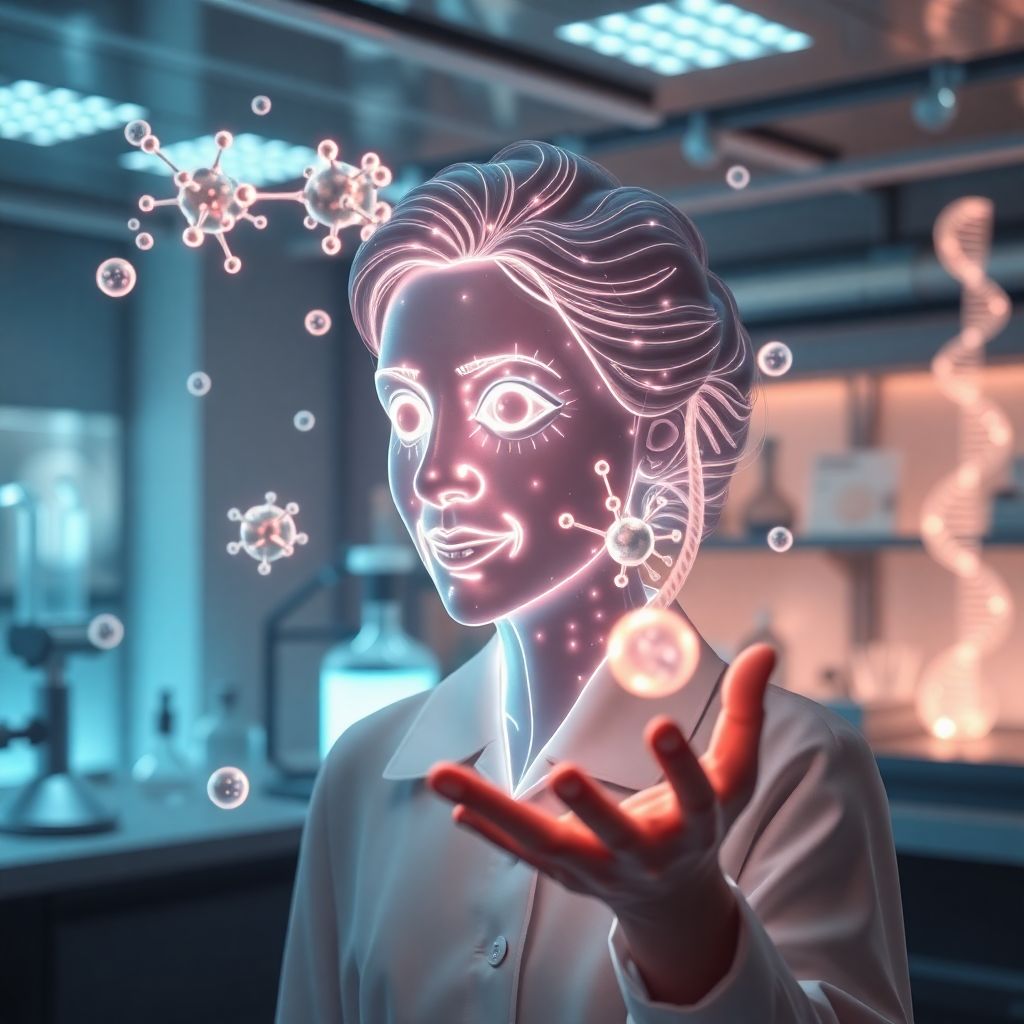
OpenAI has introduced its first narrowly focused AI system for science-and it carries a symbolic name. GPT‑Rosalind, titled in honor of chemist Rosalind Franklin, is a domain‑specific model tailored to biology, drug discovery, and translational medicine. Where previous OpenAI models have been generalists, Rosalind is explicitly built to reason about molecules, mechanisms, and medical data rather than marketing copy or code.
The choice of name is not accidental. Franklin’s X‑ray crystallography images were instrumental in identifying the double‑helix structure of DNA, yet she was effectively written out of the official story for decades. By invoking her legacy, OpenAI is signaling that Rosalind is meant to sit at the core of molecular biology and structural science: identifying targets, rationalizing mechanisms, and translating basic research into candidate therapies.
Drug development is notoriously slow and expensive. From the first hint of a promising target to final regulatory approval in the United States, the process typically stretches across 10 to 15 years. Only a small fraction of compounds survive that journey. Much of the delay is not due to dramatic experimental failures, but to the painstaking cognitive labor that surrounds them: filtering through mountains of publications, cross‑checking against clinical data, exploring off‑target effects, or manually synthesizing results from dozens of heterogeneous databases.
Rosalind is designed to attack exactly that bottleneck. Rather than simply summarizing a paper, it can in principle connect the dots between multiple sources, simulate “what if” scenarios in natural language, and propose hypotheses grounded in known biology. A medicinal chemist might feed it details of a target protein, request ideas for scaffold modifications to improve binding while reducing toxicity, and then iterate on those suggestions in near real time. A translational researcher could ask it to reconcile preclinical models, omics datasets, and early clinical signals into a coherent mechanistic narrative.
Critically, this is not just a text autocomplete model with a shiny label. OpenAI describes Rosalind as a reasoning engine optimized for life sciences. That implies training on specialized corpora, integration with curated biomedical knowledge bases, and potentially tools for working with structured data such as sequences, pathways, and clinical endpoints. In practice, this means the model is better suited to answering questions like “How might inhibiting this kinase affect downstream signaling in cardiomyocytes?” than “Write a travel itinerary for a weekend in Rome.”
Yet despite the hype, most people who would like to experiment with Rosalind won’t be able to. OpenAI is positioning the system as a premium, restricted‑access product for vetted partners in pharma, biotech, and academic research rather than a mass‑market tool. The company frames this as a safety and governance decision: a model powerful enough to accelerate drug creation is, by definition, also capable of being misused in the context of biological threats or unethical experimentation.
This tension-between scientific acceleration and biosecurity risk-is now at the core of AI for life sciences. A model that can reason through optimal dosing strategies or off‑target effects in oncology can just as easily be prompted to explore ways of enhancing virulence or immune evasion in pathogens, at least in theory. For that reason, Rosalind is being rolled out to a limited circle of institutions that undergo due diligence, have compliance infrastructures, and can agree to strict usage policies and monitoring.
For everyday researchers and smaller biotech startups, that creates a frustrating gap. Many are eager to offload literature review, trial design brainstorming, and target validation reasoning to specialized AI, but they are unlikely to get direct access to Rosalind anytime soon. Instead, they may have to rely on more generic large language models, or on emerging open‑source systems that try to replicate some of Rosalind’s capabilities using publicly available training data.
From an industry perspective, Rosalind is also a declaration of intent. Until now, the cutting edge of AI‑driven drug discovery has been dominated by players like DeepMind, Isomorphic Labs, and specialized biotech companies focused on protein folding, structure prediction, or de novo molecule design. OpenAI’s move signals that it wants a slice of that market, not merely by generating protein structures or SMILES strings, but by embedding itself in the broader reasoning workflows that guide discovery: which targets to pursue, which indications to prioritize, how to interpret ambiguous preclinical results.
If Rosalind delivers on its promises, it could compress several phases of the drug pipeline. Hit identification and lead optimization might proceed faster because researchers can interrogate the model about structure‑activity relationships across huge troves of historical data. Preclinical safety assessment could be more informed, with AI surfacing obscure but relevant toxicity signals buried in old literature or scattered adverse event reports. Even regulatory strategy might benefit from a system that can translate complex trial data into arguments aligned with existing guidance and precedents.
At the same time, scientists and ethicists are already asking what it means to have core biomedical reasoning concentrated inside proprietary black boxes. In drug development, reproducibility and transparency are crucial-not only in the lab, but in the rationale that led to specific decisions. If an AI model suggests a new dosing regimen or a novel patient stratification scheme, who is responsible when that advice influences clinical outcomes? How do regulators evaluate submissions that rely heavily on model‑assisted reasoning that cannot be fully inspected?
There is also a concern about widening inequality in research. Large pharmaceutical firms with the resources to partner with OpenAI may gain a powerful compound advantage over smaller players, public labs, and institutions in lower‑income countries. In a field where access to data and computation already dictates who can compete, a top‑tier, closed‑access scientific model could further reinforce a two‑tier innovation ecosystem: those who have Rosalind‑class tools, and those who do not.
For now, many practical details remain opaque. OpenAI has not fully disclosed how Rosalind was trained, what kinds of proprietary datasets were involved, or how performance was benchmarked against existing tools in medicinal chemistry and systems biology. It is also unclear how tightly the model will be integrated with laboratory automation platforms, high‑throughput screening tools, or electronic lab notebooks-integrations that would turn the model from a glorified consultant into an operational core of lab workflows.
Still, the direction of travel is clear. The future of drug discovery is unlikely to be human or AI alone, but a tightly coupled collaboration where models like Rosalind augment, challenge, and sometimes contradict domain experts. The value will not come merely from asking the model to “find a drug for disease X,” but from embedding it into thousands of small daily decisions: which assays are worth running, which signals are artifactual, which molecular series should be abandoned earlier rather than later.
For those locked out of direct access, the arrival of Rosalind still has consequences. It will likely push competitors to accelerate their own specialized life‑science models, including open‑source alternatives optimized for safety and transparency. Universities may invest more heavily in curated public datasets and benchmarks so that they are not wholly dependent on private AI providers. Regulatory bodies, meanwhile, will be forced to define how AI‑assisted reasoning should be documented, audited, and validated throughout the pipeline.
Rosalind, then, is both a technical milestone and a political statement. It asserts that large, general‑purpose models are no longer enough; that winning in high‑stakes applied domains requires models shaped around specific scientific questions. At the same time, it underscores an uncomfortable reality: the tools that could dramatically shrink the time and cost of bringing new therapies to patients may, at least initially, be reserved for a small circle of powerful institutions.
Whether that situation persists will depend on how quickly the broader ecosystem responds-through competing models, new governance frameworks, and pressure for greater openness in biomedical AI. For now, Rosalind represents a tantalizing but largely inaccessible glimpse of what it might look like when frontier AI is pointed squarely at the most complex problem in medicine: turning biological insight into safe, effective drugs years faster than is possible today.