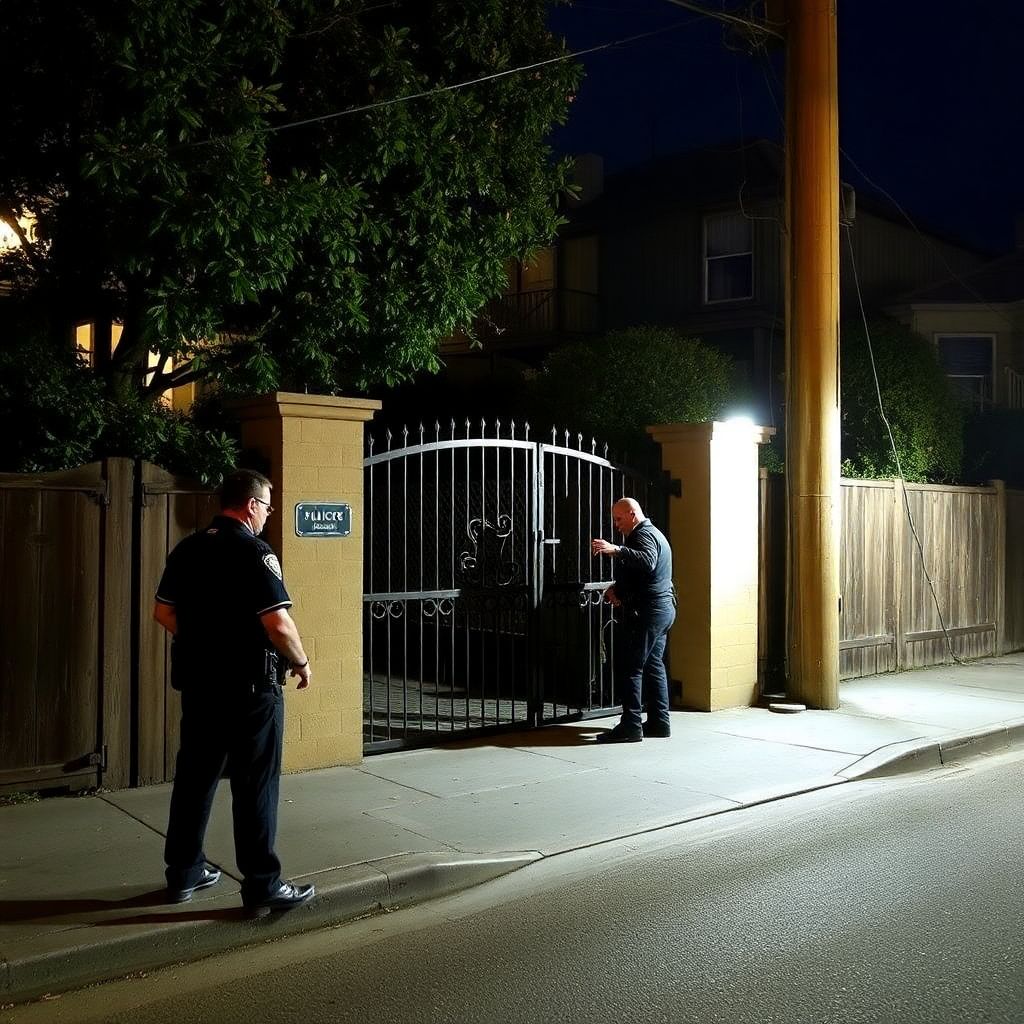
Sam Altman’s San Francisco home was targeted in a firebomb attack late Friday, an incident that was followed by threats made near OpenAI’s headquarters and the swift arrest of a 20‑year‑old suspect, according to local police. No injuries were reported, but the episode has intensified scrutiny around the safety of high‑profile tech leaders at the center of the artificial intelligence boom.
The San Francisco Police Department said an unidentified man allegedly threw an incendiary device at a residence in the city’s North Beach neighborhood, a property linked to Altman. The device ignited a fire at the exterior gate, causing visible damage but not spreading into the home itself. Officers reported that the attacker immediately fled the scene on foot.
A short time later, police responded to a separate incident near OpenAI’s offices, where the same suspect was reportedly seen moving toward the building while issuing threats. Authorities say he threatened to burn the facility down, prompting an urgent response and heightened security measures around the company’s headquarters.
Officers located and detained a 20‑year‑old man in the area and took him into custody. Police confirmed that they have not yet disclosed what charges the suspect will face and have released no further information about his identity, possible motives, or any evidence recovered in connection with the attacks. The investigation remains active and ongoing.
A spokesperson for OpenAI said that no employees or bystanders were harmed during either incident. The company emphasized that it is cooperating fully with law enforcement and taking additional steps to protect staff and facilities while investigators work to piece together what led up to the attack.
The firebombing comes at a time when both Altman and OpenAI are under renewed public pressure. Earlier this month, a lengthy magazine profile critically examined Altman’s leadership, focusing on disputes inside OpenAI over safety, governance, and the pace at which powerful AI models are being released to the public. The report portrayed deep tensions at the company and questioned how risks around advanced AI are being managed.
In the aftermath of the attack, Altman broke with his usual preference for privacy and addressed both the incident and the recent criticism in a personal blog post. He said he had decided to share an image of the damage to his home in the hope that publicizing the consequences might discourage future attempts at violence. He referenced the incendiary nature of the events both literally and metaphorically, calling the magazine article itself “incendiary” and reflecting on how easily narratives can shape public perception.
Altman acknowledged that he has made mistakes during OpenAI’s rapid expansion. Describing the company’s growth as an “insane trajectory,” he expressed regret for people he believes were hurt along the way and conceded that he had underestimated the power of stories-both those told about him and those circulating about the company. It was a rare, direct admission from a figure who often focuses outward on the future of AI rather than inward on personal missteps.
Security experts say the incident highlights a growing risk facing executives at the forefront of controversial or transformative technologies. As AI systems become more capable and more deeply integrated into the economy, the people leading these efforts increasingly attract intense admiration and equally intense hostility. Analysts point out that, while online harassment of high‑profile tech figures has been common for years, physical attacks remain comparatively rare-but this case may signal a worrying escalation.
The confrontation near OpenAI’s headquarters is likely to fuel broader debate about how companies building foundational AI models should handle security, transparency, and public engagement. Critics argue that the sector’s rapid pace has outstripped existing regulatory frameworks and social norms, leading to frustration among those who fear job loss, misuse of AI tools, or long‑term existential risks. At the same time, supporters of AI development warn that allowing threats or violence to influence research agendas would set a dangerous precedent.
Within OpenAI, the episode may reinforce internal calls for tighter security protocols and mental‑health support for staff who suddenly find themselves working in a politically and socially charged environment. Employees at AI labs today operate not only in highly competitive markets but also under the glare of public controversy, with their work frequently framed in terms of sweeping promises or dire risks. Company insiders and observers alike note that navigating this climate requires a balance between openness and protection.
The timing of the firebomb attack, arriving on the heels of a critical feature about OpenAI’s internal culture, also underscores the volatility of public narratives around AI. Leadership decisions that once would have drawn primarily financial or technical scrutiny now spark wider moral and political disputes. Altman’s own response-public regret, coupled with a defense of his record-illustrates how key figures in the field are increasingly forced to manage their personal reputations alongside their corporate responsibilities.
For law enforcement, the case raises familiar but evolving questions about how to respond when grievances intersect with highly visible technology firms. Investigators must determine whether the suspect’s actions were tied to ideological opposition to AI, personal animus, mental‑health issues, or some combination of factors. Until more details emerge, police and city officials are likely to treat the incident as both a criminal matter and a cautionary example of how high tensions can become.
The broader AI industry is watching closely. Companies racing to develop advanced models now face not only regulatory scrutiny and market competition, but also the challenge of operating in an environment where public anxiety can manifest in unpredictable ways. Some executives have begun to argue for more deliberate public education on AI-what it can do, what safeguards are being implemented, and where real risks lie-as one way to defuse fear and reduce the chance of extreme reactions.
At the same time, governance advocates point out that transparency and accountability must be substantive rather than purely symbolic. They argue that acknowledging mistakes, as Altman did, should be paired with concrete steps: clearer safety standards, stronger internal checks and balances, and more structured engagement with outside critics. Without tangible changes, they warn, frustration over perceived secrecy or irresponsibility is likely to grow.
For now, OpenAI is working with police to understand exactly what happened outside Altman’s home and at its own front door. The company’s leadership is also confronting a more intangible challenge: how to continue pushing forward in an arena many see as defining the future, while managing the very human reactions-fear, anger, hope, and ambition-that such transformative technology inevitably provokes.