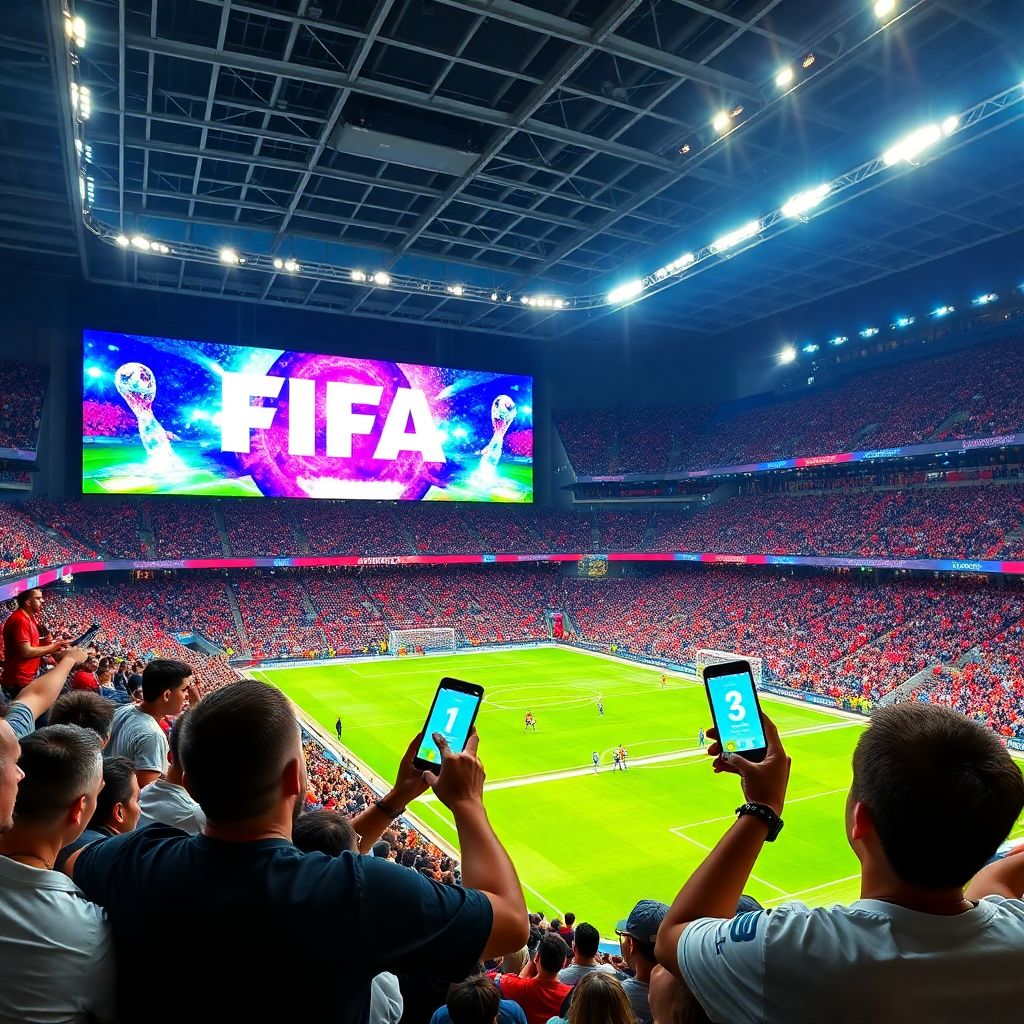
FIFA seals multi-year World Cup prediction market partnership with ADI Predictstreet, bringing blockchain-powered fan engagement to the world’s biggest football tournament.
The agreement makes ADI Predictstreet FIFA’s first-ever official prediction market partner, with the deal spanning the 2026 World Cup-the first edition to feature 48 teams and 104 matches, hosted across Canada, Mexico, and the United States. The platform will run on ADI Chain and is positioned as a central element of FIFA’s broader digital fan engagement strategy for the upcoming tournament.
What the partnership includes
Under the arrangement, ADI Predictstreet will power a dedicated prediction market experience for global fans. Through the platform, users will be able to:
– Predict match results across the entire tournament
– Forecast tournament statistics such as goals scored, clean sheets, and group standings
– Highlight standout performers, including top scorers and best goalkeepers
– Anticipate pivotal moments, from decisive knockout clashes to key turning points in the competition
Alongside the prediction markets, ADI Predictstreet will also host FIFA’s official free-to-play bracket challenge. This will allow fans to build their own tournament paths, picking who advances from each group and how the knockout stages unfold, right up to the final.
Built on ADI Chain
The prediction market will be built on ADI Chain, a blockchain network whose native token recently reached a new all-time high, underscoring heightened investor attention around the project. The collaboration effectively positions ADI Chain as the underlying infrastructure for FIFA’s flagship prediction initiative.
By anchoring the experience to a public blockchain, ADI Predictstreet aims to provide transparent, verifiable markets in which outcomes and payouts can be tracked on-chain. That transparency is especially important in prediction platforms, where user trust depends on clear, immutable records of odds, settlements, and historical performance.
A new layer of fan engagement for the 2026 World Cup
The 2026 World Cup will be the largest in history, with 48 participating teams and 16 host cities across North America. Organizers expect record-breaking attendance and global viewership, and FIFA is clearly positioning digital interactivity as a core pillar of how fans will experience the tournament.
Prediction markets expand on traditional fan games by allowing supporters to engage with the competition in real time, not just before the first whistle. Rather than simply filling out a bracket once, users can continuously react to new information-injuries, group-stage upsets, tactical shifts-and adjust their forecasts throughout the tournament.
This dynamic element is designed to keep fans connected to the event every day, not only when their national team is on the pitch. It also makes neutral matches more compelling, giving users a stake-emotional or financial-in games they might otherwise overlook.
Why prediction markets appeal to sports fans
Prediction platforms have emerged as a hybrid between gaming, analytics, and entertainment. For football supporters, they offer several points of appeal:
– Strategy and skill: Fans who closely follow squads, tactics, and form can test their knowledge against global peers.
– Data-driven engagement: Statistics, historical trends, and live metrics can inform predictions, turning fandom into a more analytical experience.
– Social competition: Leaderboards, communities, and shared predictions create a sense of rivalry and collaboration among users.
– Continuous drama: Every match carries implications for open markets and brackets, adding layers of narrative to the tournament schedule.
By formalizing this format under an official banner, FIFA is effectively legitimizing a sector that has been evolving in parallel to mainstream sports for years.
The role of free-to-play formats
While prediction markets often involve real-value stakes or tokens, FIFA’s decision to highlight a free-to-play bracket challenge is strategically significant. Free entry formats:
– Lower the barrier to participation for casual fans
– Encourage broader global involvement, including in regions with limited access to financial products
– Allow FIFA to experiment with prediction-based engagement without crossing into regulated betting territory in many jurisdictions
– Serve as an entry point, letting users explore the interface and game mechanics before trying more advanced features
The bracket challenge traditionally becomes a viral element of major tournaments. Integrating it directly into a blockchain-powered platform like ADI Predictstreet gives FIFA a way to introduce mainstream audiences to Web3-style interactions without requiring technical knowledge.
What this means for ADI Predictstreet and ADI Chain
For ADI Predictstreet, the partnership is a major validation of its technology and positioning. Being tagged as the first official prediction market partner of the world’s most-watched sporting event substantially elevates its profile.
On the infrastructure side, ADI Chain stands to benefit from:
– Increased on-chain activity driven by global traffic during the World Cup
– Higher visibility in both the crypto space and the broader sports industry
– A real-world, high-traffic use case that can stress-test and showcase its scalability and reliability
The fact that ADI’s token recently hit a new high reflects market anticipation that this kind of high-profile integration could translate into long-term ecosystem growth, beyond the duration of the tournament itself.
Balancing innovation and responsibility
Prediction markets exist in a complex regulatory environment, intersecting with gambling, financial markets, and gaming law depending on the jurisdiction. FIFA’s move to formalize a partnership in this space signals that it sees room for responsible, compliant implementations that enhance fan engagement without compromising legal or ethical boundaries.
Key considerations likely include:
– Age verification and access controls in certain regions
– Clear separation between free-to-play experiences and any real-value components
– Strong responsible play messaging and tools, especially if financial stakes are involved
– Strict transparency around how markets are structured, how odds are derived, and how outcomes are settled
By working with a dedicated prediction market provider, FIFA can offload much of the technical and regulatory complexity to a specialist while setting overarching standards aligned with its global brand.
How fans might actually use the platform
For an everyday fan, the experience of the ADI Predictstreet integration during the World Cup could look like this:
1. Pre-tournament phase:
– Fill out a free bracket predicting which teams advance from each group and who ultimately lifts the trophy.
– Lock in early forecasts on top scorers, surprise teams, and key performers.
2. Group stage:
– Make match-by-match predictions for results, goal margins, and standout players.
– Adjust overall tournament outlooks based on early upsets or injuries.
3. Knockout rounds:
– Refine predictions as the field narrows, with higher stakes attached to each match.
– Engage with special markets around penalty shootouts, extra time, or specific milestones.
4. Final stages:
– Follow the last matches with layered emotional investment-supporting a country, defending a position in the bracket standings, or protecting a strong record of predictions throughout the tournament.
This step-by-step arc keeps users involved from the opening whistle to the final, regardless of whether their favorite team remains in contention.
Potential long-term implications for global football
If the integration proves successful in 2026, it could set a template for how prediction markets and interactive platforms are woven into:
– Future World Cups and continental tournaments
– Youth and women’s competitions, tailored for different audiences
– Domestic league partnerships that mirror the global model on a local scale
More broadly, it may accelerate the normalization of blockchain-backed experiences in mainstream sports. Features such as verifiable digital achievements, cross-tournament fan profiles, and long-term performance histories of predictions could evolve into standard components of how supporters interact with the sport.
A new chapter in Web3 and sports
The FIFA-ADI Predictstreet deal marks another step in the ongoing convergence between Web3 technologies and live sports. Previous experiments have focused on collectibles, ticketing, or fan tokens. In contrast, this partnership centers on live, data-driven interaction that is tightly synchronized with the match calendar itself.
By backing an on-chain prediction market and tying it to the world’s largest sporting event, FIFA is signaling that blockchain is no longer just an experimental add-on, but a viable backbone for global-scale fan engagement.
As the 2026 World Cup approaches, all eyes will not only be on the expanded field of 48 national teams, but also on how millions of fans choose to engage with the tournament through this new, prediction-driven layer of participation.