Crypto Hardware Giant Bitmain Draws Heat As Senator Probes Trump Family Dealings
A long-running US national security investigation into Chinese crypto mining titan Bitmain remains officially unresolved – and that vacuum of information is now becoming a political flashpoint in Washington, with President Donald Trump’s sons and their bitcoin mining venture pulled into the controversy.
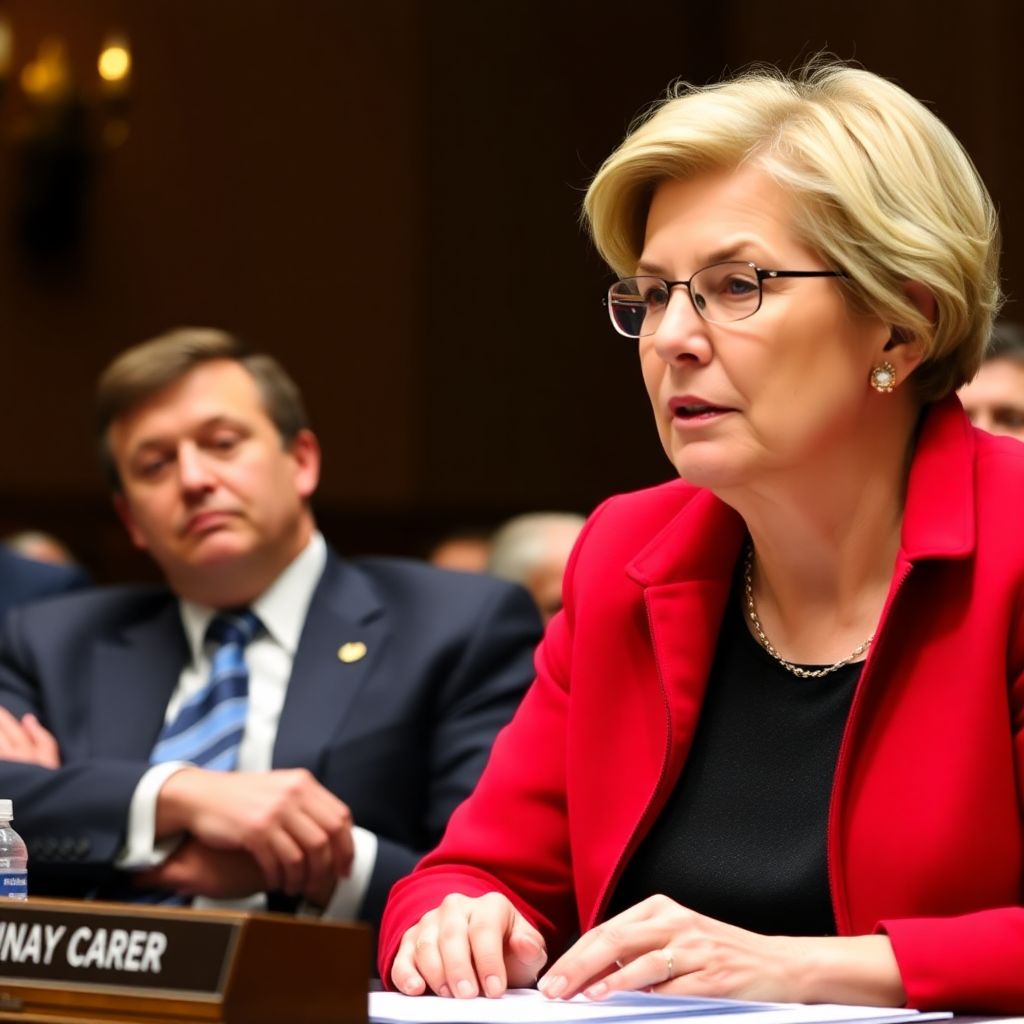
At the center of the dispute is a letter from Senator Elizabeth Warren to Commerce Secretary Howard Lutnick, demanding internal records and explanations about how the administration has handled security concerns tied to Bitmain Technologies, the Beijing-based firm that dominates the global market for bitcoin mining machines.
Warren’s inquiry zeroes in on two issues: what the government has actually done in response to warnings about Bitmain’s hardware, and whether lucrative business ties between Bitmain and companies linked to the Trump family have in any way shaped or softened those decisions.
‘Operation Red Sunset’ Under the Microscope
The unresolved federal probe that Warren is pressing to unearth is reportedly codenamed “Operation Red Sunset.” The investigation, led by the Department of Homeland Security, has been kept largely out of public view. According to prior reporting, officials examined whether Bitmain’s specialized ASIC mining rigs could be remotely accessed or manipulated – potentially enabling espionage or even disruption of critical US infrastructure.
Of particular concern was the possibility that compromised mining machines could be used to knock parts of the American power grid offline or siphon sensitive operational data. While technical details about the investigation remain classified, the mere existence of such a probe underscores how bitcoin mining equipment has evolved from a niche tech product into a possible vector for geopolitical risk.
Operation Red Sunset was initiated under President Joe Biden and, based on publicly available information, carried into the early stages of Trump’s current term. Yet years after the probe began, there has been no formal conclusion or public statement clearing or condemning the company. That lingering ambiguity is precisely what Warren is now challenging.
Security Warnings Predate the Current Political Fight
Concerns surrounding Bitmain’s hardware did not emerge overnight – nor did they start with Operation Red Sunset. In July 2025, the Senate Intelligence Committee released a report warning that Bitmain equipment “can be forced by the PRC to turn over data” pursuant to China’s sweeping national security laws. Those laws compel Chinese companies to assist state intelligence work, even when doing so conflicts with the privacy or security interests of foreign clients.
The Senate report amplified worries that any hardware manufactured by Chinese firms and deployed at scale inside US borders might be subject to covert interference or data collection. For a technology like bitcoin mining – heavily concentrated in large industrial facilities running tens of thousands of machines – the stakes are especially high if that equipment is embedded in or near sensitive infrastructure.
In 2024, a separate federal review concluded that a crypto mining operation near Francis E. Warren Air Force Base in Wyoming posed unacceptable security risks because of its use of foreign-made hardware. Authorities ordered the divestment of that facility, stressing potential vulnerabilities created by the presence of Chinese equipment close to a key military installation. That decision set an early precedent for how national security officials might approach mining farms tied to overseas manufacturers.
Trump Family Venture Deeply Entwined With Bitmain
What turns a technical security investigation into a charged political battle is the scale of the Trump family’s financial relationship with the very hardware now under scrutiny.
American Bitcoin Corp., a mining company co-founded by Eric Trump and Donald Trump Jr. in partnership with industry player Hut 8, has become one of Bitmain’s most prominent US customers. According to filings cited in financial disclosures, the company signed a contract in August 2025 to purchase 16,000 Bitmain mining rigs for a staggering $314 million.
In a notable twist, that deal was structured not in cash, but in pledged bitcoin – tying the payment directly to the performance and valuation of the same digital asset the machines are designed to mine. The arrangement reflects both the capital intensity of large-scale bitcoin mining and the willingness of operators to tap their crypto holdings as a form of collateral.
Since that initial contract, American Bitcoin Corp. has dramatically expanded its fleet. Recent reports indicate the firm acquired an additional 11,298 Bitmain units earlier this month, pushing its total inventory to approximately 89,000 active mining rigs. Collectively, those machines provide an estimated 28.1 exahashes per second of computing power – a nontrivial share of the global Bitcoin network’s hash rate.
The company has meanwhile built a sizable bitcoin treasury, reportedly amassing around 6,900 BTC. At current market prices, that stash is valued at roughly $462 million, underscoring just how quickly the operation has scaled.
Warren Seeks Firewalls Between Policy And Business
Against this backdrop, Warren’s letter to Secretary Lutnick focuses not only on technical risks, but on the integrity of decision-making inside the Commerce Department. She is pressing for detailed answers on whether any national security determinations involving Bitmain or foreign crypto hardware more broadly were influenced by companies with financial ties to the Trump family.
In practical terms, Warren is asking for internal communications, meeting records, and any policy drafts that might show whether officials weighed the business interests of American Bitcoin Corp. – or similar entities – when assessing export controls, import restrictions, or other regulatory options targeting Bitmain.
Her position is straightforward: if the US government believes there is a credible threat from foreign-manufactured mining rigs, that threat should be handled consistently, regardless of which American firms stand to gain or lose. Any hint that national security judgments could be bent to accommodate the president’s relatives would undermine both public trust and the broader campaign to secure critical infrastructure.
Why Mining Hardware Became a National Security Issue
For much of Bitcoin’s history, mining machines were seen primarily through an economic or environmental lens: how profitable they were, how much energy they consumed, and how they affected network decentralization. The Bitmain controversy illustrates how those debates have broadened into questions of cyber defense and geopolitical leverage.
Modern ASIC miners are effectively high-performance computers networked at massive scale. When tens of thousands of identical devices, controlled by a single manufacturer, are deployed across multiple data centers in one country, they can form a large and relatively homogeneous attack surface. If a backdoor or exploitable vulnerability exists – whether planted maliciously or left by negligence – the consequences could extend well beyond cryptocurrency.
US strategists worry that hostile actors could use compromised hardware to map local networks, disrupt operations, or even coordinate attacks on power supplies. This risk is amplified when mining farms are co-located with energy infrastructure, as is common in regions with cheap electricity or stranded power.
The US Balancing Act: Innovation Vs. Security
The unresolved status of Operation Red Sunset reflects a broader dilemma for policymakers: how to encourage growth in emerging industries like bitcoin mining and artificial intelligence, while limiting dependence on foreign-made hardware that might introduce systemic vulnerabilities.
On one side, companies such as American Bitcoin Corp. argue that access to the most efficient ASICs is crucial to remain competitive. Bitmain, as one of the largest and most advanced manufacturers, sits at the top of that supply chain. Imposing strict restrictions on its equipment could rapidly alter the economics of US-based mining, potentially driving operations overseas or shrinking domestic capacity.
On the other side, lawmakers and intelligence officials increasingly view critical digital infrastructure – from data centers to mining farms – as part of the national security perimeter. That mindset shifts the conversation from cost and efficiency to resilience and control, even if it means higher capital expenditure or a slower rollout of new capacity.
Implications For The Global Crypto Industry
The scrutiny on Bitmain is being watched closely by miners, hardware makers, and investors around the world. Any aggressive move by the US – from imposing new import controls to blacklisting specific models – could reverberate through Bitcoin’s mining landscape.
If Washington decides that Chinese-made rigs pose an unacceptable risk, US-based operations may pivot toward alternative suppliers or push for homegrown manufacturing. That could benefit competitors in countries seen as more aligned with US security interests, while squeezing Chinese firms out of a lucrative market.
At the same time, Bitcoin itself is designed to be geographically decentralized. As mining shifts among jurisdictions, the network can adapt, but regional crackdowns or trade restrictions can temporarily disrupt hash rate, impact block times, and introduce volatility. Investors will be watching whether the Bitmain probe triggers any sharp changes in mining distribution or policy.
What To Watch Next
Several key developments will determine how this story evolves:
1. Commerce Department’s Response
How fully Secretary Lutnick responds to Warren’s document demands will signal whether the administration is prepared to open its decision-making to greater scrutiny, or whether it plans to invoke confidentiality to shield internal deliberations.
2. Status of Operation Red Sunset
Any formal statement on the outcome of the DHS-led investigation – even a limited, redacted summary – could clarify whether US officials still consider Bitmain equipment a live threat or a manageable risk.
3. Potential Regulatory Actions
New rules on foreign-made mining hardware, enhanced export controls, or fresh reviews of facilities located near sensitive infrastructure would indicate that the government is willing to translate security concerns into concrete policy.
4. Trump Family’s Business Posture
How American Bitcoin Corp. responds – whether by diversifying away from Bitmain or doubling down – will be closely read as a barometer of the Trump family’s confidence in both the hardware and the regulatory environment.
A Test Case For Crypto’s Political Future
The clash over Bitmain and the Trump family’s mining empire encapsulates a broader transformation: crypto is no longer a fringe financial experiment, but an industry intertwined with energy policy, foreign relations, and electoral politics.
For lawmakers like Warren, the case is an opportunity to demand clearer boundaries between personal business interests and the machinery of national security. For the White House, it is a test of whether it can support domestic innovation in digital assets while convincing skeptics that foreign technology is being handled with appropriate caution.
Until Operation Red Sunset is officially resolved and the Commerce Department fully explains its approach, the uncertainty will persist – for miners deploying Bitmain hardware, for investors betting on the sector’s growth, and for voters assessing how closely presidential families should be allowed to orbit the cutting edge of crypto infrastructure.