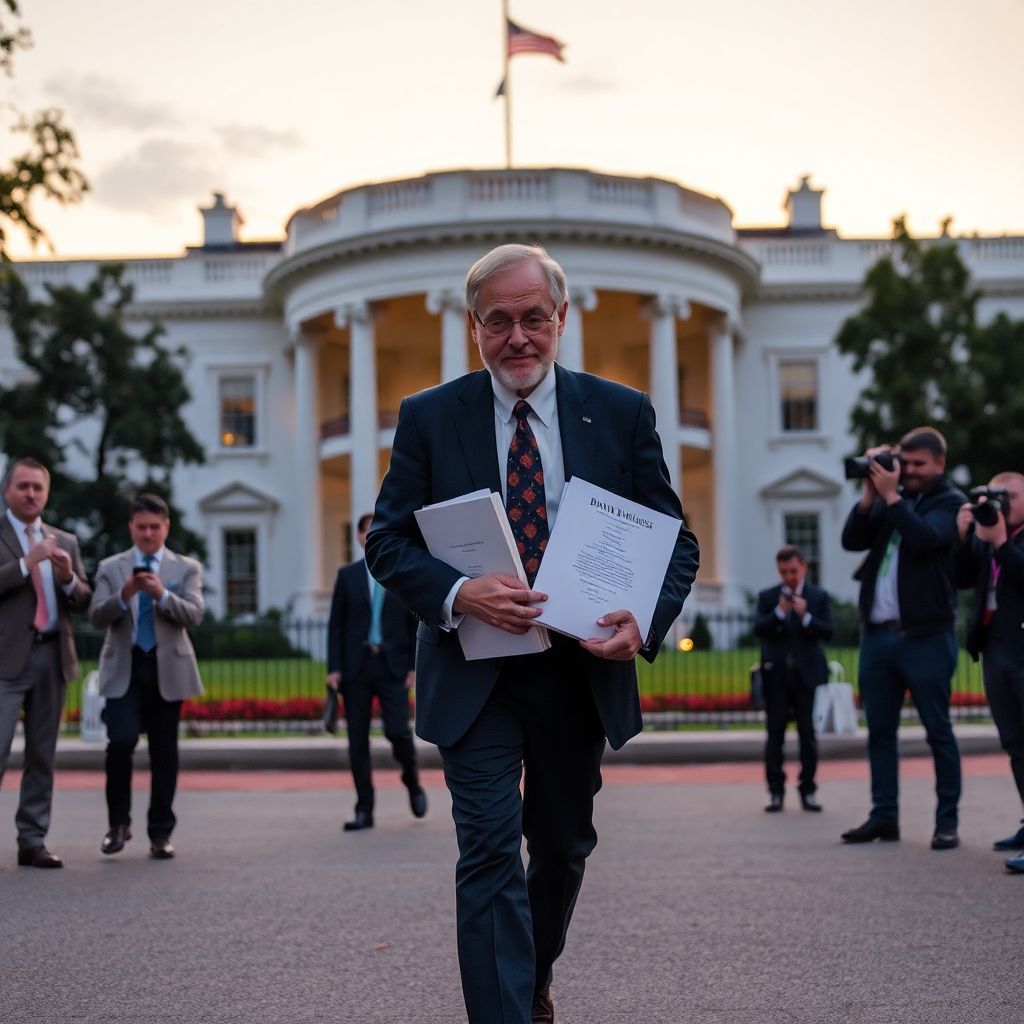
David Sacks Exits White House Crypto Post With Core Policy Battles Still Ahead
David Sacks has left his position as the White House’s de facto “AI and crypto czar,” ending a brief but influential stint that helped recalibrate how the U.S. government thinks about digital assets-while leaving the most consequential legislation still hanging in the balance.
In an interview published Thursday, Sacks explained that his service as a special government employee has concluded after he hit the 130‑day legal maximum for that status. His departure does not mean a full break with the administration: he will continue to shape policy as co‑chair of the President’s Council of Advisors on Science and Technology (PCAST), a powerful advisory body that informs the White House on a wide range of technology issues, from AI and semiconductors to cybersecurity and, indirectly, digital finance.
A Short Tenure With Outsized Influence
Despite the relatively short duration of his formal White House role, Sacks became a key architect of the Trump administration’s evolving crypto agenda. He was widely seen as one of the main internal advocates for bringing more clarity to how digital asset markets are supervised, rather than relying solely on patchwork enforcement actions and decades‑old statutes.
Within the administration, Sacks worked closely with officials across financial and technology portfolios to build a coherent policy framework. His remit spanned both artificial intelligence and crypto, reflecting the White House’s view that these two domains are converging-especially as AI increasingly powers trading, risk assessment, and compliance tools in digital asset markets.
Market Structure Legislation Still in Limbo
The centerpiece of the administration’s crypto push has been comprehensive market structure legislation designed to answer some of the sector’s most pressing questions:
– Which tokens should be treated as securities and which as commodities?
– What powers should the SEC and CFTC respectively hold over digital assets?
– How should centralized exchanges and trading platforms be supervised to protect investors while allowing innovation?
Sacks was deeply involved in the White House’s internal work on this agenda, pushing for clearer lines of regulatory responsibility and more predictable rules for companies operating in the space. Yet, as he steps away from his formal crypto role, those bills remain stuck in Congress, with negotiations ongoing and no final votes scheduled. The result is that one of the core pillars of the administration’s digital asset strategy is still unresolved.
Stablecoins and Payment Innovation Left Unfinished
Beyond market structure, the administration-guided in part by Sacks-also sought to advance legislation around stablecoins and other digital payment instruments. Policymakers have been grappling with how to regulate dollar‑pegged tokens that are increasingly used in global payments and trading, balancing concerns about financial stability, consumer protection, and U.S. monetary sovereignty.
Sacks pressed for a framework that would set clear standards for reserves, disclosures, and issuer oversight, while still allowing private sector innovation in dollar‑linked tokens. Here too, however, major legislative efforts remain incomplete. The outlines of a regime have been sketched, but the details that matter for banks, fintechs, and crypto firms are still being hammered out on Capitol Hill.
Continuing Role via PCAST
Although Sacks is no longer the administration’s point person on AI and crypto regulation, his influence is unlikely to vanish. As co‑chair of PCAST, he will continue advising the President on a broad technology portfolio, and that inevitably includes the digital infrastructure upon which modern finance runs.
Through PCAST, Sacks can still shape how the White House thinks about the intersection of AI, data, and financial systems-issues that underpin everything from algorithmic trading to fraud detection in crypto markets. His vantage point shifts from day‑to‑day regulatory strategy to long‑term technology planning, but his voice will remain present in internal debates about how the U.S. should position itself in the global race for leadership in both AI and digital assets.
What His Departure Means for Crypto Policy
Sacks’ exit from the specialized crypto role comes at a delicate moment for the industry. The U.S. is in the midst of deciding whether to pursue a rules‑based, innovation‑friendly approach or double down on regulation‑by‑enforcement and fragmented oversight. With core bills not yet passed, the direction is still uncertain.
His absence may matter in several ways:
– Loss of a coordinating figure: Sacks often acted as a bridge between tech‑savvy industry voices and more traditional financial regulators. Without him, there is a risk of less cohesion across agencies.
– Potential shift in tone: Future advisors may be more cautious or more hawkish toward crypto, depending on their background and political calculations. That could slow or reshape ongoing legislative efforts.
– Greater reliance on agencies: With Congress deadlocked on some digital asset issues, regulators like the SEC, CFTC, and banking agencies may retain broad discretion-something many in the industry view as problematic without updated statutes.
The Broader AI-Crypto Nexus He Helped Highlight
One of the less visible, but strategically important contributions of Sacks’ tenure was to position AI and crypto within a single policy conversation. The administration began to treat these as overlapping technologies that both:
– Reshape how data, value, and risk move across networks
– Challenge legacy regulatory frameworks
– Raise questions about national competitiveness and security
Under Sacks, the White House increasingly acknowledged that AI tools are already intertwined with crypto markets: bots manage liquidity on decentralized exchanges, machine learning models detect suspicious transactions, and AI‑driven analytics power compliance systems. This framing is likely to endure, even after his departure, because it reflects how these technologies operate in practice.
Why Crypto Legislation Is So Hard to Finish
The fact that major crypto bills remain unresolved is not solely a reflection on Sacks or the administration. The underlying policy questions are genuinely difficult and politically charged:
– Jurisdictional turf wars: Agencies are reluctant to cede authority, and Congress must decide how to divide oversight without undermining market integrity.
– Consumer and investor risk: High‑profile failures and frauds have made lawmakers wary of appearing too friendly to the industry.
– Global competitiveness: At the same time, there is concern that overly restrictive or unclear rules will push innovation and capital to other jurisdictions.
– Partisan dynamics: Crypto has become entangled with broader partisan debates about regulation, financial privacy, and the role of the state in innovation.
Sacks’ role was to help navigate these cross‑currents from the White House side, but the final outcome still depends on congressional negotiations that can extend far beyond any one advisor’s tenure.
What to Watch Next for U.S. Crypto Rules
With Sacks moving into a broader advisory position, several key developments will determine the future of U.S. crypto policy:
1. Progress on market structure bills: Whether Congress can agree on clear definitions for digital asset categories and a division of responsibilities between the SEC and CFTC.
2. Stablecoin framework: Whether lawmakers can finalize standards for reserve quality, issuer licensing, and the role of banks versus non‑bank entities.
3. Agency rulemaking and enforcement: Even without new laws, regulators can issue guidance and pursue cases that effectively shape the industry’s operating environment.
4. International coordination: The U.S. response to regulatory regimes emerging in Europe and Asia will signal how seriously it intends to compete as a hub for digital asset innovation.
The groundwork Sacks helped lay inside the White House will influence how these questions are answered, but the decisive moves will now come from legislators and agency heads.
Implications for Industry, Investors, and Developers
For crypto firms and builders, Sacks’ departure underscores the need to plan for regulatory uncertainty as a baseline condition, not an exception. Companies will likely continue to:
– Seek multi‑jurisdictional strategies, balancing U.S. presence with operations in clearer regulatory environments.
– Invest heavily in compliance and legal infrastructure, anticipating evolving rules.
– Engage more directly with policymakers and regulators to ensure their perspectives are considered in forthcoming frameworks.
Investors, meanwhile, should recognize that U.S. regulatory clarity remains a work in progress. Policy direction can materially affect valuations, access to banking services, and the feasibility of new products. The fact that market structure and stablecoin legislation are still unresolved means that regulatory risk is not yet fully priced into many projects or business models.
A Transition, Not an Endpoint
David Sacks’ exit from his formal crypto role marks the end of a concentrated phase of White House engagement with digital assets under his guidance, but not the end of federal involvement in the sector. The unresolved status of key bills guarantees that crypto will remain a live political and policy issue.
From his new vantage point at PCAST, Sacks will continue to influence the conversation about how emerging technologies-AI included-reshape the financial system. The central question now is whether Congress and regulators can turn the conceptual frameworks that took shape during his tenure into durable law and regulation, or whether the U.S. will remain in a prolonged holding pattern as other countries move faster to define the rules of the digital asset era.