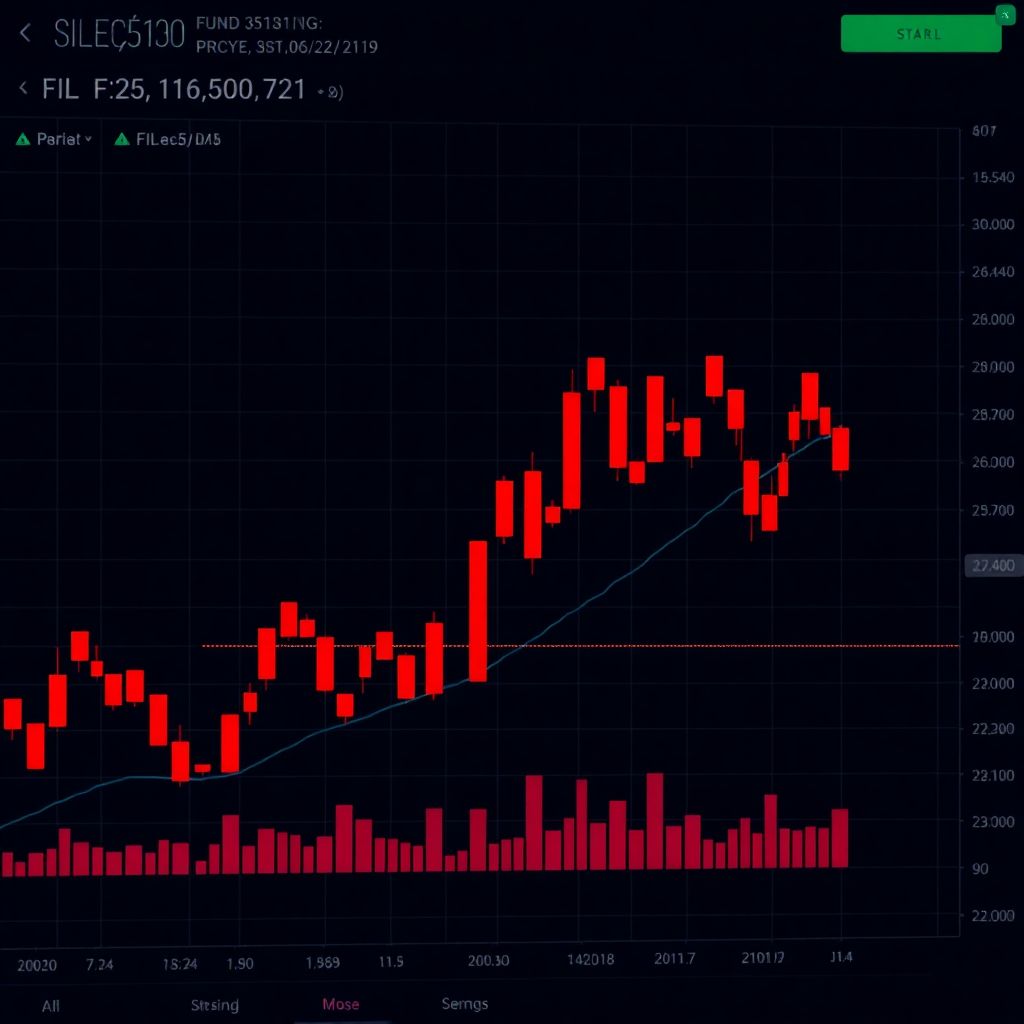
Filecoin sinks as $26M floods into shorts: Are FIL bears tightening their grip?
Filecoin’s [FIL] price has come under sharp pressure, sliding roughly 9.5% over the last 24 hours at the time of writing. The move does not appear to be driven by any sudden shift in project fundamentals or major network news. Instead, the selling seems closely tied to aggressive speculative positioning in the derivatives market.
A rare pattern: price drop with rising capital inflows
What stands out in this move is not just the extent of the decline, but how traders are positioning around it. In most corrections, capital tends to flee perpetual futures as traders rush to close positions and de‑risk. This time, the opposite happened.
Data shows that FIL’s perpetual futures market actually attracted fresh money despite the falling price. Around $26.45 million flowed into perpetual contracts, lifting total open interest (OI) to approximately $138.56 million. That means more capital is now actively betting on FIL’s future direction, even as the token trades lower.
This pattern is relatively uncommon. In a typical risk‑off phase, you’d expect open interest to shrink as both longs and shorts exit positions. Here, open interest is expanding, which strongly suggests traders are not merely closing old positions but opening new ones – and the funding data makes clear which side they’re choosing.
Funding rate turns deeply negative
The OI‑Weighted Funding Rate – a key gauge of sentiment in perpetual markets – has plunged to around -0.0691%. Funding represents the periodic fee paid between long and short traders to keep perpetual contracts in line with spot prices. Deeply negative funding means short sellers are paying a premium to maintain their bets, and yet are still willing to do so.
Such a pronounced negative reading typically indicates that the bulk of new capital is being deployed into short positions. In other words, traders are not just hedging; they are actively positioning for further downside, expecting that FIL has more room to fall.
The combination of rising open interest and negative funding paints a picture of a market where bearish conviction is strengthening rather than fading.
Technical picture: broken support and momentum flip
Price action on the chart echoes the pessimistic signal from derivatives.
FIL has now slipped below a key horizontal support zone that the market had defended multiple times in February. This level, which price failed to break down on four separate attempts earlier in the month, has now been convincingly breached. When a support that has held several times finally gives way, it often flips into resistance, making any recovery attempts more difficult.
The Moving Average Convergence Divergence (MACD) indicator has also turned decisively negative. A “death cross” has formed, where the MACD’s orange signal line has crossed below the blue MACD line. This crossover is widely interpreted as confirmation that bearish momentum is overtaking bullish forces and that downside pressure is building.
Bull Bear Power confirms sellers’ dominance
Additional confirmation comes from the Bull Bear Power (BBP) indicator, which measures the balance between buying and selling pressure using bar formations on the chart. Green bars point to bullish control, while red bars highlight dominance by bears.
Currently, the BBP is printing a deep, intense red bar, underscoring that sellers are firmly in charge. Such strong negative readings indicate that bears are not merely reacting to short‑term noise, but are actively pushing the price lower, reinforcing the broader bearish setup.
Spot market adds fuel to the downside
The spot market, which can sometimes provide a stabilizing counterweight when derivatives become overheated, is offering little relief.
Recent flows show that spot traders have been offloading FIL even before the latest phase of the decline accelerated. Over the last 72 hours, more than $4.22 million worth of FIL has exited exchanges. In practice, this pattern often reflects selling pressure: assets leaving exchanges frequently do so after being sold or in preparation for sale elsewhere, especially when aligned with falling prices.
When spot holders choose to sell into weakness instead of buying the dip, it usually signals that short‑term confidence in the asset is low. This behavior can deepen and prolong a downtrend, as it removes one of the main potential sources of support – contrarian buyers stepping in at lower prices.
If this selling trend persists, the probability of a continued or extended decline increases, potentially pressing FIL into a more prolonged bearish phase.
—
What does $26M in new shorts really mean for FIL?
The influx of $26 million into perpetual contracts, with funding deeply negative, is more than just a curiosity – it shapes the risk profile for both bulls and bears.
For short sellers, an overcrowded short trade can become a double‑edged sword. On one hand, it reflects strong conviction that prices will drop further. On the other, it increases the risk of a sharp short squeeze should the market turn higher unexpectedly. If FIL were to bounce on positive sentiment or a broader market rally, heavily leveraged shorts could be forced to close in a hurry, driving a fast, counter‑trend spike.
For bulls, the current setup is challenging. Betting against a dominant bearish trend with negative funding and broken support levels means fighting both momentum and positioning. However, some contrarian traders might view these extreme readings as a sign that bearish sentiment is becoming crowded, laying the groundwork for a future relief rally once selling exhausts.
In the short term, though, the data still leans in favor of the bears: the trend is down, shorts are in control of the derivatives market, and spot investors are not stepping in aggressively to absorb supply.
—
Key scenarios traders should watch
From here, several paths are plausible:
1. Continuation of the downtrend
If spot selling accelerates and funding remains negative with rising open interest, FIL could see further declines. In this scenario, support levels below the current price become critical. Bears remain in full control, and any bounces are likely to be sold into.
2. Sideways consolidation under broken support
FIL might enter a consolidation phase below the formerly defended February support. Price could move sideways as shorts and late sellers take profits while new participants hesitate. In such a range, indicators like BBP and funding may gradually normalize.
3. Short squeeze and sharp rebound
If negative sentiment becomes too extreme, even a modest positive catalyst – such as an improvement in broader market conditions or a sudden spike in volume – could force shorts to cover. This would lead to a rapid upside move, especially if open interest is still elevated.
Monitoring changes in funding rates, open interest, and spot flows will be crucial for identifying which of these paths is unfolding.
—
How this aligns with broader crypto market behavior
The pattern seen in FIL is consistent with how many altcoins behave during periods of heightened risk aversion or localized speculation. Traders often use perpetual futures to express short‑term directional views with leverage, while spot investors adjust positions more slowly.
In many past market cycles, spikes in short positioning appeared close to local lows, preceding at least temporary relief rallies. However, they have also coincided with the early stages of deeper downtrends when fundamental interest in the asset is fading. Distinguishing between these two contexts requires looking beyond a single day’s data to broader liquidity trends, development activity, and macro sentiment.
For now, the current picture is dominated by technical and positioning factors rather than a dramatic shift in Filecoin’s underlying narrative. Nonetheless, persistent technical weakness can shape perception and deter new capital from entering the ecosystem.
—
What this means for existing FIL holders
For current holders, the present environment is defined by three main forces:
– Bearish technicals: Broken support, a MACD death cross, and a strongly negative BBP all argue for caution.
– Aggressive short‑side speculation: Negative funding and rising open interest show that many traders are actively betting on more downside.
– Weak spot demand: Spot outflows and selling into weakness imply that there is limited willingness to buy the dip at current levels.
Long‑term holders may choose to look past short‑term volatility and focus on fundamental metrics and use‑case development. However, those with shorter timeframes often reassess risk exposure when multiple indicators align in a bearish direction.
—
Risk management considerations in a bear‑tilted market
In conditions like these, risk management tends to matter more than precise predictions about where the bottom might be. Traders typically pay attention to:
– Leverage levels: In a market dominated by shorts, high leverage can magnify losses quickly if a sudden reversal occurs.
– Stop‑loss and take‑profit planning: Defining clear invalidation points and profit targets helps reduce emotional decision‑making in volatile swings.
– Position sizing: Keeping individual positions small relative to overall capital can prevent a single move from derailing an entire portfolio.
– Time horizon alignment: Matching strategy (short‑term trading vs. long‑term holding) with personal risk tolerance and conviction in the asset.
Such practices do not change the direction of the market, but they can significantly alter how individual participants experience volatility.
—
Could sentiment flip from bearish to neutral?
To shift from clearly bearish to at least neutral, several developments would likely need to occur:
– FIL reclaims and holds above the broken February support zone, turning it back into a reliable floor.
– MACD begins to flatten or form a bullish crossover, indicating waning downside momentum.
– The BBP indicator moves away from deep red bars, pointing to a more balanced tug‑of‑war between buyers and sellers.
– Funding rates rise toward zero, signaling that aggressive short‑side pressure is easing.
– Spot flows stabilize, with reduced net selling and possibly some signs of accumulation.
Until some of these elements start to appear on the charts and in derivatives data, the default interpretation of current conditions remains bearish.
—
Bottom line: Are FIL bears in control?
Based on the latest signals, bears are indeed steering the Filecoin market for now:
– Price has fallen by around 9.5% in a single day.
– Roughly $26.45 million in new capital has flowed into perpetual futures, driving open interest up to about $138.56 million.
– The OI‑Weighted Funding Rate sits deeply in negative territory at around -0.0691%, showing heavy short positioning.
– Technicals are stacked against bulls, with broken support, a MACD death cross, and a strongly negative BBP.
– Spot traders have withdrawn and likely sold more than $4.22 million of FIL in the last 72 hours, adding to downward pressure.
Until the data starts to point otherwise, the market structure and sentiment around FIL remain skewed toward the bears, with short sellers and cautious spot participants shaping the near‑term outlook.