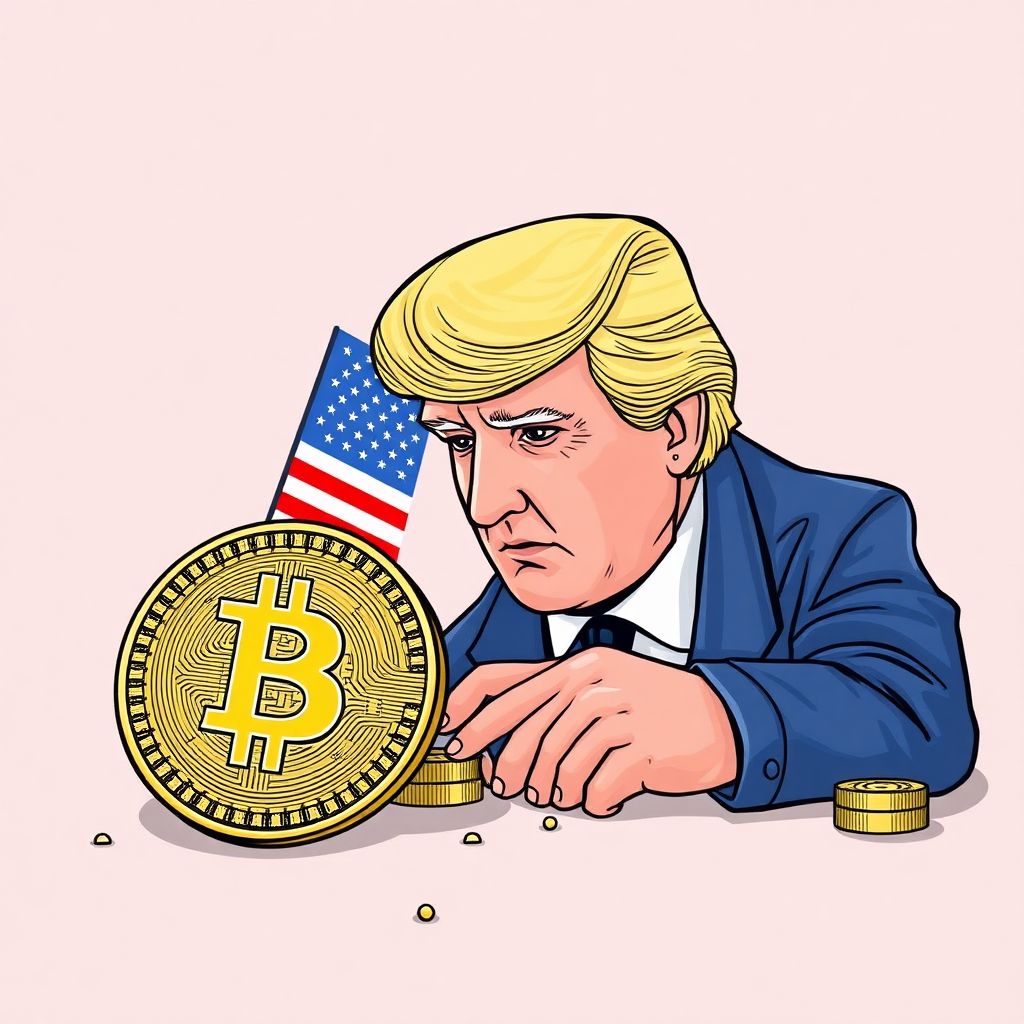
Crypto Markets Tumble Following Trump’s Tariff Announcement: Bitcoin Drops Below $117K
The cryptocurrency market experienced a sharp downturn after former President Donald Trump announced a planned “massive increase” in tariffs on Chinese imports on October 10. This aggressive rhetoric reignited fears of a renewed trade war between the United States and China, sending shockwaves across both traditional and digital financial markets.
The announcement came shortly after China introduced fresh restrictions on the export of rare-earth minerals—critical components for the tech and defense industries. This tit-for-tat escalation revived memories of previous trade tensions and added to the unease already present due to a partial U.S. government shutdown, now stretching into its 10th day.
Bitcoin (BTC), which had recently surged to record highs earlier that week, plummeted in a matter of hours. The cryptocurrency dipped below the $119,000 threshold and continued its decline to under $117,000. This abrupt drop mirrored broader investor anxiety and triggered a wave of selling across the digital asset space.
Ethereum (ETH), the second-largest cryptocurrency by market capitalization, also slipped, breaking through the psychological $4,000 barrier. Meanwhile, Solana (SOL) approached the critical $200 support level, raising concerns among traders about further downside risk.
The panic wasn’t limited to digital currencies. Publicly traded crypto-related firms such as Coinbase, Robinhood, and MicroStrategy saw their stock prices drop between 5% and 10% amid the broader market sell-off. These companies, which are closely tied to the performance of digital assets, bore the brunt of investor retreat in what appeared to be a synchronized risk-off movement.
U.S. equity markets also suffered significant losses in response to Trump’s comments and the deepening political impasse in Washington. The S&P 500 fell by 2.71%, the Dow Jones Industrial Average lost nearly 900 points, and the Nasdaq Composite led the decline with a 3.56% drop—its worst daily performance in weeks.
While cryptocurrencies stumbled, gold emerged as a safe haven once again. The precious metal gained over 1% on the day, underscoring its continued role as a hedge during periods of geopolitical and economic instability. In contrast, Bitcoin, often touted as “digital gold,” failed to fulfill that role amid the latest bout of market turbulence.
The ongoing government shutdown further exacerbated market uncertainty, particularly affecting the regulatory landscape for digital assets. The Securities and Exchange Commission (SEC) confirmed that due to reduced staffing levels, most approval and review processes—including those related to cryptocurrency filings—remain on hold until normal funding is restored.
This regulatory slowdown added another layer of concern to an already volatile day. Traders and investors were left grappling with a confluence of negative triggers: escalating trade tensions, political deadlock, and limited government oversight. All of these factors contributed to a broad sell-off that affected everything from equities and crypto to commodities.
Oil prices also dropped, hitting a five-month low, signaling weakening investor confidence in global economic growth. The simultaneous rise in gold and fall in oil, equities, and crypto marked a clear shift toward risk aversion across asset classes.
Beyond immediate price reactions, the current situation raises broader questions about the evolving role of crypto in global finance. Although digital assets have increasingly been positioned as alternatives to traditional financial instruments, their sensitivity to macroeconomic forces and geopolitical developments remains evident.
Institutional investors, who have steadily increased their exposure to crypto in recent years, are now reassessing the reliability of digital assets as portfolio hedges. The idea of Bitcoin as a “store of value” is being tested in real-time, particularly when it fails to rally during periods of heightened uncertainty.
At the same time, the slowdown in regulatory activity has significant implications. Several major crypto-related proposals, including applications for Bitcoin ETFs and stablecoin frameworks, are currently in limbo. The lack of clear guidance or advancement on these initiatives may hinder the industry’s momentum and delay broader adoption.
In addition to market movements, the geopolitical climate could shape the direction of crypto policy. If trade tensions between the U.S. and China persist, it’s possible that both nations will double down on developing digital currency infrastructure to reduce reliance on each other’s financial systems. China has already made substantial progress with its digital yuan, while the U.S. continues to explore central bank digital currency (CBDC) options.
For now, retail and institutional investors alike are bracing for potential further volatility. With uncertainty surrounding trade policy, fiscal governance, and regulation, the crypto market remains highly susceptible to external shocks. As such, traders are watching key support levels and macroeconomic signals closely for clues about the next move.
Looking ahead, market participants will likely focus on upcoming Federal Reserve decisions, inflation data, and future statements from political leaders. Each of these factors could either stabilize or further disrupt an already fragile market environment.
In summary, Trump’s renewed tariff threats have not only rattled traditional markets but also exposed the vulnerabilities within the crypto ecosystem. Despite its decentralized nature, the digital asset space remains deeply intertwined with global economic trends. Until regulatory clarity improves and geopolitical tensions ease, periods of heightened volatility may become the new normal for crypto investors.