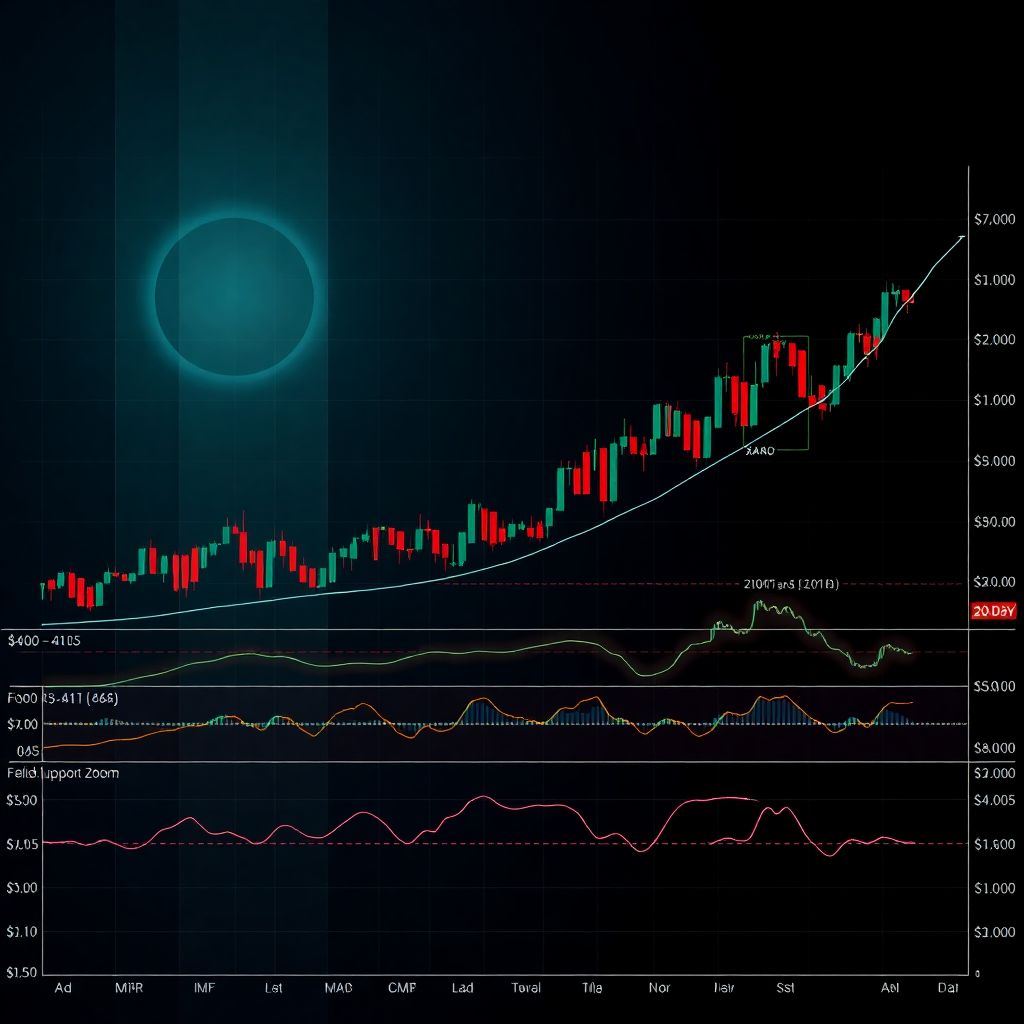
Decoding Monero’s 43% pullback: Key zones to watch for an XMR trend reversal
Monero’s latest price action has been brutal for late buyers, but it may be setting up new opportunities for patient traders. After printing a fresh all-time high near 800 dollars in mid-January on surging volume, XMR has already surrendered close to 44% of those gains. The move looks dramatic on the chart, yet the broader structure still leaves room for both bullish and bearish scenarios.
Below is a detailed look at where Monero stands now, what the key levels are, and how traders might approach the current setup.
—
From euphoric rally to sharp correction
In mid-January, Monero [XMR] exploded higher and tagged a new record high at roughly 799.89 dollars. The rally was accompanied by a noticeable spike in trading volume, a textbook signature of strong speculative interest and a so‑called “blow‑off top.”
Since that peak, XMR has dropped by about 43.8%, retracing a large part of the impulsive advance that began back in August. This entire move from August to January formed the basis for the key Fibonacci retracement levels and swing points now in focus.
Despite the magnitude of the pullback, the broader swing structure on higher timeframes has not yet been conclusively broken. On the weekly chart, the recent decline still fits the definition of a deep corrective move within a larger uptrend rather than a confirmed long‑term trend reversal.
—
XMR technical picture: Structure still intact, but under pressure
A closer inspection of the daily timeframe shows a more nuanced story. While the major swing high–low structure remains technically bullish, the internal structure has shifted to the downside.
Several indicators highlight growing selling pressure:
– The Chaikin Money Flow (CMF) has dropped below the -0.05 mark, suggesting that capital is flowing out of the asset and that selling volume is outweighing buying volume.
– The Relative Strength Index (RSI) has slipped under the neutral 50 line, signaling that momentum has tilted in favor of the bears on the daily chart.
– Price is currently trading beneath both the 20-day and 50-day moving averages, which often act as dynamic resistance in a downtrend.
Taken together, these signals point to a real possibility of further near‑term losses, even if the macro structure is not yet decisively bearish.
—
The role of Bitcoin: Headwinds for XMR bulls
Monero’s fate rarely exists in isolation. At present, Bitcoin is experiencing its own wave of selling pressure, and that weakness tends to spill over into the broader altcoin market. When Bitcoin retreats, risk appetite often dries up, and capital flows away from smaller, more volatile assets like XMR.
This correlation matters because XMR is now sitting on a major Fibonacci retracement level that is acting as support. The combination of:
– XMR testing a critical support zone, and
– Bitcoin being under pressure
creates a precarious environment for Monero bulls. If Bitcoin extends its decline, it could be the catalyst that pushes XMR through its current floor and forces a deeper correction.
—
Key levels on the downside: Where could the selloff extend?
Previous analysis suggested that Monero was likely to pull back towards the 520 dollar region as well as the 400–440 dollar zone. That projection has largely materialized, and price is now hovering above one of these significant support areas.
Two downside focus points stand out:
1. 411.5 dollars – trend confirmation level
– A decisive daily close below approximately 411.5 dollars would strongly signal that the broader trend has turned bearish.
– Such a breakdown would likely invalidate the immediate bullish thesis of revisiting or surpassing recent all‑time highs in the short to medium term.
2. 400–440 dollar support band
– This range has emerged as a key demand zone where buyers have previously shown interest.
– If the level holds, it can serve as the foundation for a new base and potentially a fresh leg higher.
– If it fails, downside acceleration becomes more likely as stop-loss orders are triggered and late buyers are forced to exit.
Traders closely watching these levels should view a clean break below 411.5 dollars as a meaningful warning sign that the market’s character has shifted.
—
Liquidity, bounces, and “magnetic” zones on the upside
Even inside a broader correction, markets rarely move in a straight line. After tapping into liquidity pockets around the 450–480 dollar band, XMR staged a bounce on the 26th of January. This reaction rally is not unusual; once sell‑side liquidity is absorbed, price often retraces to test areas where resting orders and unfilled interest lie above.
On the current XMR chart, two such “magnetic” liquidity zones stand out to the north:
– 500–510 dollars – the first overhead liquidity pocket
– 560–580 dollars – a higher zone that could attract price if momentum strengthens
These areas represent possible short‑term targets if the current bounce gains traction. They are also potential zones where sellers might re‑enter the market in force, especially if broader indicators remain bearish.
—
Bearish scenario: “Sell the bounce” playbook
Given the confluence of negative signals on the daily chart and ongoing pressure on Bitcoin, the bearish interpretation remains compelling for many short‑term traders. Under this view, the current rally is framed as a dead‑cat bounce or relief pump within a broader downtrend.
In that scenario, an aggressive strategy could look like this conceptually (not as financial advice, but as an illustration of how some might think):
– Wait for price to revisit 500–510 or 560–580 dollars
These zones align with nearby liquidity pools and former support-turned-resistance areas.
– Look for rejection signals
Candlestick patterns such as long upper wicks, bearish engulfing formations, or repeated failures to close above these zones could indicate that sellers are regaining control.
– Define risk tightly
Traders operating from the short side would typically place stops beyond the liquidity zone being traded, aiming to limit losses if price breaks higher instead of reversing.
– Target lower supports
Initial downside targets might include the 450–480 region and, in a more extended move, a retest or breakdown of the 411.5 level and the 400–440 band.
Under this framework, rallies into the magnetic zones are opportunities to offload long positions at better prices or to position for further downside, rather than signs of a sustained bullish reversal.
—
Bullish scenario: Can the uptrend still be saved?
Despite the negativity in indicators, the bullish case cannot be totally dismissed yet. The key argument for the bulls is structural: the major upswing from August to January has not been fully invalidated, and XMR is currently reacting around historically important support.
A constructive bullish scenario would likely require:
– A firm defense of the 400–440 dollar zone
If buyers continue to step in here and prevent a close below 411.5 dollars, this area could evolve into a long‑term accumulation base.
– A reclaim of the 20-day and 50-day moving averages
Sustained closes back above these averages would point to improving momentum and weakening bearish control.
– A break and hold above 560–580 dollars
This is the more aggressive bullish trigger. If price can not only tag this higher liquidity pool but also consolidate above it, the narrative would shift back towards a possible retest of the all‑time high area.
– Supportive macro environment
A stabilization or recovery in Bitcoin would make it considerably easier for XMR to mount a credible trend resumption.
Until these conditions are met, the bullish case remains speculative and requires confirmation.
—
How traders might navigate the current XMR landscape
The present environment around Monero is one that tends to punish indecision and over‑leverage. Traders considering exposure often focus on a few practical principles:
1. Timeframe clarity
– Short‑term traders might lean bearish while longer‑term holders still view the move as a buy‑the‑dip opportunity.
– Confusing these horizons can lead to poor decisions, such as turning short‑term trades into involuntary long‑term bags.
2. Level‑based planning
– Clearly defined zones – 400–440, 411.5, 500–510, and 560–580 – can help structure entries, exits, and invalidation points.
– Reacting to price action at these levels, rather than guessing in the middle of ranges, can improve discipline.
3. Confirmation over prediction
– Waiting for either a breakdown below 411.5 or a convincing reclaim of resistance zones reduces the need to guess the exact bottom or top.
– Allowing the market to “show its hand” can help avoid emotional trades driven by fear or euphoria.
4. Risk management first
– Given the volatility of privacy coins and the speed of recent moves, position sizing and stop placement are often more important than direction alone.
—
Additional factors to monitor beyond the chart
Pure technical analysis captures price behavior, but several broader elements can influence XMR’s path:
– Regulatory sentiment toward privacy coins
Shifts in regulatory tone, especially around privacy-focused crypto assets, can quickly change investor appetite for Monero. Tighter scrutiny can weigh on price, while a calmer environment may allow fundamentals and adoption narratives to regain traction.
– Market rotation within altcoins
Capital frequently rotates between sectors – DeFi, layer-1s, memecoins, privacy coins, and so on. If attention rotates back toward privacy narratives, XMR could benefit even while the broader market moves sideways.
– On-chain and usage trends
Increases in transactional activity, network utility, or merchant adoption can provide a longer‑term floor for valuation, even if short‑term price action is choppy.
– Macro risk sentiment
Global risk appetite, interest rates, and liquidity conditions affect the cryptocurrency market as a whole. In risk‑off environments, speculative assets tend to face stronger headwinds.
—
What to watch next: Decision points for XMR
Over the coming sessions and weeks, Monero is likely to revolve around a small set of pivotal decisions:
– Does 400–440 dollars hold or break?
A sustained hold keeps the door open for a medium‑term recovery. A break accelerates the bearish thesis.
– Is the current bounce just a relief rally?
Price behavior at 500–510 and 560–580 dollars will be telling. Strong rejection there suggests that sellers still dominate. A clean reclaim would hint at shifting momentum.
– Do momentum indicators start to recover?
A CMF move back into positive territory and an RSI reclaiming above 50 would signal improving conditions for bulls.
Until these questions are resolved, XMR remains in a transitional phase – not yet a confirmed top with an established downtrend, but no longer in the clear, parabolic advance that carried it to 799.89 dollars.
—
Bottom line
Monero has experienced a deep, roughly 43% retracement from its all‑time high, but the evidence does not yet conclusively prove that the entire multi‑month rally is over. XMR is balancing on key support levels while internal structure and indicators lean bearish.
Two primary zones deserve close attention:
– 411.5 dollars and the 400–440 support band – a breakdown here would strongly favor a longer‑term bearish outlook.
– 500–510 and 560–580 dollars – overhead liquidity “magnets” where the current bounce may exhaust itself or, if reclaimed, signal the beginning of a more durable reversal.
For now, Monero sits at an inflection point. Whether it evolves into a deeper downtrend or stages a surprising recovery will likely depend on how price behaves around these decisive zones – and on the broader mood of the crypto market.
—
The information above is informational in nature and reflects analysis and opinion, not financial, investment, or trading advice. Cryptocurrencies are highly volatile and risky assets. Each reader should independently evaluate their financial situation, risk tolerance, and conduct thorough research before making any investment or trading decisions.