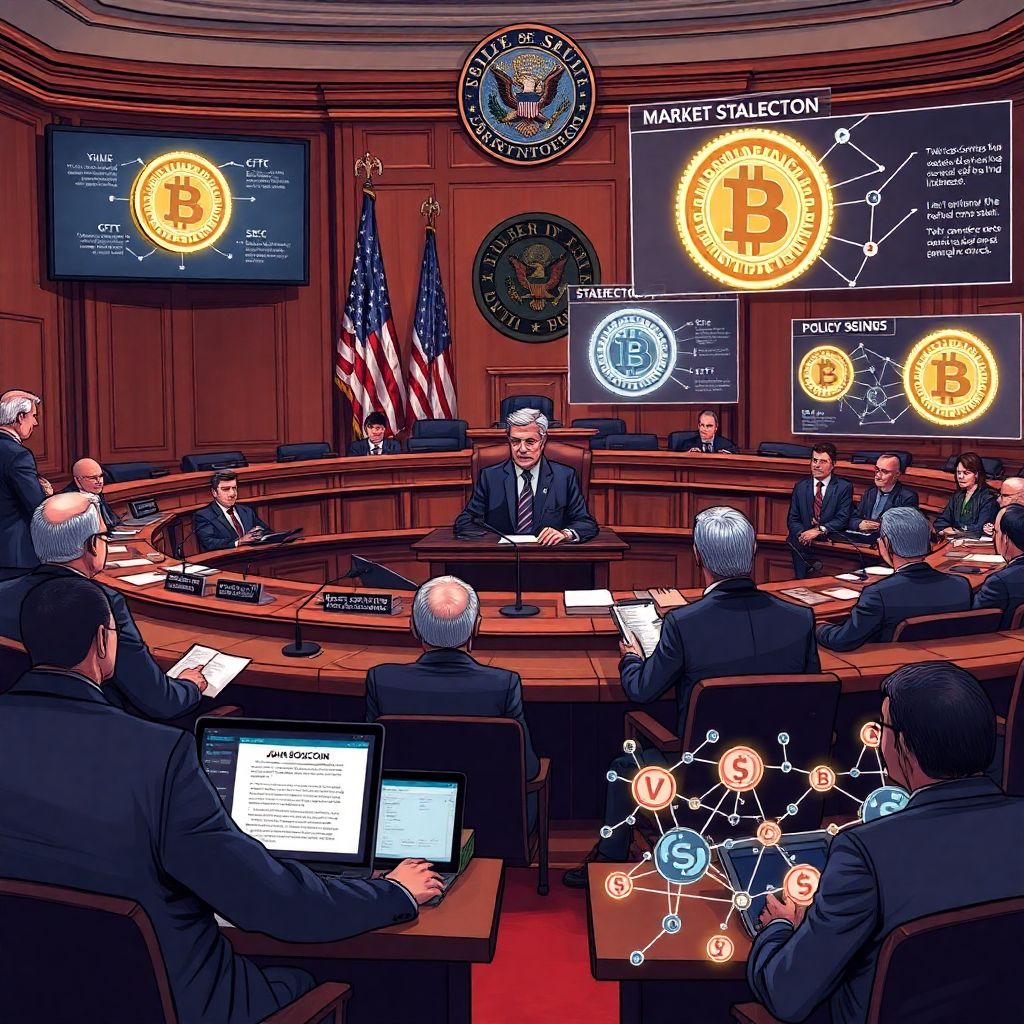
Markup of Senate Crypto Market Structure Bill Delayed to Late January Amid Stablecoin Disputes
The Senate’s effort to craft a comprehensive regulatory framework for digital asset markets has hit another pause button. The Senate Committee on Agriculture, Nutrition, and Forestry has postponed a planned markup of a wide‑ranging crypto market structure bill to the final week of January, pushing back a closely watched step in Washington’s attempt to bring clarity to the industry.
Committee Chair John Boozman (R‑AR) said bipartisan negotiations made meaningful progress over the preceding weekend but not enough to finalize the package. The decision to delay, he stressed, was aimed at securing the kind of broad, cross‑party backing needed for a bill this consequential to have any realistic path through Congress.
In a statement issued Monday, Boozman explained that the postponement would give lawmakers time to iron out remaining policy disputes rather than rush a divided product to a vote. The goal, he suggested, is to emerge from the markup with a bill that both parties can credibly support, reducing the risk that it stalls later on the Senate floor.
At the center of the remaining disagreements are the rules for stablecoins—particularly how yield and interest‑bearing features should be treated—and how the legislation will approach decentralized finance (DeFi). These two issues have repeatedly emerged as fault lines in digital asset debates, reflecting broader concerns about investor protection, systemic risk, and the appropriate roles of different U.S. regulators.
Stablecoins, which are typically pegged to the U.S. dollar or other assets, have become a critical piece of the crypto trading and payments infrastructure. But as issuers increasingly experiment with yield‑generating products—such as interest on stablecoin balances or structured products promising returns—lawmakers are divided on whether these offerings should be regulated like bank deposits, securities, or something else entirely. The contours of that decision will have major consequences for how stablecoin providers design their products and where consumers can legally access them.
DeFi represents a different but equally thorny challenge. Provisions that determine how decentralized protocols, automated market makers, and on‑chain lending platforms are categorized could decide whether they fall under the purview of traditional financial rules or receive a more tailored regime. Industry groups have repeatedly warned that overly rigid classifications could drive innovation offshore, while skeptics argue that leaving DeFi largely unregulated invites a repeat of past crises under a new label.
The bill under consideration would help define the “market structure” for crypto in the United States—essentially, who regulates what and under which rules. While the specific language remains in flux, legislators have been working on questions such as which digital assets are commodities overseen by the Commodity Futures Trading Commission and which might be considered securities regulated by the Securities and Exchange Commission. The Agriculture Committee’s involvement underscores the central role of the CFTC, which the panel formally oversees.
By postponing the markup, the committee leaves numerous stakeholders—including exchanges, stablecoin issuers, custodians, and DeFi developers—waiting to see which version of the bill moves ahead. Many in the industry have signaled conditional support for a clear federal framework, but that support hinges on how the final text treats key issues such as stablecoin reserves, capital requirements, disclosure obligations, and the degree of flexibility for new token models.
The timing of the delay also matters politically. Pushing the markup to the last week of January compresses the legislative calendar for 2026 and raises questions about how much bandwidth Congress will have to complete negotiations, pass the bill through committee, move it to the Senate floor, and reconcile any differences with parallel efforts in the House. Every slip in schedule increases the risk that the bill gets caught up in broader partisan fights or overshadowed by other priorities.
Still, Boozman’s comments suggest that negotiations are active rather than stalled. Bipartisan engagement over the weekend indicates that both Republicans and Democrats see value in a negotiated settlement rather than allowing the status quo—piecemeal enforcement and overlapping regulatory claims—to continue. For many lawmakers, the alternative to legislation is a continued patchwork of agency guidance and court decisions that neither the industry nor regulators find satisfactory.
The demand for “broad support” is more than a talking point. Crypto legislation that passes on a narrow, party‑line vote is vulnerable to reversal when political winds shift, and would likely face difficulty clearing both chambers. A bipartisan bill, by contrast, stands a far better chance of surviving changes in administration and providing the long‑term stability markets say they need to plan investments and build infrastructure.
In policy terms, the unresolved debate over stablecoin yield is about more than just interest rates. It goes to the core question of whether stablecoins should function more like bank‑style deposits, money market funds, tokenized cash equivalents, or a completely new category of instrument. Each option implies different rules for reserve assets, disclosures, redemption guarantees, and who is allowed to issue or distribute such products. Getting that classification wrong could either stifle innovation or expose consumers to unacceptable risks.
The DeFi discussion is similarly foundational. If the bill treats developers and protocol participants as traditional intermediaries, they could be subject to registration, compliance programs, and liability regimes that many argue do not fit trustless or open‑source systems. If, on the other hand, DeFi is carved out too broadly, regulators worry about creating parallel shadow markets with limited oversight. Lawmakers are grappling with how to thread this needle—perhaps with thresholds based on decentralization, governance structures, or control over user funds.
For market participants, the delay presents both uncertainty and opportunity. On one hand, firms must continue operating in a gray zone where multiple regulators may assert jurisdiction, and where enforcement actions can redefine boundaries overnight. On the other hand, the extra time gives industry, consumer advocates, academics, and technical experts one more window to provide feedback, propose compromise language, and clarify how specific provisions would play out in practice.
The committee’s eventual markup in late January will be closely scrutinized as a barometer of how serious the Senate is about delivering a comprehensive framework rather than a symbolic gesture. Observers will be watching whether the bill:
– Clearly delineates authority between major regulators
– Offers workable compliance paths for stablecoin issuers
– Addresses DeFi without effectively banning open protocols
– Incorporates meaningful consumer protections and transparency requirements
– Provides transitional rules for existing projects and platforms
If the resulting text manages to balance these competing demands, it could form the foundation of the first durable, federal‑level crypto market structure law in the United States. If not, the bill may emerge weakened, leaving many fundamental questions unresolved and pushing critical decisions back to regulators and courts.
For now, the outcome of the bipartisan talks remains uncertain. What is clear is that the stakes of the delayed markup extend well beyond a single committee hearing: the eventual choices on stablecoins, DeFi, and regulatory jurisdiction will help determine whether the U.S. becomes a leader in digital asset regulation or continues to cede ground to jurisdictions moving faster with clearer rules.