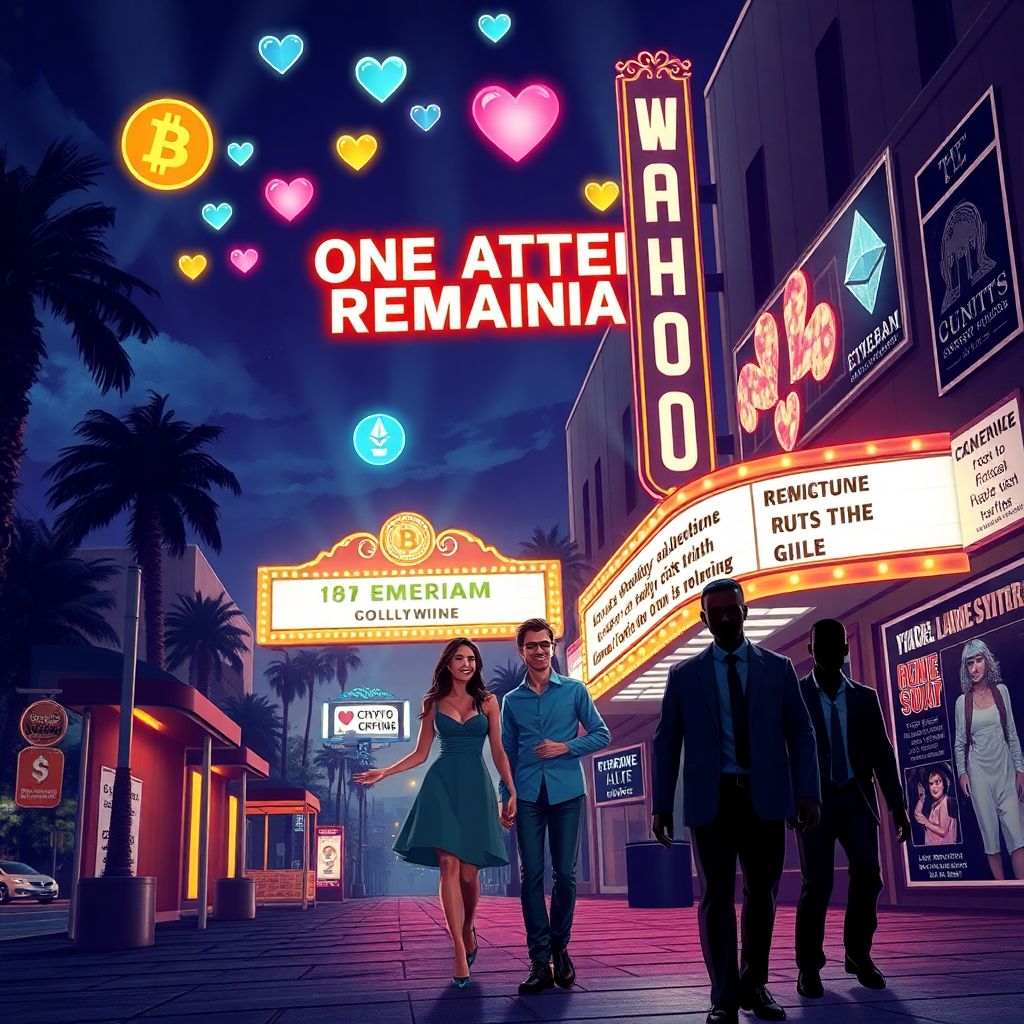
Crypto Finally Hits the Big Screen: Why Hollywood Took So Long to Notice
Earlier this month, Netflix quietly confirmed production on “One Attempt Remaining,” a romantic comedy built around cryptocurrency. For an industry that’s reshaped finance, art, and online culture, its arrival as the centerpiece of a mainstream studio movie feels oddly late.
For over a decade, crypto’s film presence has been scattered and marginal: low-budget thrillers, direct-to-video crime flicks, background gags in sci‑fi, or quick throwaway lines meant to signal “the future.” Now that a major platform is centering an entire rom-com on digital assets, it’s worth asking: why did it take this long, and what exactly has been holding Hollywood back?
Crypto on Screen: Still Treated as a Fringe Curiosity
Cutter Hoderine, director of the indie crypto heist thriller “Cold Wallet,” notes that cinematic portrayals have barely kept up with reality. On screen, crypto is often framed as something shady or niche; off screen, it’s embedded in central bank debates and Wall Street portfolios.
“In movies, it still comes across as fringe,” he observes, even as U.S. regulators, politicians, and institutional investors treat digital currencies as a serious macro factor. Bitcoin, for instance, is now watched almost like a tech-weighted market barometer, the way blue-chip indices once were—yet films still act as if it’s only for hackers and weirdos.
A Familiar Pattern: Just Like the Early Internet
Leo Matchett, CEO of the Web3-focused film fund Decentralized Pictures, argues that this lag is nothing new. He compares today’s crypto moment to the early internet era in movies.
Look back at mainstream films from the late 1990s and early 2000s: even as people were starting to email, browse, and shop online, cinema often barely mentioned the web, or used it as a vague backdrop. Only once the internet had thoroughly infiltrated daily life did we start seeing fully-fledged “net movies”: hacker thrillers, online romance stories, and social media dramas.
Crypto, Matchett suggests, is following a similar cultural curve—but we’re not as far along. While millions hold digital assets, there are still relatively few widely understood, visible, day-to-day use cases comparable to email or social networks.
That creates a problem for screenwriters. Movies tend to mirror ordinary life. If most viewers don’t use crypto in any obvious way—no monthly bills paid in stablecoins, no default savings held in Bitcoin—then building a relatable story around it becomes difficult. Until it feels mundane in the real world, it’s likely to remain exotic in fiction.
Crypto as a Simple “Object of Value”
In “Cold Wallet,” crypto isn’t treated as some mystical technology or ideological revolution. It’s mostly a plot device: the thing everyone wants to steal.
Hoderine describes it as simply the means of payment in the story. Matchett adds that, structurally, it’s no different from gold bars in a heist film. Think of the Federal Reserve bullion in “Die Hard: With a Vengeance”: the bars could be replaced by almost any valuable commodity, as long as audiences grasp “this is worth a lot.”
In “Cold Wallet,” the token stash functions the same way. It’s a “device of value.” The drama revolves less around the intricacies of blockchain and more around betrayal, greed, and revenge: a crypto CEO who rug-pulled his own investors soon finds himself the target of the desperate bagholders he ruined.
Because the film targets a general audience, the team deliberately simplified the tech. Concepts like crypto wallets and seed phrases had to be explained without lectures or jargon. So they wrapped them in familiar genre language: safes, access codes, keys, and loot. Underneath, it’s a classic heist/thriller, with just enough crypto flavor to feel modern.
Crime, Scams and Shadowy Deals: The Dominant Narrative
If you only knew crypto from movies, you’d assume it exists mainly to bankroll criminal enterprises.
Recent titles reinforce that impression. In the 2019 film “Crypto” and the 2020 actioner “Money Plane,” digital assets are deeply intertwined with money laundering, gangsters, and secretive financial conspiracies. Even big-budget blockbusters lean into the stereotype: in “Mission: Impossible – Dead Reckoning,” a clandestine deal to acquire a dangerous cyberweapon is conveniently settled in cryptocurrency.
To make things worse, that scene throws in a smartphone screen that literally reads something like “Decrypting Blockchain,” telegraphing how poorly understood the tech remains in mainstream writing rooms. It’s not really about crypto—just a shorthand for “hi-tech, untraceable and dodgy.”
This isn’t unique to digital assets—cash, diamonds, offshore accounts, and Swiss banks have all played the same cinematic role—but crypto’s lack of positive counterexamples makes the stereotype feel definitive.
The “Crypto Bro” as the New Yuppie Villain
Even when no laws are being broken, crypto characters on screen are rarely sympathetic. The subculture is often portrayed as obnoxious, tasteless, or morally hollow.
In the 2023 film “The Quiet Maid,” funded in part with crypto and NFTs, the tasteless rich family—rather than the underdog protagonist—are the ones flaunting CryptoPunks on their walls and dabbling in speculative coins. Ownership of digital art and crypto becomes visual shorthand for excess, detachment, and elitism.
In recent and upcoming action movies like “The Beekeeper” (2024) and “Play Dirty” (2025), the “crypto bro” has emerged as a recognizable archetype: loud, shallow, greedy, and vaguely tech-savvy. He occupies the same narrative space 1980s movies reserved for soulless Wall Street yuppies. Crypto isn’t just shady—it’s uncool in a way that invites ridicule.
How Crypto Culture Helped Shape Its Own Bad Image
Viviane Ford, who created the web series “Crypto Castle,” is blunt: the scene bears some responsibility for how it’s perceived.
“What kind of culture invents a token named after a cartoon frog, pumps it relentlessly, and then celebrates that behavior?” she asks, referencing meme coins like Pepe. Or the trend of wrapping Lamborghinis in Doge imagery.
By leaning into absurdity, irony, and endless memes, crypto enthusiasts “memeified themselves,” Ford argues. They willingly took on the role of the internet’s favorite punchline, only to double down on that identity. The result: they ended up with “the worst version of the narrative,” one that’s easy for writers to parody and hard to humanize.
Market crashes have compounded that. The collapses of major platforms and ecosystems—such as FTX and Terra—wiped out fortunes and shattered trust. For many ordinary people, crypto now means personal financial loss, not empowerment.
In Ford’s words, “Crypto is gambling, dressed up in a sexier form.” That framing has made it simpler for filmmakers to treat it as either scam bait or a morality lesson, rather than as a transformative technology with nuanced impacts.
Why There’s So Little Crypto Product Placement
With so many exchanges, wallets, and Web3 brands fighting for attention, you might expect film and TV to be packed with subtle product placement: logos on phones, branded exchanges on screens, sponsored storylines. In reality, it’s rare.
“Cold Wallet” includes a crypto wallet as a prop, but Matchett reveals they received no backing or placement fees from any company. Another short film, “Límite,” features the privacy coin Monero as a symbol of the protagonist’s hidden potential and unexpressed talents, but that too grew out of a community funding initiative rather than a corporate marketing push.
One major reason is timing. Film production cycles are slow: from initial script to release can easily take two to five years. Crypto, by contrast, lives in violent boom-and-bust cycles.
When prices are soaring, marketing budgets flow freely, but studios are only optioning scripts or entering early development at that point. By the time a project is ready for shooting—or later, for release—the market may have plunged into a deep bear phase. Suddenly, the flashy exchange that had promised placement money is cutting staff, not writing checks.
As Matchett puts it, the industry is “feast or famine.” Crypto firms often use bull markets to accumulate reserves that must last through brutal downturns. Long-term, multi-year advertisement commitments—exactly what film productions require—clash with this survival mindset.
The Storytelling Challenge: Making Crypto Emotionally Resonant
Beyond money and image problems, there’s a deeper creative hurdle: it’s not easy to dramatize cryptography, consensus mechanisms, or tokenomics in a way that feels emotionally engaging.
Classic storytelling thrives on visible stakes and physical objects: a diamond necklace, a briefcase full of cash, a stolen painting. Crypto, by design, is intangible. It lives in ledgers, keys, and abstract numbers that don’t lend themselves to cinematic visuals.
To use crypto well in film, writers have to connect it to human concerns: trust, power, identity, freedom, or betrayal. The asset itself can be a MacGuffin, but the surrounding context—who controls it, what it represents, who’s excluded from it—has to carry the weight. That requires more research and nuance than simply typing “untraceable coin” into a script.
Most productions so far have taken the easy route: use crypto as a generic signifier for “digital illicit money” and move on. As long as that remains the norm, the audience’s understanding of crypto—and Hollywood’s understanding of its narrative potential—will stay shallow.
Where Crypto Stories Could Go Next
Despite the missteps, there is enormous untapped potential for more sophisticated crypto storytelling across genres:
– Drama: A family navigating inheritance when a parent dies without sharing seed phrases. A whistleblower hiding funds from a corrupt regime using censorship-resistant tools.
– Romance: Two people who meet through DAOs or NFT art communities, forced to navigate trust when one loses everything in a hack.
– Social commentary: Films exploring unbanked communities using stablecoins to escape hyperinflation, or gig workers paid on-chain rather than through exploitative intermediaries.
– Sci‑fi and dystopia: Worlds where central bank digital currencies coexist with forbidden privacy coins, raising questions about surveillance, autonomy, and resistance.
– Comedy: Satirical takes on token launches, influencer pump-and-dumps, or absurd NFT projects that spiral out of control.
“One Attempt Remaining,” as a romantic comedy centered on crypto, hints at this broader horizon. By embedding digital assets into a genre associated with everyday emotions—love, embarrassment, relationships—it could help normalize crypto in the public imagination, moving it out of the crime-only corner.
Rehabilitating Crypto’s Image: What Needs to Change
If the industry wants better on‑screen representation, it can’t rely solely on Hollywood to fix it. Several shifts may be necessary:
1. Less self-sabotaging spectacle
Meme coins, ostentatious car wraps, and aggressive flex culture make for funny cameos but poor ambassadors. A more grounded, responsible image might invite more nuanced characters.
2. Greater everyday visibility
As more people use crypto for remittances, savings, or payments—in visible, routine ways—screenwriters will have more organic touchpoints to draw from. The more mundane crypto becomes, the richer the possible stories.
3. Collaboration with creators
Crypto-native founders, developers, and artists can advise on scripts, consult on technical accuracy, or even co-create stories. Authentic detail helps move depictions beyond clichés like “Decrypting Blockchain.”
4. Stable, long-term marketing strategies
Companies that plan across multiple market cycles, rather than chasing short-term hype, will be better positioned to support carefully developed media projects and credible product placement.
The Role of Independent Creators and Web3-Native Productions
While big studios move cautiously, independent filmmakers and Web3-native projects are already experimenting. Series like “Crypto Castle,” crowdfunded films, and NFT-backed projects are testing alternative funding models and more authentic narratives.
These creators are closer to the technology and culture, which lets them explore subtler themes: the loneliness of remote trading, the thrill and terror of volatility, the philosophical debate over sound money vs. speculative madness. They’re also more likely to highlight diverse perspectives—women, non-Western users, and builders actually using these tools for survival rather than speculation.
If any group is going to break crypto out of the “scam or villain” trope, it’s probably this hybrid zone where film and Web3 intersect. As those projects gain traction, they may influence how larger studios approach the subject.
Hollywood’s Slow Embrace of Digital Money
Film history shows that it routinely takes years for new technologies to be portrayed with nuance. Early movies about cars, phones, computers, and social media were often awkward and sensationalized. Only once those technologies became banal did storytelling become subtle.
Crypto is still in that awkward adolescent phase: too big to ignore, too poorly understood to handle gracefully. “One Attempt Remaining” suggests that turning point is coming. The more the technology blends into everyday life—and the more storytellers treat it as a backdrop rather than a gimmick—the richer and more varied its on‑screen presence will become.
For now, crypto has finally made it to Hollywood. The question is no longer whether it will appear, but how—and whether filmmakers will move beyond villains, scams, and punchlines to explore what this new form of money really means for ordinary people.