
Why Multi-Chain Staking Is Where The Real Action Is
If you’re still staking on just one network “because it’s easier”, you’re basically running a concentrated risk fund without the upside that professionals get. Multi-chain staking is about taking the same capital, spreading it across several blockchains, and squeezing out higher, more stable *real yield* instead of chasing random APY screenshots on Twitter.
Think of it as building your own mini-crypto income desk: multiple chains, multiple protocols, diversified yield streams — and you’re the one in control of risk and reward.
—
The Core Idea: Spreading Risk, Locking In Real Yield
Multi-chain staking strategies revolve around one simple principle: don’t let one chain, one token, or one protocol decide your future PnL. You split your capital across different ecosystems, validator sets, and revenue models while tracking your *real yield* — the return adjusted for inflation, token unlocks, and actual cash flows (fees, MEV, protocol revenue).
In other words, you’re not just hunting “high APY cross chain staking opportunities”; you’re filtering them through a brutal, simple question:
“Is this reward backed by real protocol usage, or is it just emissions that will dump on me?”
When you start thinking like that, your whole approach to staking changes.
—
Real Yield Mindset: From “APY Porn” to Cash-Flow Logic
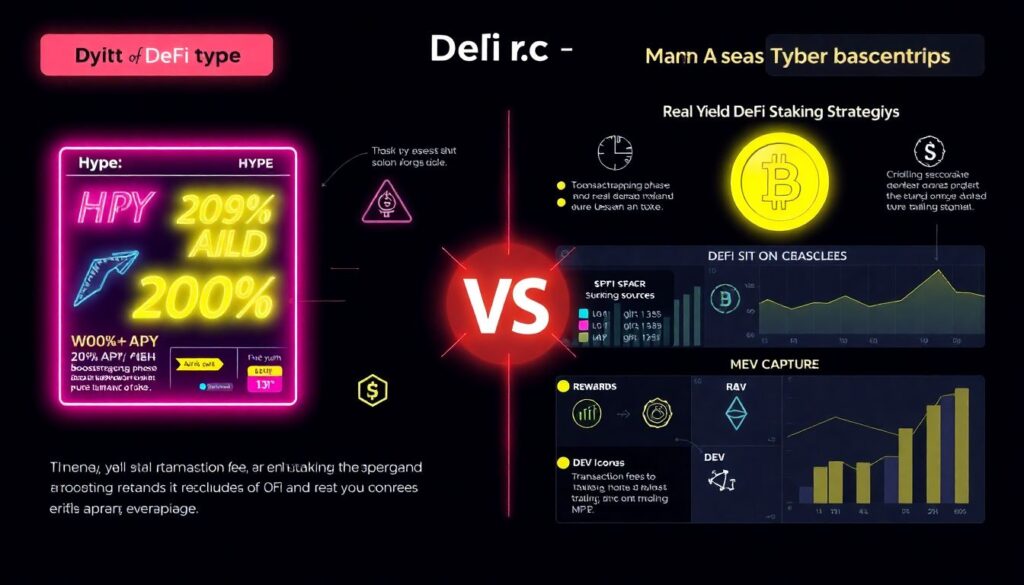
Most staking ads scream about 200%+ APY. That’s usually either:
– A bootstrapping phase that will normalize down
– Or pure inflation with no real demand for the token
Real yield DeFi staking strategies focus on rewards that come from:
– Transaction fees (L1 / L2 gas fees, DEX trading fees)
– MEV capture shared with stakers
– Protocol revenue (borrow interest, liquidations, liquid staking fees)
– Mature tokenomics where inflation is predictable and sustainable
Once you see yield as “cash flow from real users” instead of “magic farm number”, you’re already ahead of 90% of the market.
—
How to Stake Crypto on Multiple Blockchains: A Simple, Practical Workflow
You don’t need a quant desk to go multi-chain. You just need a repeatable workflow. Here’s a battle-tested approach you can actually follow.
Step 1: Decide Your Risk Buckets
Split your total stack into 3 buckets before you even pick tokens:
– Conservative (40–60%) – major L1/L2 assets (ETH, BTC L2 representation, well-established PoS chains)
– Core Growth (30–40%) – newer but credible ecosystems with real users, audited staking protocols
– Experimental (10–20%) – early-stage chains, newer real-yield farms, liquid staking derivatives on emerging networks
This structure stops you from yolo-ing into the latest narrative and calling it “strategy”.
—
Step 2: Pick Chains With Real Activity, Not Hype Only
When choosing where to stake, look past marketing and check:
– Daily active users and transactions
– Total value locked (TVL) and its trend, not just absolute number
– Fee revenue and whether some of it flows to stakers
– Ecosystem maturity: wallets, bridges, liquid staking, dev tools
If a chain has high APY but almost no users and low fee volume, that “yield” is probably just subsidized inflation.
—
Step 3: Choose Platforms, Not Just Tokens
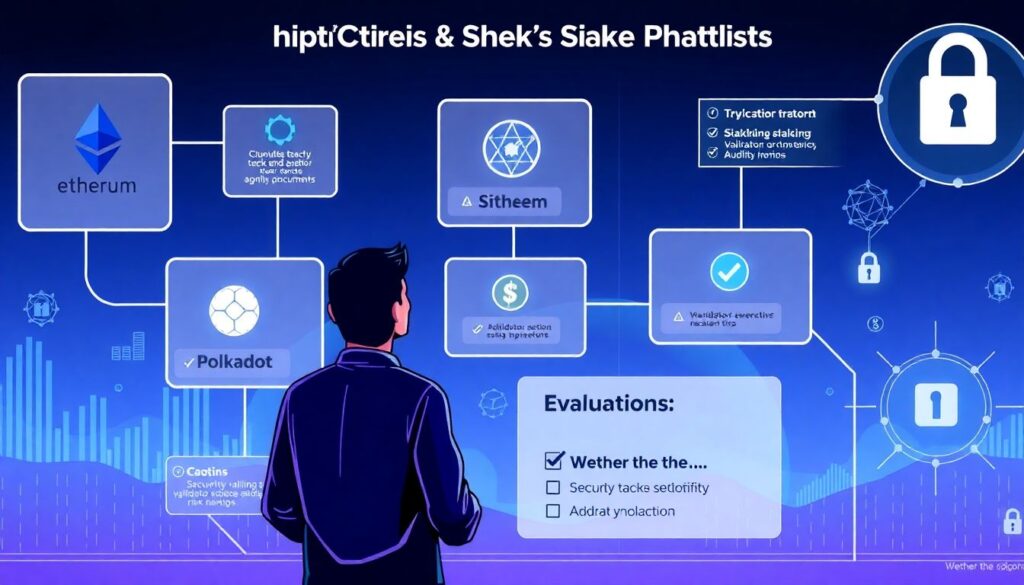
Once you know your chains, you need platforms to stake on. You’ll see constant lists of the best multi chain crypto staking platforms, but instead of just trusting rankings, evaluate each platform by:
– Security track record and audits
– How they handle slashing and validator selection
– Whether they support liquid staking tokens you can reuse elsewhere
– Cross-chain UX: single dashboard vs. fragmented interfaces
You want platforms that make multi-chain staking feel like managing one portfolio, not juggling ten wallets and five bridges.
—
Step 4: Automate What You Can, But Stay in Control
Multi-chain staking becomes overwhelming if everything is manual. You don’t need full automation, just smart shortcuts:
– Use one or two reliable multi-chain wallets
– Use dashboards that aggregate staking positions and yield
– Set calendar reminders for unlocks, restake dates, and governance votes
– Keep a simple spreadsheet or Notion page with: chain, token, platform, lock-up, APY, real yield notes
The goal is: clear mental map, low operational friction.
—
Inspiring Real-World Examples: How People Actually Do This
Let’s walk through some realistic multi-chain staking setups. These are *patterns*, not financial advice — adjust to your risk tolerance.
Example 1: The “Earn and Sleep” Setup
For someone who wants stability and low maintenance:
– 50% in ETH liquid staking across two providers on Ethereum and an L2
– 20% in a large-cap L1 (e.g., Chain A) directly staked via native validator
– 20% in a battle-tested DeFi L2 staking derivative
– 10% in a more experimental chain with strong developer traction
They don’t chase every new farm. They care about:
– Long-term alignment with blue chips
– Auto-compounding where possible
– Minimal bridge usage to reduce smart contract and bridge risk
This setup won’t 100x overnight, but it quietly compounds and survives most market cycles.
—
Example 2: The “Cross-Chain Yield Explorer”
This person is more active and wants to monetize their research:
– 30% in core blue-chip staking (ETH, main L1) for baseline stability
– 40% rotated across 2–4 emerging chains with real apps and rising fee revenue
– 20% allocated to liquid staking tokens used as collateral in conservative DeFi loops
– 10% for aggressive plays in new high apy cross chain staking opportunities with strict size limits per position
They often:
– Rebalance monthly or quarterly
– Exit if emissions change drastically or user activity drops
– Track *net* PnL including bridge fees, gas, and impermanent losses from any LP components
The edge here is not degenerate risk, it’s patience + fast reaction when the fundamentals shift.
—
Top Real Yield Staking Coins 2025: What to Look For (Framework, Not Shill)
Everyone wants a shortcut list of the top real yield staking coins 2025, but the reality is: the list changes, the framework doesn’t.
Here’s what to screen for:
– Fee-based rewards: Part of gas or protocol fees reliably goes to stakers
– Healthy inflation schedule: Emissions that trend down, not explode upward
– Strong on-chain usage: Real transactions, not just wash activity
– Ecosystem depth: DEXes, money markets, bridges, liquid staking options
In practice, you’ll usually end up with:
– 1–2 major L1/L2 assets as anchors
– 1–3 mid-cap ecosystem tokens with transparent revenue sharing
– A rotating slot for newer tokens that prove real user traction over time
Focus less on “what’s hot this week” and more on: *“Does this token have a logical reason to keep paying me for years?”*
—
Case Studies: How Successful Projects Won the Staking Game
Case 1: Liquid Staking that Became Core Infrastructure
Some liquid staking protocols started in one ecosystem, then expanded to multiple chains. Their edge:
– They solved a real pain: capital inefficiency of locked staking
– They offered secure, audited, composable liquid tokens
– They integrated quickly with lending markets and DEXes
Result: holders could stake once and then deploy the liquid staking token across multiple chains and protocols, effectively stacking yield streams while still anchored to a strong base asset. That’s multi-chain by design.
—
Case 2: A Chain That Turned Fees Into Staker Loyalty
Certain L1s and rollups saw that pure inflation-based staking wasn’t sustainable. They:
– Re-routed a chunk of protocol fees directly to stakers
– Reduced inflation over time so real yield came mainly from usage
– Marketed staking not as a “farm”, but as participation in protocol cash flow
As user adoption rose, stakers saw yields stay attractive even as nominal APY decreased — because token price and fee volume compensated. These chains proved that real yield DeFi staking strategies can beat pure emission farms in the long run.
—
Case 3: Cross-Chain Protocols That Reward Multi-Chain Participation
Some DeFi protocols now run on several chains and offer:
– Reward boosts for users who stake or provide liquidity across more than one chain
– Shared governance power that spans all deployments
– Unified dashboards to manage all positions
These projects showcase the future of multi-chain staking: not isolated positions everywhere, but an orchestrated network of yields, all tied to one protocol thesis.
—
Practical Recommendations for Developing Your Multi-Chain Strategy

Let’s convert all of this into concrete moves you can start applying.
1. Set Clear Objectives Before You Click Any “Stake” Button
Ask yourself:
– Do I want income in stable terms, or am I willing to hold native tokens through volatility?
– What’s my max acceptable drawdown on this portfolio?
– How often do I realistically want to rebalance (weekly, monthly, quarterly)?
Without these answers, you’re not strategizing — you’re browsing.
—
2. Build Your Own “No-Go” Rules
Create strict filters like:
– No more than X% of portfolio in any single chain
– No staking on unaudited protocols with admin keys controlled by one team
– No bridges without proven track record and robust security
A few tough rules upfront save you from many emotional decisions later.
—
3. Use Lists and Checkpoints
When evaluating any new opportunity, run through a short checklist:
– Where does the yield come from? (fees vs. emissions vs. ponzinomics)
– What’s my realistic exit path? (liquidity, unlocks, bridge risk)
– Worst-case scenario: how much can I lose here and can I live with it?
If you can’t answer these in under 5 minutes, you’re not ready to enter.
—
4. Rebalance Intentionally, Not Impulsively
Every 1–3 months, review:
– Allocation per chain and per token
– Changes in protocol risk (exploits, governance drama, TVL crash)
– Shifts in real yield: are fees up or down, are emissions tapering, is usage growing?
Then:
– Trim positions where risk increased without extra reward
– Add to chains/protocols where adoption and revenue clearly trend up
– Move some experimental gains into your conservative bucket to lock in progress
This is how you grow while surviving.
—
Inspiring Examples: People Who Turned Staking Into a System
You’ll often find:
– Early stakers who started small, but kept adding to multi-chain blue-chip positions every month
– Builders who stake their project’s treasury across several chains to diversify operational runway
– Power users who treat staking rewards as a monthly “crypto salary”, periodically off-ramping a portion into fiat or stablecoins
The common pattern: instead of trying to “win” in one huge bet, they built a repeatable multi-chain system and let time compound the result.
—
Where to Learn More and Level Up Your Multi-Chain Skills
You don’t have to figure everything out from scratch. Use curated resources and keep iterating.
Core Learning Resources
– Official docs and forums of major chains and staking protocols – they explain validator mechanics, reward distribution, slashing, and governance
– On-chain analytics dashboards – to track fee revenue, active addresses, TVL, and protocol health across chains
– Security-focused blogs and incident reports – to understand what went wrong in past bridge and protocol exploits
—
Practice-Oriented Tools and Communities
– Multi-chain wallet providers with support articles and video walkthroughs
– Cross-chain DeFi trackers that show all your positions in one interface
– Developer and validator communities (Discord/Telegram) where you can ask detailed technical questions and see how infrastructure-level players think
As you dig into these, you’ll also naturally discover which platforms match your needs and qualify, for you personally, as the best multi chain crypto staking platforms — not just based on marketing, but on your actual experience.
—
Closing Thought: Design Your Own Yield Machine
Multi-chain staking isn’t about chasing every shiny APY. It’s about designing a personal yield machine:
– Multiple chains
– Diverse, real-yield sources
– Structured risk buckets
– Clear rules and review cycles
You don’t need to be a whale or a dev to do this. You just need to start small, be intentional, and keep refining. Over time, your multi-chain staking strategy stops being a collection of random bets and becomes exactly what you want it to be: a robust, evolving system that spreads risk while maximizing real yield.