Avalanche’s John Nahas: Crypto’s Future Belongs to Purpose-Built Blockchains
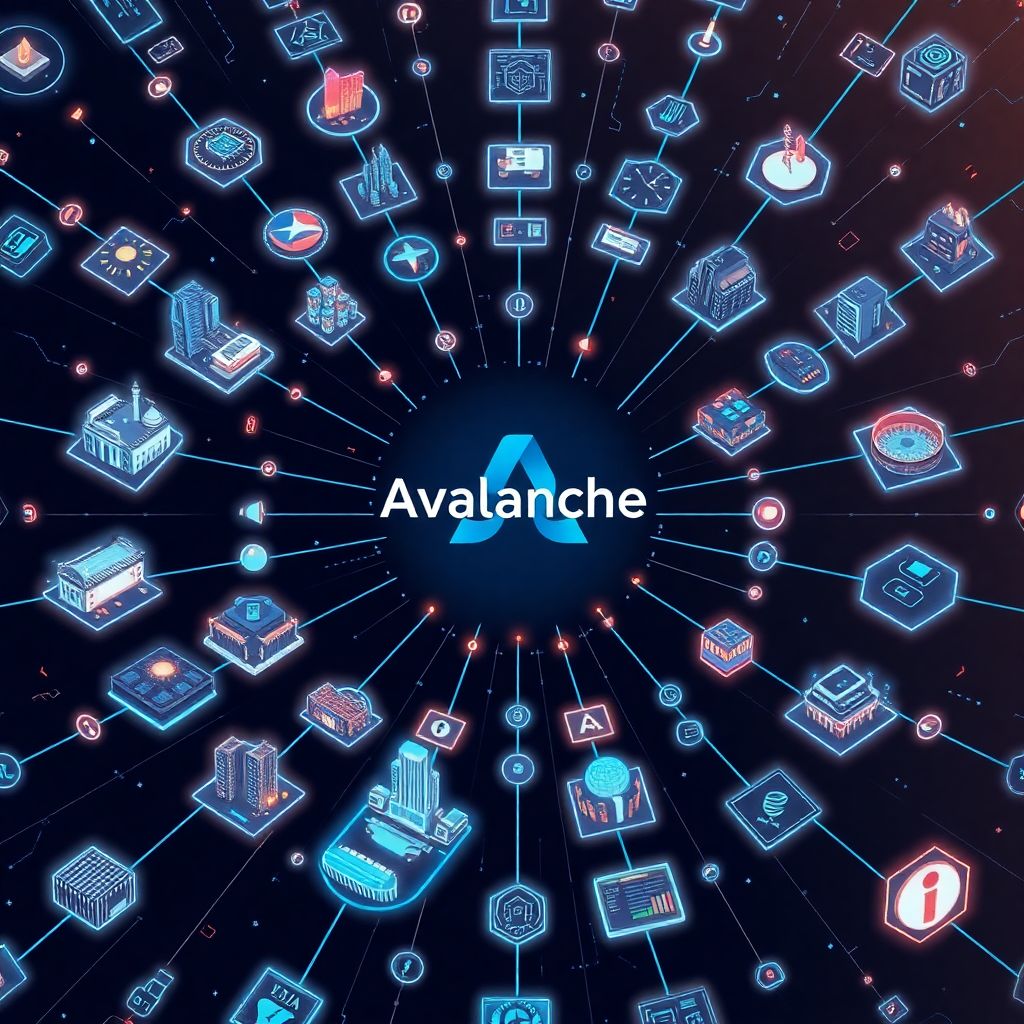
Ava Labs is heading into 2025 with a clear conviction: the next wave of blockchain adoption will be driven not by a single dominant network, but by many specialized, sovereign chains built for specific real-world needs.
John Nahas, chief business officer at Ava Labs, outlined this strategy in a recent interview, explaining why Avalanche is doubling down on purpose-built blockchains instead of chasing short-lived market narratives or social media hype cycles.
Moving Beyond Hype Cycles
Nahas contrasted Ava Labs’ long-term approach with the industry’s tendency to pivot around trending narratives that flare up and fade within a few months.
According to him, constantly reacting to the latest crypto buzz — whether it’s a new meme sector, a seasonal yield farming strategy, or a speculative narrative — leaves projects “always playing catch‑up.” In his view, meaningful infrastructure takes years to design, test, and deploy, and attempting to rebuild strategy every quarter is incompatible with serious enterprise and institutional adoption.
“Where we’ve been successful,” Nahas emphasized, “is in the medium to long term. Things that are worth doing take time.”
That philosophy underpins Avalanche’s focus on building dedicated blockchains tailored to concrete use cases rather than trying to be everything for everyone on a single monolithic network.
From One-Chain-Fits-All to a Network of Specialized Chains
Avalanche regularly appears among the top 15 cryptocurrencies by market capitalization, but its long-term thesis diverges sharply from the early industry assumption that “everything will settle on one chain.”
Nahas characterizes much of the market as still stuck in a “first‑generation business plan,” where success is defined by funneling all activity onto a single base layer. This model assumes that scale is primarily about adding more block space on one network and squeezing every application into that shared environment.
Ava Labs rejects that premise. The company believes the future lies in a constellation of sovereign layer‑1 blockchains — each purpose-built for a particular industry, workflow, or regulatory regime — that can still communicate and interoperate when needed.
“We don’t need more block space. We don’t need more blockchains,” Nahas said. “But we do need more blockchains that are purpose-built, because that’s how the real world works.”
In the physical economy, different sectors operate with their own tools, standards, and environments. Banking infrastructure does not run on the same rails as a gaming platform, and high-frequency trading systems do not share the same architecture as consumer loyalty apps. Avalanche is trying to mirror that logic on-chain.
Why Enterprises Want Their Own Chains
A central pillar of Avalanche’s strategy is catering to enterprises, financial institutions, and global brands that want control over their own blockchain environments without sacrificing interoperability or security.
“Banks want their own environment. Asset managers want their own environment. Enterprises want their own environment,” Nahas explained.
For these organizations, running on a shared public chain can raise issues around data privacy, compliance, performance, and governance. A bank managing tokenized assets, for example, may need strict access controls, auditing capabilities, and predictable transaction finality that are difficult to guarantee in a noisy, fully open public mempool.
By offering sovereign, customizable chains, Avalanche lets institutions define:
– Who can access the chain (public, private, or hybrid)
– Which validators secure it
– What rules govern its operation
– How fees, incentives, and economics are structured
Instead of forcing enterprises into a generic environment and asking them to adapt, Ava Labs positions Avalanche as a toolkit for designing infrastructure around each client’s actual business processes.
Real-World Examples: Toyota, FIFA, SMBC
Nahas highlighted several large organizations already building their own Avalanche-based environments.
– Toyota is creating four distinct Avalanche chains, each optimized for a different workflow. While specific use cases were not detailed, this pattern typically reflects different operational needs: supply chain, internal data management, loyalty or customer-facing applications, and possibly financial or mobility services. Rather than jamming all of this into one generalized blockchain, Toyota can align each chain with the performance, privacy, and governance demands of that particular line of business.
– FIFA, the global football governing body, is building its own independent environment on Avalanche. Sports federations increasingly experiment with digital collectibles, ticketing systems, and fan engagement platforms. A dedicated chain can support large spikes in activity around tournaments while keeping control over branding, user experience, and IP rights.
– SMBC in Japan, one of the country’s major financial institutions, is also developing its own Avalanche-based infrastructure. For a regulated bank, the ability to configure permissioning and compliance logic at the chain level is crucial. A sovereign chain can be tuned to local regulatory standards while still connecting to other networks when needed.
These examples illustrate Avalanche’s core thesis: different industries and even different departments inside the same organization often require their own, explicitly designed blockchain environments rather than a one-size-fits-all solution.
A Spectrum: Public, Private, and Hybrid Chains
Avalanche’s architecture is built to support a wide range of chain types:
– Private permissioned chains for regulated industries, confidential data, and internal workflows
– Public permissionless chains for consumer apps, DeFi, gaming, and open innovation
– Hybrid models that blend the two — for example, public-facing apps that settle onto a more controlled environment, or private chains that selectively expose data to public networks
Crucially, these chains are not isolated silos. Avalanche is designed so that different chains can interoperate, exchange data, and coordinate value transfers. This interoperability allows enterprises to keep sensitive operations in a secured environment while still connecting to broader liquidity, user bases, or public verification when appropriate.
Nahas summarized this as delivering “solutions rather than a solution in search of a problem.” The idea is to start from what businesses, institutions, and developers actually need, then shape the chain around that, not the other way around.
Avalanche’s Current Footprint: Dozens of Live Chains, Hundreds in the Pipeline
According to Nahas, the Avalanche ecosystem is already supporting close to 80 live Avalanche layer‑1 blockchains, with more than 100 additional networks currently on testnet. These include both enterprise deployments and independent chains tailored for finance, gaming, identity, infrastructure, and other sectors.
Looking ahead, he projected that by next year, approximately 200 institutional and enterprise chains will be operating on Avalanche technology. These chains will span:
– Finance, including tokenized assets, payments, and capital markets
– Identity, with verifiable credentials and privacy-respecting identity frameworks
– Artificial intelligence, where blockchain can be used to verify data integrity, model provenance, and usage rights
– Government and public services, from registries and land titles to procurement and digital citizen services
This growth pattern reinforces Ava Labs’ belief that success will not be measured solely by activity on a single base chain, but by the breadth and depth of specialized networks running on shared infrastructure.
Why Purpose-Built Blockchains Matter for Performance and UX
From a technical and user-experience standpoint, purpose-built blockchains offer several advantages:
– Performance tuning: A chain dedicated to high-frequency trading can prioritize low-latency finality and throughput, while a chain focused on collectibles or gaming can optimize for large user counts and microtransactions.
– Predictable fees: Instead of competing with unrelated activity (like a meme token surge or NFT mint), enterprises can design fee markets that reflect their own needs and user expectations.
– Regulatory alignment: Different jurisdictions impose different data, KYC, and reporting requirements. Sovereign chains make it easier to embed these rules at the protocol level.
– Security domains: Critical infrastructure can be isolated from highly experimental ecosystems, reducing systemic risk and limiting blast radius in case of exploits on unrelated applications.
For end users, the ideal scenario is that they do not need to think about any of this. As Nahas and others in the industry have argued, the next billion users are unlikely to care what chain they’re on — they will care about speed, cost, reliability, and clarity. Purpose-built chains are one way to deliver those properties behind the scenes.
The Strategic Bet: Infrastructure Over Narratives
Avalanche’s stance reflects a broader shift in crypto from speculation-driven cycles to infrastructure-driven adoption. Instead of structuring the roadmap around whatever narrative boosts token prices in the short term, Ava Labs is effectively betting that:
– Enterprise and institutional demand will keep accelerating.
– These clients will favor control, configurability, and compliance.
– The market will fragment into many chains, but those chains will need to coexist and interoperate.
– Blockchains that solve real operational problems will outlast hype-driven experiments.
This does not mean Avalanche ignores public markets or retail adoption. Its core network still powers DeFi protocols, consumer apps, and open ecosystems. The difference is philosophical: the company sees the future as an interconnected fabric of specialized networks, not a race to become the one chain that dominates everything.
How This Shapes the Competitive Landscape
If Ava Labs’ thesis is correct, the winners in the next phase of blockchain development will not necessarily be those with the largest single-chain TVL or the loudest community presence. Instead, the key metrics may become:
– How many independent chains are launched using a given stack
– How deeply those chains are integrated into real-world industries
– How easy it is for developers to design, deploy, and maintain purpose-built networks
– How well private and public environments can talk to each other securely
Avalanche’s existing footprint — nearly 80 live chains and over 100 in testing — suggests it is already competing on these terms. The projected expansion to around 200 institutional and enterprise chains by next year underscores that this is not just theoretical positioning but an active strategy in motion.
The Bigger Picture: Blockchains as Invisible Infrastructure
Ultimately, Nahas’s perspective points to a future where blockchains become a mostly invisible layer of infrastructure, tailored to the needs of specific sectors and organizations. Just as end users today rarely think about the particular database or cloud provider behind their favorite app, future users may interact with dozens of blockchains without ever being aware of it.
Purpose-built blockchains make that vision more plausible by aligning technical design with business reality. For Avalanche and Ava Labs, that alignment — rather than short-term market sentiment — is where they believe the real future of the industry lies.