These Bleak Victim Letters Helped Seal Terra Founder Do Kwon’s Fate
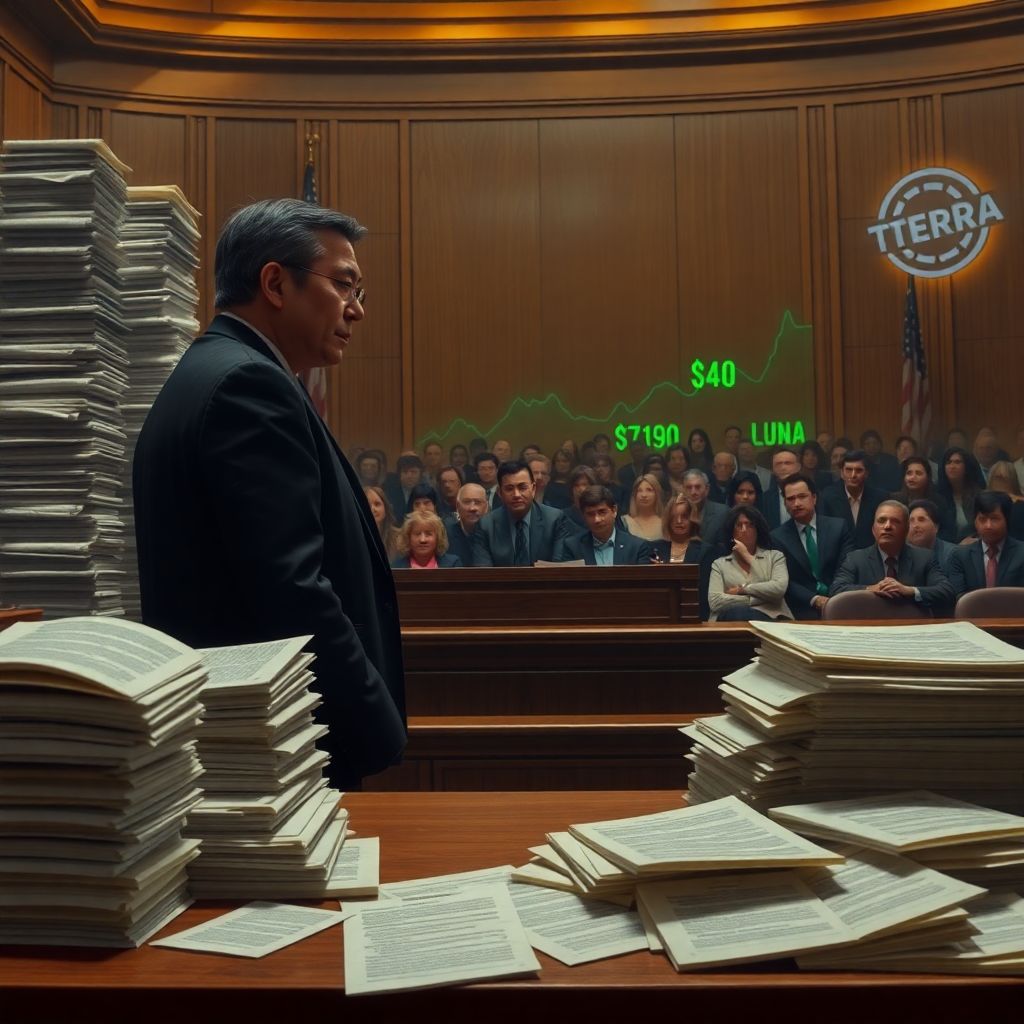
There were potentially millions of victims of the $40 billion implosion of Terra’s UST and LUNA, a U.S. federal judge said during the sentencing of Terraform Labs founder Do Kwon. Among that vast pool of harmed investors, 315 individuals took the extra step of submitting written statements to the court—letters that described suicide attempts, bankruptcies, ruined retirements, and serious health crises, all of which they tied directly to the 2022 collapse of the Terra ecosystem.
Those letters, according to U.S. District Judge Paul Engelmayer, played a decisive role. He said on the record that he read every single one—staying up late and even canceling personal plans to get through the stack. He characterized the submissions as “impactful,” emphasizing that they provided a human counterweight to the dry spreadsheets and expert reports that typically dominate white-collar sentencing hearings.
Before handing down a 15‑year prison sentence, the judge confronted Do Kwon with the emotional gravity of those accounts. He asked whether Kwon himself had read the letters and even offered to delay the hearing so that he could do so, noting that around 30 victim statements had been filed right before the proceeding and might not yet have been fully digested by the defense. The exchange underscored how central the victims’ voices had become to the court’s final decision.
A Collapse Measured in Human Stories
The Terra crash is often reduced to numbers: $40 billion in value erased; one of the largest failures in crypto history; a ripple effect that shook markets globally. But the letters pushed the court to look beyond the macroeconomic damage and focus instead on granular stories: a parent losing a college fund, a retiree watching decades of savings vanish overnight, a small entrepreneur forced to shutter a business after betting heavily on UST’s advertised stability.
Several writers described spiraling into depression or contemplating self‑harm after the collapse, connecting their emotional breakdowns to the sense of betrayal they felt toward a project that had been marketed as sophisticated but safe. Others spoke of divorces, family rifts, and the humiliation of having convinced friends and relatives to invest, only to see those relationships crumble under financial stress.
For Judge Engelmayer, these letters illustrated that this was not just an abstract “market correction” or a case of investors misjudging risk. They framed the Terra scheme as a chain reaction of human suffering fueled by misleading assurances about an algorithmic stablecoin that was supposed to hold its dollar peg.
From Technical Failure to Criminal Accountability
Terraform Labs promoted UST as a stablecoin that could maintain parity with the dollar through algorithmic mechanisms rather than traditional cash reserves. For many retail investors, the distinction was either poorly understood or downplayed. Marketing materials and public statements stressed stability and innovation, creating what victims described as an aura of inevitability and safety.
When UST lost its peg in May 2022, selling pressure cascaded, pulling down LUNA and triggering a full‑blown death spiral. In hours, fortunes evaporated. The suddenness intensified the shock; victims said they had no meaningful chance to exit positions or process what was happening before their holdings were virtually worthless.
In court, prosecutors argued that Kwon was not simply a visionary whose experiment went wrong, but a promoter who misrepresented crucial risks and metrics, cultivating trust he did not deserve. The letters reinforced that narrative, suggesting that investors had not simply misread a speculative bet—they had been actively reassured, emboldened, and persuaded by Kwon’s public posture of confidence even as red flags accumulated.
Why the Letters Mattered So Much at Sentencing
In many financial crime cases, sentencing hinges on two pillars: the scale of monetary loss and the defendant’s intent. Victim statements add a third dimension: visible, personal harm. Judge Engelmayer’s insistence on reading all 315 letters signaled that he viewed this dimension as essential in determining a just punishment.
These letters helped the court answer critical questions:
– Were investors sophisticated risk‑takers who understood the dangers, or mostly ordinary people lured by promises of stability and high yield?
– Was the damage limited to portfolio losses, or did it extend to mental health crises, family breakdowns, and long‑term financial insecurity?
– Did Kwon’s conduct resemble that of a reckless innovator or that of a promoter who ignored foreseeable harm while maintaining a public image of control?
The more specific and vivid the accounts, the clearer it became that the Terra collapse had real‑world consequences far beyond trading charts and market caps. That emotional and social fallout helped justify a lengthy custodial sentence instead of a lighter penalty centered on fines and restitution alone.
The Judge’s Tone: Sympathy for Victims, Skepticism Toward Kwon
Reports from the courtroom described a judge who treated the victims’ experiences with gravity and empathy. By staying up late to read hundreds of letters, he signaled both to the affected investors and to the broader public that their suffering mattered in the eyes of the law.
By contrast, his questioning of Kwon was pointed. Asking whether Kwon had taken the time to read the statements was not just procedural; it was a test of remorse and accountability. Offering to delay the hearing suggested that the judge believed a genuine response from Kwon required full confrontation with the damage attributed to his project.
That dynamic—respect for victims paired with skepticism toward the defendant—colored the backdrop to the 15‑year sentence. It also highlighted a growing expectation that founders in high‑impact sectors like crypto must reckon not only with technological outcomes but with the human cost of their failures.
Terra as a Cautionary Tale for the Crypto Industry
The Terra case has become a touchstone in discussions about regulation, risk, and ethics in digital assets. The victims’ letters, now part of the public record of the case, illustrate how narratives of “disruption” and “decentralized finance” can obscure traditional consumer‑protection concerns.
Many letter‑writers said they believed they were participating in the future of money, not merely gambling in a volatile market. They pointed to upbeat interviews, social media posts, and confident public statements that minimized the fragility of UST’s design. The sense of being misled—rather than just unlucky—runs through the correspondence.
For policymakers and regulators, these accounts strengthen the argument that certain claims about stability, yield, and safety in crypto products must be subject to the same scrutiny as comparable promises in banking or securities markets. The Terra disaster is being cited as a prime example of why disclosures, audits, and transparent risk communication need to be non‑negotiable.
The Role of Personal Narratives in White‑Collar Justice
White‑collar cases have historically been criticized for producing lenient sentences, especially when defendants are wealthy or influential. Victim impact statements can shift that dynamic by making the harm harder to dismiss as abstract or “just financial.”
In the Terra case, the letters served several functions:
– They provided judges with qualitative data about how losses translate into real‑life consequences.
– They challenged any narrative that the victims were purely speculative thrill‑seekers.
– They informed the debate over deterrence—helping the court decide what sentence is necessary to dissuade other founders from similar behavior.
The emotional force of a victim describing a spouse’s suicide attempt or the loss of a family home can carry more weight, in practice, than an expert economist’s chart. In imposing 15 years, the court implicitly recognized that large‑scale financial misconduct in digital markets can be just as devastating as traditional frauds.
Lessons for Retail Investors
For many individuals who wrote to the court, the damage has already been done. But their experiences offer painful lessons for current and future investors:
– “Stable” and “algorithmic” are not interchangeable with “risk‑free.” Any promised stability requires scrutiny of underlying mechanisms and reserves.
– High yields on supposedly safe products are a red flag. Sustainable, low‑risk returns rarely come with double‑digit annualized interest rates.
– Charismatic founders and strong online communities can create the illusion of security and inevitability. Investors must separate social confidence from technical resilience.
Several letter‑writers said they had ignored nagging doubts because of crowd enthusiasm or the fear of missing out. The Terra collapse, and the heartbreak documented in the letters, now serves as a stark reminder that due diligence and skepticism are critical—even, and especially, in fast‑moving tech sectors.
A Turning Point for Founder Responsibility
Do Kwon’s sentencing, shaped so heavily by victim testimony, is likely to influence how other crypto founders think about risk disclosures and public communication. The message from the courtroom is clear:
– Public statements and assurances are not free of legal consequence.
– Ignoring or downplaying systemic vulnerabilities, while encouraging mass retail participation, can be framed as reckless or fraudulent behavior.
– Founders cannot hide behind the “experimental” label if they simultaneously market their products as safe or stable to everyday users.
The 15‑year term will be seen not only as a punishment for one individual, but as a signal to the entire sector that innovation does not exempt builders from accountability when their creations implode on a global scale.
The Emotional Ledger of a $40 Billion Crash
Ultimately, the Terra saga is being written in two ledgers: one financial, filled with numbers and charts, and one emotional, filled with stories like those in the 315 letters. The sentencing hearing brought those two ledgers together in a single courtroom, where a federal judge weighed the loss of billions against the loss of trust, mental health, and security for ordinary people.
By emphasizing the “impactful” nature of the victim statements, Judge Engelmayer made clear that the legal system is beginning to treat crypto‑related catastrophes with the same seriousness as more traditional financial crimes. The bleak letters did more than describe damage; they helped define the moral and legal boundaries of responsibility in a rapidly evolving industry—and, in the process, helped determine Do Kwon’s fate.