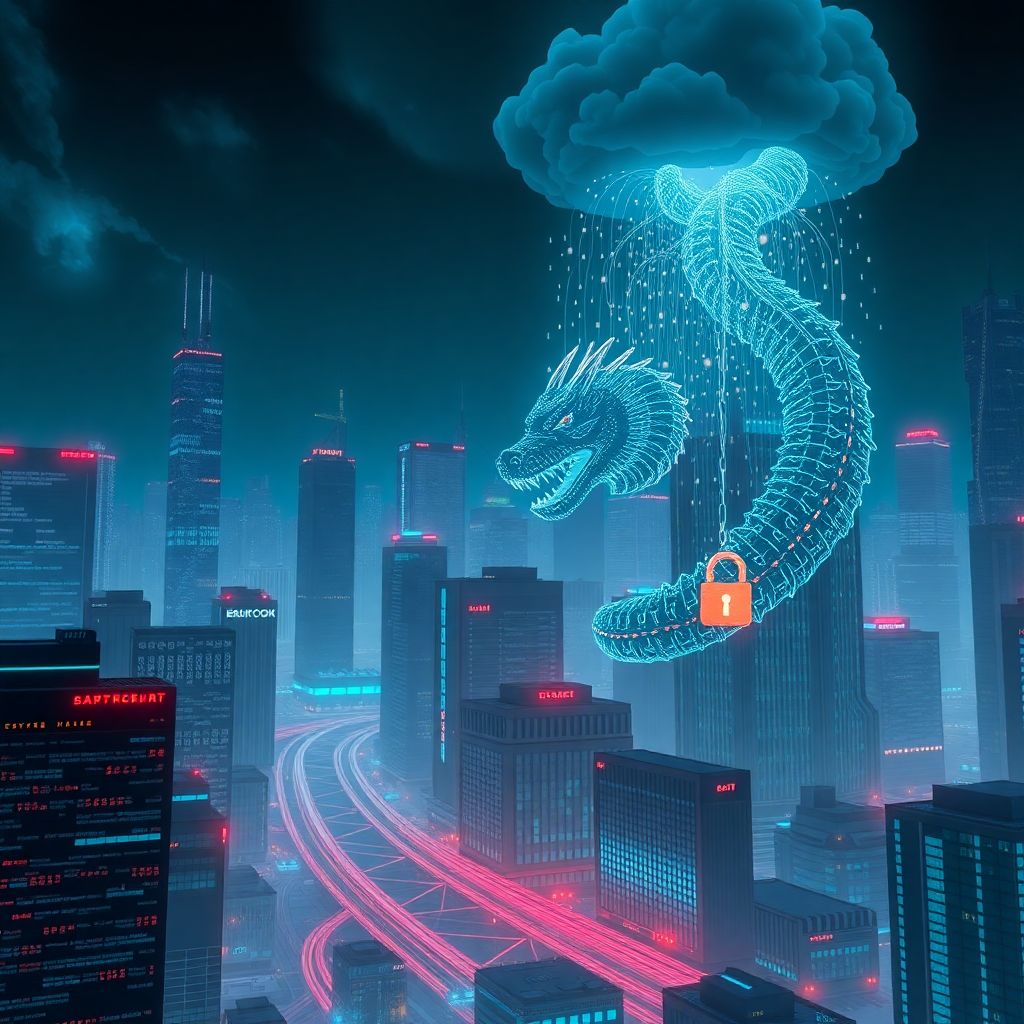
South Korean banks hit by joint Russia–North Korea ransomware campaign
South Korea’s banking sector has become the latest high‑profile victim of a sophisticated supply chain attack attributed to a joint operation between Russian and North Korean threat actors. According to cybersecurity company Bitdefender, the attackers deployed the Qilin ransomware family and managed to steal roughly 2 terabytes of highly sensitive financial data from multiple institutions.
The campaign, outlined in Bitdefender’s October Threat Debrief, shows a level of coordination and technical capability that analysts say marks a worrying escalation in state‑linked cybercrime. Investigators first picked up traces of the operation after detecting anomalous network activity and unusual patterns in data exfiltration attempts tied to known Russian and North Korean hacking infrastructure.
Coordinated operation targeting the financial backbone
Bitdefender’s analysis indicates that the intruders worked in a synchronized manner, sharing access, tooling, and likely intelligence. While Russia‑based groups are known for their sophisticated ransomware ecosystems and profit‑driven operations, North Korean actors have increasingly focused on attacks that generate hard currency and intelligence for the isolated regime. The convergence of these interests appears to have produced a powerful, mutually beneficial partnership.
The attackers did not go directly after every bank individually. Instead, they exploited weaknesses in the software supply chain, compromising a third‑party vendor or service provider with trusted access to multiple financial organizations. Once embedded at this single choke point, they were able to pivot into several South Korean banks with significantly less effort than a series of standalone intrusions would require.
How the supply chain attack unfolded
Supply chain attacks target upstream vendors that provide software, IT services, or infrastructure tools to many organizations at once. In this case, the compromised provider acted as a bridge into the internal networks of several banks, bypassing many of the perimeter defenses those institutions had put in place.
After acquiring the initial foothold, the attackers conducted reconnaissance to map internal systems, identify high‑value servers, and locate critical databases. Only then did they deploy Qilin ransomware, a strain known for its modular architecture, ability to disable security tools, and strong encryption that locks victims out of their own data and systems.
Simultaneously, the threat actors began siphoning data out of the banks’ networks. The estimated 2 TB of exfiltrated information likely includes customer records, transaction histories, internal communications, and potentially authentication or back‑office system details. This dual approach—stealing data before encrypting it—turns a traditional ransomware incident into a data‑extortion and espionage event.
Qilin ransomware: from financial extortion to geopolitical tool
Qilin is part of a class of modern ransomware families that operate as flexible platforms rather than static malware. It can be configured to target specific file types, disable backups, and spread laterally inside a victim’s network. Groups using Qilin often adopt a “double extortion” model: even if an organization refuses to pay for decryption, attackers can still threaten to leak or sell the stolen data.
In the context of a Russia–North Korea collaboration, Qilin becomes more than a criminal tool. The stolen banking data could be monetized on underground markets, used to launder funds, or exploited to understand how capital flows through South Korea’s financial system. That intelligence has clear strategic value: it can inform sanctions evasion, cyber‑enabled theft operations, and broader financial manipulation efforts.
Details kept under wraps—for now
Bitdefender confirmed the key technical findings in its October threat intelligence report but deliberately withheld the names of affected institutions and an exact timeline of the breaches. This kind of restraint is common in large‑scale financial incidents, where premature disclosure can trigger market instability or interfere with ongoing remediation efforts and law enforcement investigations.
What is known is that multiple banks were impacted, and the scale of data theft suggests the attackers had sustained access over a non‑trivial period. The final encryption stage with Qilin may have been the last step in a long‑running espionage and data‑harvesting campaign rather than the starting point of the attack.
Growing trend: state‑linked actors weaponize supply chains
Security analysts have long warned that supply chain compromises are among the hardest attacks to detect and prevent. By targeting a single trusted provider—such as a software updater, managed service, or cloud‑based tool—threat actors can infiltrate dozens or even hundreds of downstream organizations at once.
State‑sponsored groups have embraced this tactic because it offers an efficient way to scale operations and remain hidden. The cooperation between Russian and North Korean actors in this South Korean case highlights how nation‑state and financially motivated cybercrime are blurring. Experts view this as part of a broader shift in the cyber threat landscape, where alliances between different actor groups are forming around shared goals: revenue, sanctions circumvention, and strategic intelligence gathering.
Implications for South Korea’s financial stability
For South Korea, the incident raises uncomfortable questions about the resilience of its banking infrastructure. A 2 TB data theft from core financial institutions is not merely an IT problem; it is a systemic risk. Exposed banking data can facilitate identity theft, targeted fraud against high‑net‑worth clients, and long‑term compromise of payment systems.
Even if the immediate operational impact is contained, the reputational damage could be significant. Customers may question the ability of banks to safeguard their assets and personal information. Regulators will likely respond with tougher cybersecurity requirements for both banks and their critical service providers, adding new compliance burdens but also raising the security baseline across the sector.
Why Russia–North Korea cooperation matters
The partnership between Russian and North Korean threat actors is particularly concerning for several reasons:
1. Complementary strengths: Russian groups bring deep experience in building and running ransomware operations, including negotiation tactics and money‑laundering networks. North Korean units contribute discipline, state‑backed resources, and a clear mandate to extract value under heavy sanctions.
2. Deniability and complexity: Joint operations muddy attribution, making it harder for governments to respond with sanctions or diplomatic measures. It becomes less clear which state should be held accountable, and both can plausibly deny direct involvement.
3. Scaling future attacks: Once tools, playbooks, and working relationships are established, they can be reused and adapted to hit new targets—other banks, cryptocurrency platforms, payment processors, or even central financial infrastructure.
What financial institutions should do next
The South Korean incident offers a set of practical lessons for financial institutions globally:
– Harden supply chains: Banks need more rigorous due diligence and continuous monitoring of vendors with network access or data processing roles. Zero‑trust principles should be extended to third parties, with strict segmentation and least‑privilege access.
– Improve detection of lateral movement and exfiltration: Advanced attacks are rarely stopped at the perimeter. Enhanced logging, anomaly detection, and network traffic analysis can catch unusual data flows before they reach the terabyte scale.
– Prepare for double extortion: Incident response plans must assume data has been stolen, not just encrypted. This requires legal, communication, and regulatory strategies for dealing with extortion demands and potential public leaks.
– Invest in threat intelligence: Up‑to‑date information about emerging malware families like Qilin, new infrastructure used by Russian and North Korean groups, and evolving tactics can significantly shorten detection and response times.
The broader cyberthreat horizon
The attack on South Korean banks reflects a larger reality: financial institutions are prime targets in an era where geopolitical conflicts increasingly play out in cyberspace. As sanctions tighten and global power rivalries deepen, states will continue to experiment with cyber operations that blend espionage, sabotage, and financial crime.
For the private sector, this means traditional security measures focused on stopping random criminal hackers are no longer sufficient. The adversaries now include well‑resourced, patient, and strategically motivated actors willing to collaborate across borders. The Russia–North Korea ransomware alliance is unlikely to be the last example of such cooperation.
South Korea’s experience may serve as an early warning for other advanced economies: the next major shock to financial stability may not come from credit risk or macroeconomic turbulence, but from coordinated, state‑linked cyberattacks that quietly penetrate the digital backbone of global finance.