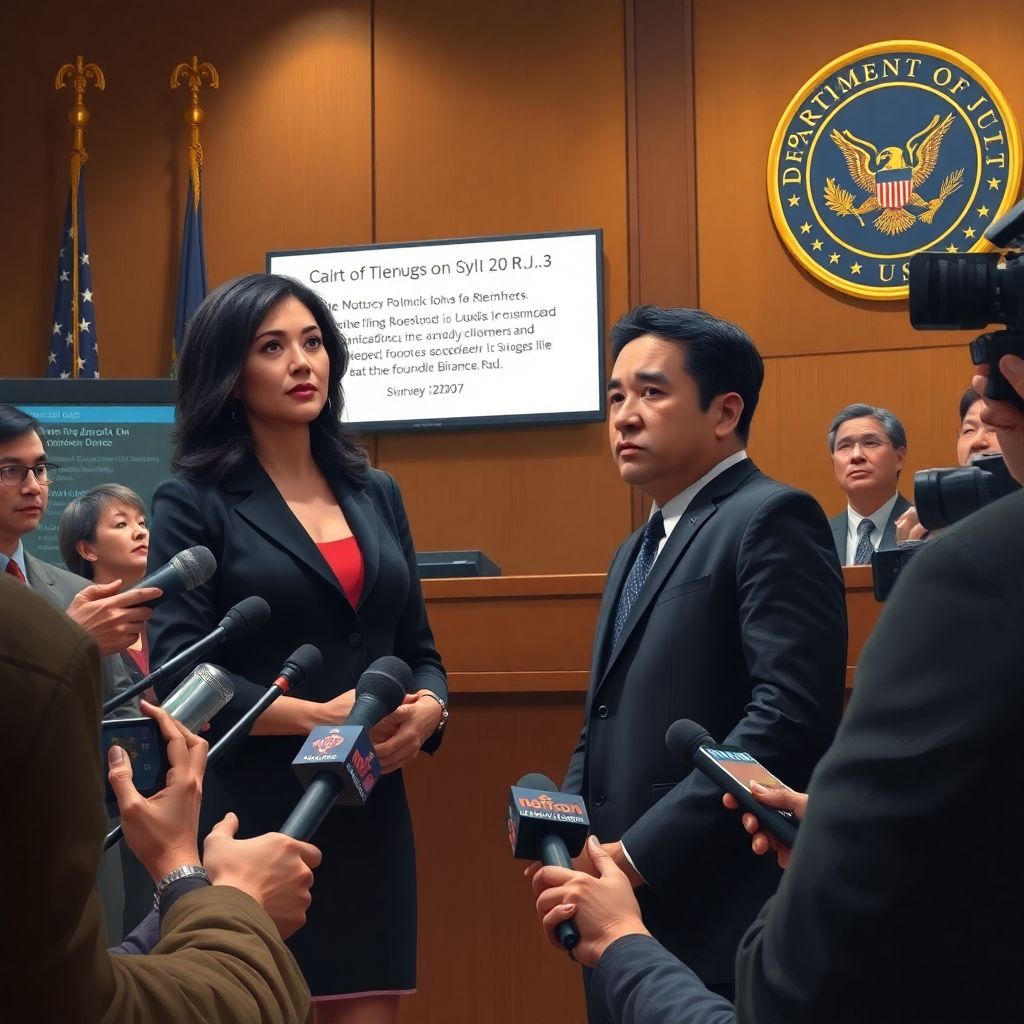
Binance founder Changpeng Zhao’s attorney, Teresa Goody Guillén, has firmly rejected all speculation suggesting that Zhao secured a presidential pardon through improper financial influence or political favoritism. Addressing these allegations in a recent interview, Guillén emphasized that Zhao’s legal troubles stemmed from regulatory compliance issues, not criminal conduct or corruption.
Guillén clarified that Zhao, commonly known as CZ, was prosecuted solely for failing to implement sufficient anti-money laundering (AML) compliance measures at Binance. “This is a regulatory violation, not a criminal offense involving money laundering,” she stated. According to her, the case was wrongly escalated and should not have reached the level of prosecution in the first place.
The attorney criticized the media for perpetuating the pay-to-play narrative based on unverified sources. She noted that many reports relied on a cycle of citing other media outlets without presenting concrete evidence. “It becomes a loop—media quoting media quoting media—with no solid foundation,” Guillén said, expressing concern about the quality of journalism surrounding the case.
One focal point of the allegations was Binance’s alleged connection to World Liberty Financial, a company associated by some with former President Donald Trump. Guillén rejected claims that World Liberty Financial is “Trump’s company,” asserting that no substantiated evidence supports this narrative. She also addressed the controversy around USD-1, a stablecoin issued by World Liberty Financial on the Binance blockchain. Using an analogy, she stated, “Just because something is listed on Binance doesn’t imply a personal or business relationship—similar to posting on Craigslist and claiming ties with its founder.”
Furthermore, Guillén highlighted that other high-profile figures in the crypto space had also received pardons, including Arthur Hayes, former CEO of BitMEX, and Ross Ulbricht, founder of the Silk Road marketplace. She pointed out that presidential pardons, both for individuals and entities, have long been part of American legal tradition—dating back to the country’s earliest legal frameworks.
When questioned about allegations of secret Bitcoin payments being made to Trump in exchange for the pardon, Guillén was unequivocal: “I know CZ. That’s not who he is. That would never happen.” She dismissed such claims as conspiracy theories lacking any factual basis.
Guillén also responded to public statements made by Senator Elizabeth Warren, who inaccurately claimed Zhao had been convicted of crimes he was never formally charged with. Warren’s assertion that Zhao engaged in a pay-to-play scheme for his pardon was similarly denounced by Guillén. “You cannot go around accusing people of crimes they haven’t committed,” she said, emphasizing the legal and ethical dangers of spreading unfounded allegations.
As for Zhao’s future, Guillén confirmed that he will not be returning to a leadership role at Binance. The company remains under regulatory scrutiny from multiple U.S. agencies, including the Department of Justice, CFTC, FinCEN, and OFAC. Binance is currently barred from servicing American customers and operates under oversight from a Treasury Department-appointed monitor to ensure compliance with U.S. law.
The broader implications of this case shed light on the increasing complexity of crypto regulation in the United States. While Binance was one of the most prominent exchanges to face enforcement actions, other platforms are also under growing pressure to align with U.S. legal standards. The situation raises questions about the balance between innovation and compliance, and how regulators and industry leaders can collaborate to build a more transparent ecosystem.
Additionally, the public discourse around Zhao’s pardon reflects the political tensions surrounding crypto policy in the U.S. With figures like Senator Warren taking a hardline stance against the industry, and others advocating for more crypto-friendly regulations, the sector remains deeply polarized. As the 2024 election approaches, crypto may become an increasingly important issue on the political stage.
The case also underscores the importance of accurate reporting and source verification in high-stakes financial and legal matters. Guillén’s criticism of media practices serves as a reminder that misinformation can distort public understanding and potentially harm reputations.
Moreover, the controversy around stablecoins like USD-1 highlights the need for clearer regulatory frameworks governing digital assets. As stablecoins gain adoption across multiple blockchains and exchanges, questions surrounding their issuance, backing, and oversight become more urgent.
In sum, while Zhao’s pardon has sparked debate, his attorney insists it was granted based on legal discretion rather than political favor. The case continues to fuel discussions about how the American legal system treats crypto pioneers and what the future holds for digital finance in the U.S.