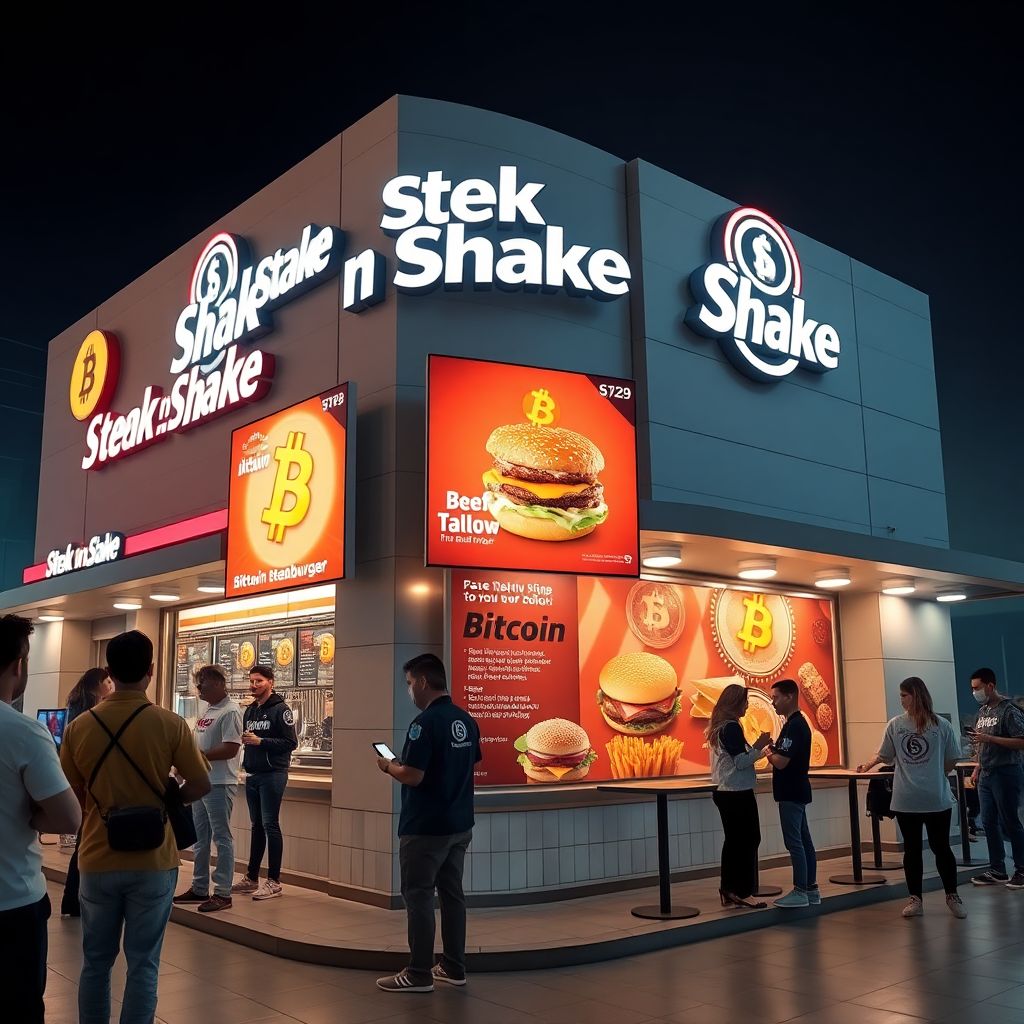
Steak ’n Shake, a long-standing American fast-food chain, is making waves in the cryptocurrency space with its strategic expansion into El Salvador — a country known for its bold embrace of Bitcoin. Following its participation in the Bitcoin Histórico event held in San Salvador, the company has confirmed its intention to further integrate Bitcoin into its global operations.
Having begun accepting Bitcoin across its US locations on May 16, 2025, Steak ’n Shake has quickly positioned itself as a crypto-friendly brand. This move was announced in advance via a social media post on May 9, hinting at a major crypto-related development. True to its promise, the chain not only activated BTC payments nationwide but also introduced a limited-edition “Bitcoin Steakburger” to commemorate the occasion.
Dan Edwards, Chief Operations Officer of the company, stated that they intend to implement Bitcoin payments at every Steak ’n Shake location globally. “We want to be recognized as a brand that supports digital innovation and financial freedom,” Edwards said during a press briefing.
El Salvador, the first country in the world to adopt Bitcoin as legal tender, is a natural next step for the company’s international expansion. Steak ’n Shake celebrated its presence at the Bitcoin Histórico event by serving signature items like Beef Tallow Fries and distributing Wagyu and Grass-Fed Beef Tallow Cooking Oil, emphasizing its alignment with Bitcoin culture. A post from the company’s official X account declared, “The beginning of a beautiful friendship,” reaffirming its commitment to the Salvadoran market and the BTC ecosystem.
The results of this crypto-forward approach have been notable. Following the Bitcoin payment launch, Steak ’n Shake reported an 11% increase in same-store sales for Q2, followed by a 15% surge in Q3. These figures outpaced those of major competitors such as McDonald’s, Burger King, Taco Bell, and Starbucks during the same period. While analysts are cautious about attributing the growth solely to cryptocurrency acceptance, they acknowledge that the move likely played a significant role in driving customer engagement.
However, the company’s attempt to expand its crypto payment options beyond Bitcoin sparked controversy. A poll posted on social media asked whether Ethereum (ETH) should be added as a payment method. The response was swift and divisive: 53% of nearly 49,000 respondents voted in favor, but a vocal segment of Bitcoin maximalists voiced strong opposition. One particularly critical user commented, “ETH is just centralized trash. Bitcoin represents freedom. If you do this, you’ll lose all your Bitcoiner customers, including me.”
Reacting to the backlash, Steak ’n Shake deleted the poll and reaffirmed its dedication to the Bitcoin community. “Poll canceled. We stand with Bitcoiners. You have made your choice known,” the company posted, signaling that consumer sentiment—especially that of Bitcoin supporters—plays a critical role in its strategic decisions.
This incident underscores how customer feedback, particularly from niche communities, can shape corporate direction in real time. By aligning closely with Bitcoin advocates, Steak ’n Shake has cultivated a loyal fan base within the crypto world, which may prove to be a competitive advantage as digital currencies become more mainstream.
Beyond its public image and community-driven decisions, Steak ’n Shake’s foray into crypto payments reflects a broader trend across the fast-food industry. As more businesses explore blockchain integration, companies are recognizing the value of aligning with decentralized finance to attract younger, tech-savvy consumers.
The expansion into El Salvador could also serve as a testing ground for widespread Bitcoin payments in international markets. With its legal status and growing infrastructure for crypto transactions, El Salvador offers a unique environment for companies like Steak ’n Shake to experiment with digital payment models without the regulatory uncertainty present in other countries.
Additionally, embracing Bitcoin may help the company streamline international transactions, reduce processing fees, and attract a borderless customer base. For global franchises, these advantages can enhance profitability and operational efficiency.
Steak ’n Shake’s marketing strategy also deserves attention. By launching themed menu items and engaging directly with the crypto community on social media, the brand has successfully merged lifestyle branding with digital finance innovation. This approach not only modernizes its image but also positions it as a forward-thinking player in a competitive market.
Looking ahead, if the El Salvador initiative proves successful, other regions with growing crypto adoption—such as parts of Latin America, Southeast Asia, and Eastern Europe—may become targets for further expansion. This could set a precedent for other food chains considering similar moves.
In conclusion, Steak ’n Shake’s bold push into El Salvador is more than a geographical expansion—it’s a strategic alignment with a financial revolution. By embracing Bitcoin early, listening to its digitally native customer base, and leveraging crypto culture in its branding, the company is carving out a unique space in both the fast-food and fintech arenas. Whether this experiment will yield long-term success remains to be seen, but it certainly places Steak ’n Shake at the forefront of a new era in global commerce.