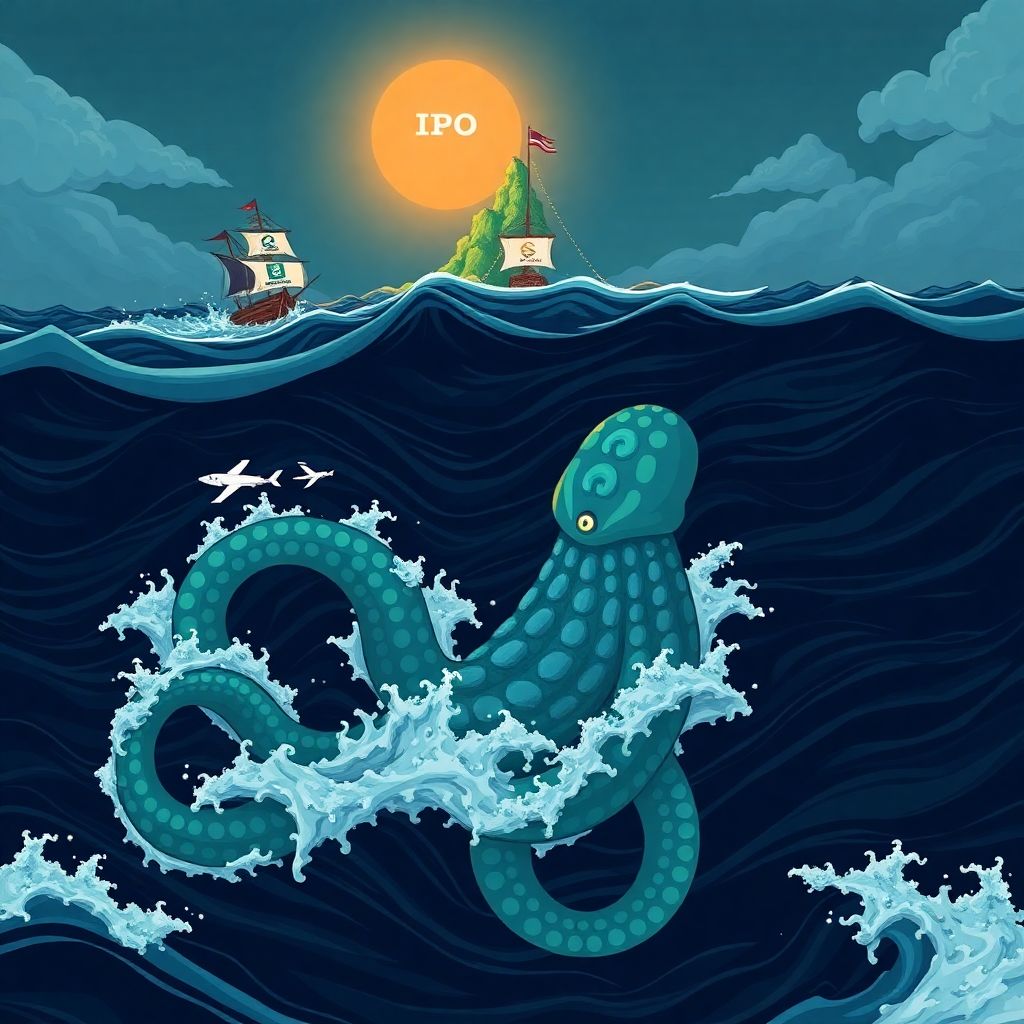
Kraken Holds Off on U.S. IPO Despite Industry Momentum
Cryptocurrency exchange Kraken has confirmed it is not hurrying to go public in the United States, despite a wave of IPO activity among its competitors. Co-CEO Arjun Sethi emphasized that the company remains financially robust and sees no urgency to enter public markets, even as others in the sector capitalize on improved market conditions and growing investor interest.
Strong Financial Position Enables Patience
Kraken, founded in 2011, has raised approximately $530 million in capital over the years, including a significant $500 million funding round that valued the company at $15 billion. According to Sethi, this financial cushion allows the firm to operate comfortably as a private entity. “We have sufficient capital on our balance sheet. There’s no need to rush to the public markets,” he stated in a recent interview.
Competitor Listings Spark Investor Enthusiasm
While Kraken remains cautious, other crypto companies have been quick to pursue IPOs. Circle’s public offering drew considerable attention, with its shares initially soaring over 160% to more than $83, and at one point briefly surpassing $260 before stabilizing. Other firms including eToro, Gemini, Bullish, and BitGo have either completed or filed for public listings, signaling a growing appetite among investors for exposure to crypto firms.
Despite the momentum, Sethi maintains that Kraken’s strategy remains independent. “We don’t feel pressured by what others are doing,” he explained, noting that the company is focused on long-term sustainability rather than short-term market trends.
IPO Filings Shed Light on Crypto Business Models
Sethi acknowledged that public filings from competitors have helped educate investors about the revenue streams and margins of crypto enterprises. These disclosures have made it easier for the market to assess the value and business models of digital asset companies.
Still, Kraken prefers to prioritize strategic alignment over speed. Bloomberg previously reported the company was considering a public listing as early as Q1 2026, but there’s no definitive timeline. “We’re not driven by FOMO,” Sethi clarified, referring to the fear of missing out.
Volatility Tests Market Resilience
The crypto market has recently faced a downturn, with Bitcoin falling over 4% in the past 24 hours to near $97,000 — a 22% drop from its early October high above $126,000. This broader slump has also impacted crypto-related equities. Shares of Cipher Mining dropped 14%, while Riot Platforms and Hut 8 fell by 13%. MARA Holdings and Bitmine Immersion experienced declines exceeding 10%, and Coinbase and Strategy each lost around 6%.
Investor sentiment has also taken a hit, with the Crypto Fear & Greed Index plunging to 15, its lowest level in seven months, signaling a growing sense of caution.
Kraken Emphasizes Long-Term Vision Over Short-Term Fluctuations
Despite the downturn, Sethi remains unfazed. “What matters are the long-term fundamentals that drive interest in assets like Bitcoin and Ethereum,” he said. According to him, the focus should be on the underlying thesis behind investments, rather than reacting to daily price shifts. This perspective aligns with Kraken’s broader philosophy of risk management and measured decision-making.
Regulatory Landscape Shifts, But Kraken Stays the Course
Some crypto firms have been encouraged to go public due to a more favorable regulatory tone in the U.S., particularly under policies associated with former President Donald Trump’s administration. Improved investor sentiment and market recovery have further fueled the trend. Nevertheless, Kraken insists that its IPO decision will be based on internal readiness, not external signals.
The Value of Strategic Independence
Kraken’s refusal to follow the crowd highlights the importance of maintaining a distinct corporate roadmap. By resisting the IPO frenzy, the company aims to avoid the pitfalls of premature public exposure, such as increased regulatory scrutiny, quarterly earnings pressure, and potential dilution of long-term vision.
What an IPO Could Mean for Kraken
While not imminent, a potential IPO could eventually provide Kraken with fresh capital to expand its services, invest in infrastructure, and compete more aggressively with publicly traded rivals like Coinbase. However, going public also brings challenges, including heightened transparency requirements and market-driven volatility.
Preparing for the Right Moment
Internally, Kraken is likely evaluating a variety of metrics before deciding on an IPO, including user growth, trading volume, regulatory developments, and macroeconomic factors. The firm may also be closely monitoring how peers perform post-IPO, using their experiences to fine-tune its own strategy.
Industry Perspective: A Mixed Bag
While some industry voices applaud Kraken’s cautious approach, others argue that delaying an IPO could mean missing out on a rare window of opportunity. However, Kraken’s leadership appears committed to balancing growth ambitions with operational discipline.
Conclusion: A Deliberate Approach Amid a Rapidly Evolving Market
Kraken’s decision to hold off on a U.S. IPO underscores a broader theme in the crypto sector — the tension between market momentum and prudent business planning. By focusing on strategic timing and risk management, the company positions itself for a potentially stronger debut when market conditions and internal metrics align. Whether that moment arrives in 2026 or later, Kraken is signaling that it will move on its own terms.