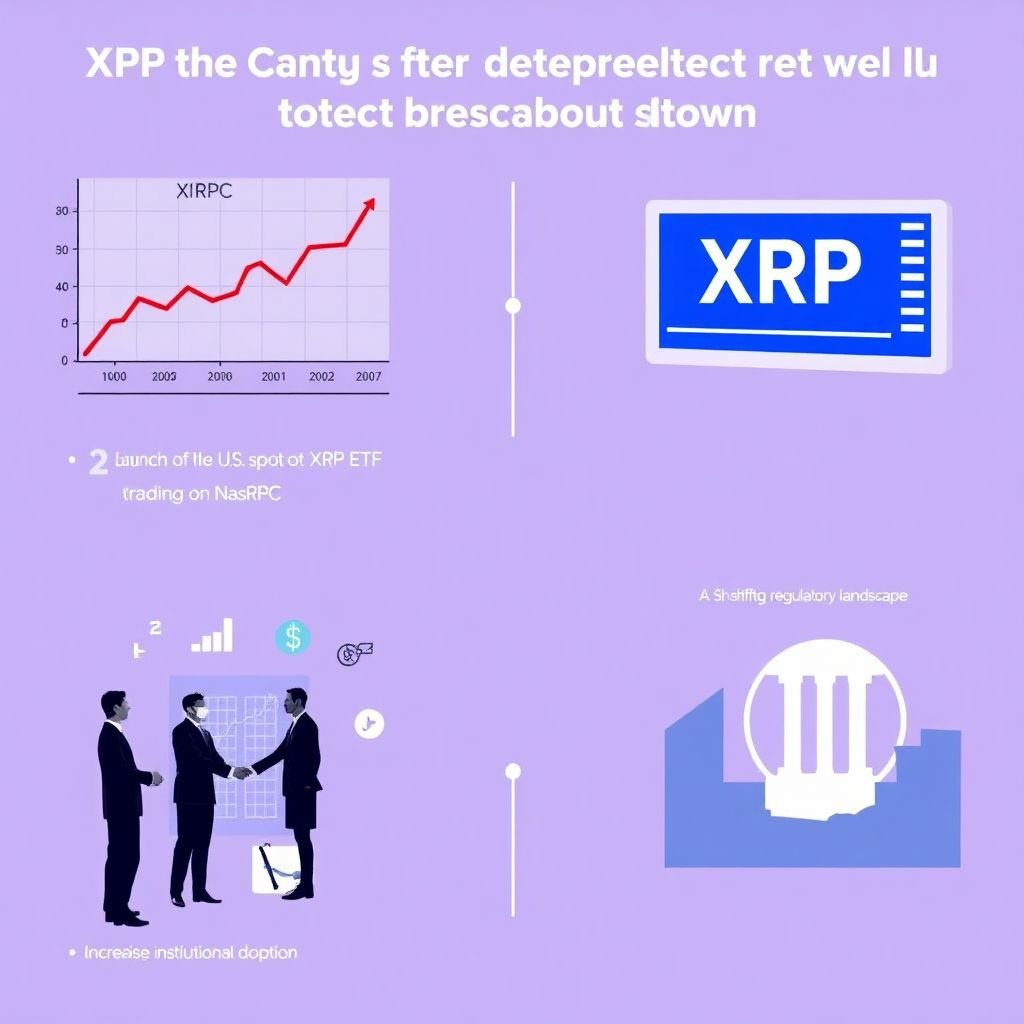
Three Key Drivers That Could Propel XRP This Month
Despite ongoing uncertainty in the macroeconomic environment, XRP is entering a potentially transformative period. This month, several powerful forces are converging that could significantly influence the token’s trajectory. These include the introduction of a long-awaited spot ETF, a surge in institutional interest, and a shifting regulatory backdrop following a government shutdown. Collectively, these catalysts position XRP for potential gains, even as broader market sentiment remains cautious.
1. Launch of the First U.S. Spot XRP ETF
The most immediate and potentially impactful development is the launch of the first-ever spot XRP exchange-traded fund (ETF) in the United States. Canary Capital is spearheading this initiative, with the fund scheduled to begin trading under the ticker XRPC on Nasdaq. This ETF is designed to directly hold physical XRP, with a management fee set at 0.50%. With this move, XRP joins the ranks of Bitcoin, Ethereum, and Solana, becoming the fourth cryptocurrency to receive a U.S.-based spot ETF.
The launch of XRPC represents a pivotal moment for XRP, not only because it increases the token’s accessibility to traditional investors but also because it signals growing acceptance of the asset within mainstream financial markets. This structural shift could encourage inflows from retail and institutional investors alike, driving demand and potentially lifting prices.
2. Accelerating Institutional Adoption
Beyond the ETF, XRP is beginning to experience renewed interest from institutional players. As regulatory clarity slowly improves and large financial institutions seek diversified exposure to digital assets, XRP’s use case as a cross-border payment solution is gaining traction. Unlike many speculative tokens, XRP has long positioned itself as a utility-driven coin, with real-world applications in international remittances and banking infrastructure.
Recent reports suggest that several fintech firms and payment processors are exploring integrations with XRP Ledger, further strengthening its utility narrative. If these developments materialize, XRP could see sustained institutional flows, reinforcing its long-term value proposition.
3. Evolving Regulatory Environment
Following the resolution of the latest U.S. government shutdown, regulatory agencies such as the SEC and CFTC are resuming activity with renewed urgency. Legal clarity, especially in relation to the ongoing Ripple vs. SEC case, remains a critical factor for XRP. However, there is growing optimism that a more structured and predictable regulatory approach could emerge in the months ahead.
This changing landscape could remove some of the uncertainty that has long plagued XRP, especially since the SEC’s 2020 lawsuit alleging that Ripple conducted an unregistered securities offering. If Ripple secures favorable legal rulings or a comprehensive settlement, it could act as a major bullish trigger, opening the door for relisting on major U.S. exchanges and broader adoption.
Market Reaction and Investor Sentiment
Market response to these developments has already begun. In the 24 hours following the ETF announcement, XRP surged by over 4%, reaching $2.51—a notable move that reflects growing investor enthusiasm. This price action suggests that market participants recognize the significance of these catalysts and are positioning accordingly.
Sentiment among traders and analysts appears bullish, with many anticipating sustained momentum if institutional demand continues and regulatory clarity improves. Technical indicators also hint at potential upside, though volatility remains a constant factor in crypto markets.
Historical Context of XRP’s Performance
To understand the potential impact of these catalysts, it’s important to consider XRP’s historical context. Once the third-largest cryptocurrency by market cap, XRP experienced significant setbacks due to regulatory challenges. The SEC lawsuit in 2020 led to delistings from major exchanges and a sharp decline in price. However, XRP has proven resilient, maintaining a strong community and continuing to develop its ecosystem.
If current trends continue, XRP could reclaim some of its former standing in the market. The convergence of utility, institutional trust, and regulatory progress could provide the foundation for a long-term recovery.
What the ETF Means for Retail Investors
The XRP spot ETF is particularly significant for retail investors who prefer investing through traditional brokerage accounts. Until now, accessing XRP required navigating crypto exchanges, wallets, and private keys—barriers that deterred many. The ETF format eliminates these complexities, making it easier than ever to gain exposure to XRP price movements through familiar investment vehicles.
This accessibility could broaden the investor base and improve liquidity, both of which are beneficial to price stability and long-term growth.
Risks and Volatility Remain
Despite these bullish indicators, it’s important to acknowledge the risks. Crypto markets remain highly sensitive to macroeconomic shifts, including interest rate decisions, inflation data, and geopolitical events. Furthermore, the outcome of Ripple’s legal battle with the SEC is still uncertain. A negative ruling could reverse recent gains and dampen momentum.
Investors should remain cautious and consider risk management strategies when trading or investing in XRP or any cryptocurrency.
Technological Developments on the XRP Ledger
Another underappreciated factor that could support XRP’s growth is the ongoing development of the XRP Ledger (XRPL). With upgrades focused on smart contracts, decentralized finance (DeFi) capabilities, and interoperability, the XRPL is positioning itself as more than just a payments network. These enhancements could attract developers and users to build new applications, potentially creating additional demand for XRP tokens.
If XRPL continues to evolve in this direction, it could align XRP with broader trends in blockchain innovation, increasing its relevance in a competitive market.
Cross-Border Payments Still a Core Focus
XRP’s original vision as a bridge currency for international payments remains central. With global remittance markets valued in the hundreds of billions, there’s significant room for disruption. Strategic partnerships with financial institutions and remittance providers could help XRP capture a meaningful share of this market.
Ripple’s partnerships in regions like Southeast Asia, Latin America, and the Middle East also suggest that the company is pursuing growth where regulatory environments are more favorable and demand for fast, low-cost transfers is high.
Conclusion
In summary, XRP is entering a defining moment driven by three main catalysts: the debut of its first U.S. spot ETF, increasing institutional interest, and a potentially more favorable regulatory climate. While risks remain, these developments have the potential to reshape XRP’s market narrative and reignite momentum among investors. For those watching the crypto space closely, XRP is undoubtedly one of the key assets to monitor this month.