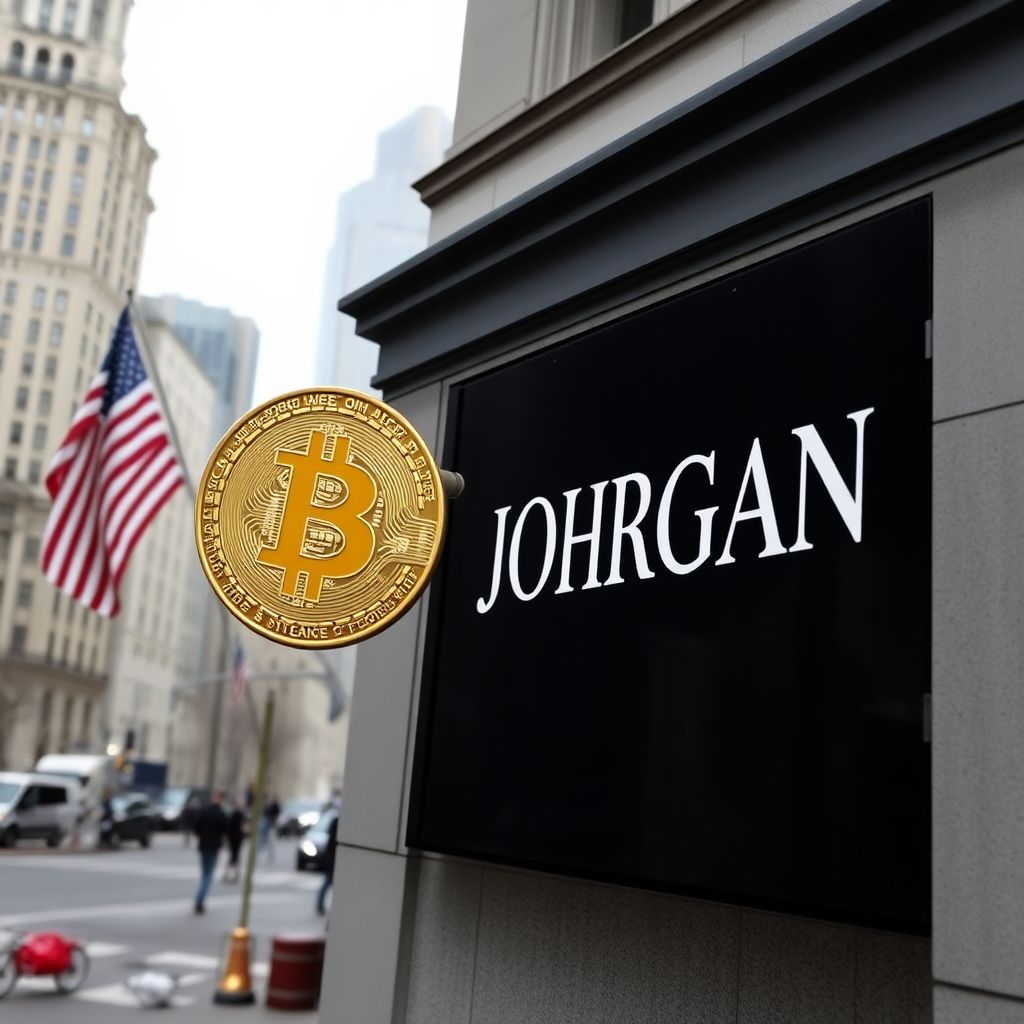
JPMorgan Chase has significantly increased its exposure to Bitcoin through BlackRock’s spot Bitcoin exchange-traded fund (ETF), the iShares Bitcoin Trust (IBIT), marking a strategic move in response to shifting market dynamics and institutional sentiment.
According to its latest 13-F filing with the U.S. Securities and Exchange Commission (SEC), JPMorgan reported holding 5,284,190 shares of IBIT as of September 30, 2025. This represents a 64% increase compared to its previous holdings, cementing JPMorgan’s position as one of the key institutional players investing in Bitcoin through ETF products.
The value of JPMorgan’s IBIT holdings was approximately $333 million at the end of Q3, although recent market fluctuations have brought that valuation closer to $312 million. Despite the increase in holdings, JPMorgan still lags behind other financial giants such as Goldman Sachs, which reported 30.8 million IBIT shares in its Q1 2025 disclosure.
In addition to direct ETF shares, JPMorgan has also taken on significant options exposure. The bank held IBIT call options valued at $68 million and put options worth $133 million as of the Q3 cutoff. This hedging strategy suggests JPMorgan is actively managing its Bitcoin-related risk positions, balancing its bullish exposure with protective instruments against potential downturns.
This growing institutional interest aligns with JPMorgan’s broader outlook for Bitcoin. A recent analysis from the bank’s strategist, Nikolaos Panigirtzoglou, indicated that the worst of the deleveraging cycle in the crypto derivatives market is largely over, particularly in Bitcoin perpetual futures. This development signals a potential stabilization phase, which could attract more traditional investors.
Panigirtzoglou and his team also highlighted an interesting trend: increasing volatility in the gold market has made Bitcoin a more attractive asset on a risk-adjusted basis. Using a comparative valuation model, the strategists argue that Bitcoin remains undervalued relative to gold. They estimate that BTC could rise as high as $170,000 within the next 6 to 12 months, provided macroeconomic conditions remain favorable.
As of now, Bitcoin is trading around $102,900, having gained over 1% in the past 24 hours. However, the cryptocurrency is still down by more than 6% over the past week, reflecting ongoing volatility and market uncertainty.
Despite JPMorgan’s bullish position, BlackRock’s IBIT has faced headwinds recently. The ETF experienced a net outflow of approximately $403 million over the last week, based on figures from SoSoValue. Excluding November 7 performance, the ETF appears set to close the week with an even higher net outflow of around $450 million. These withdrawals suggest that while institutional interest is rising in some quarters, others are opting to de-risk or rebalance their portfolios.
Nevertheless, the iShares Bitcoin Trust remains the largest spot Bitcoin ETF on the market, managing over $80.58 billion in net assets. Its dominant position underscores continued faith in Bitcoin as an institutional-grade asset, despite short-term redemption pressures.
This surge in institutional investment is not occurring in isolation. Several macroeconomic and regulatory developments have contributed to this trend. For instance, continued inflation concerns and monetary policy uncertainty are driving investors toward alternative stores of value. Bitcoin, often referred to as “digital gold,” has increasingly been viewed as a hedge against fiat currency depreciation.
Moreover, the regulatory environment for crypto ETFs has evolved over the past year. The approval of multiple spot Bitcoin ETFs by the SEC has provided a much-needed sense of legitimacy to the asset class, encouraging traditional financial institutions to participate more fully in the crypto economy.
JPMorgan’s aggressive accumulation of IBIT also signals a broader shift in Wall Street’s approach to digital assets. Once skeptical, major banks now appear more willing to allocate capital to Bitcoin, especially via regulated and transparent financial vehicles like ETFs. This evolving stance is likely to influence other firms still sitting on the sidelines.
Additionally, the presence of both call and put options in JPMorgan’s portfolio suggests a sophisticated strategy aimed at navigating Bitcoin’s notoriously volatile price movements. While call options give the bank upside exposure, the put options serve as insurance against steep declines—a prudent approach in an unpredictable market.
Looking ahead, the interplay between institutional adoption and retail sentiment will be crucial in determining Bitcoin’s trajectory. As traditional finance deepens its involvement in the digital asset space, it could lead to greater price stability and broader acceptance of cryptocurrencies as part of a diversified investment portfolio.
The dynamics of capital flow into ETFs like IBIT also reflect broader investor psychology. While short-term outflows may point to profit-taking or risk-aversion, sustained accumulation by major players could signal long-term confidence in Bitcoin’s role in global finance.
In conclusion, JPMorgan’s 64% increase in IBIT holdings during Q3 2025 is more than just a portfolio adjustment—it’s a strong signal that Bitcoin is gaining deeper traction among institutional giants. Despite recent ETF outflows and lingering price volatility, the long-term outlook for Bitcoin remains positive, fueled by macroeconomic trends, shifting investor attitudes, and increasing regulatory clarity.